
ZIXU’s Newly Designed 300W Mini Air-cooled Pulsed Laser Cleaner was Delivered to UK Customer Today
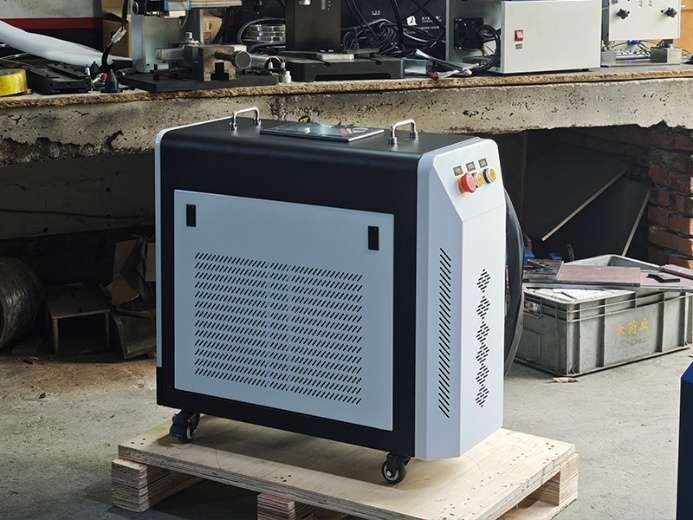
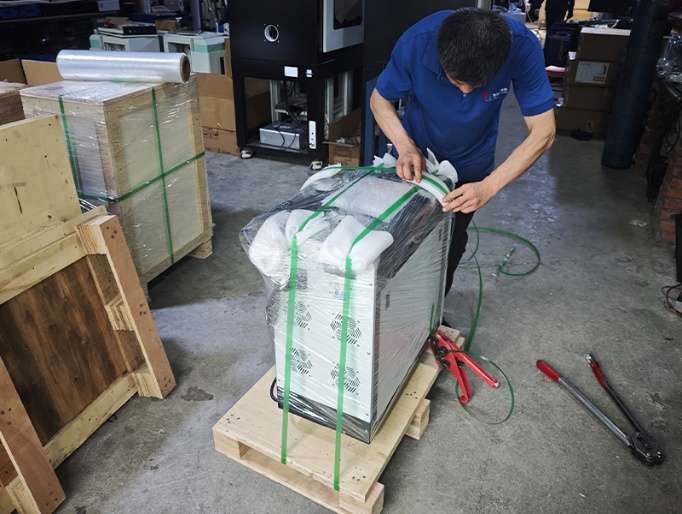
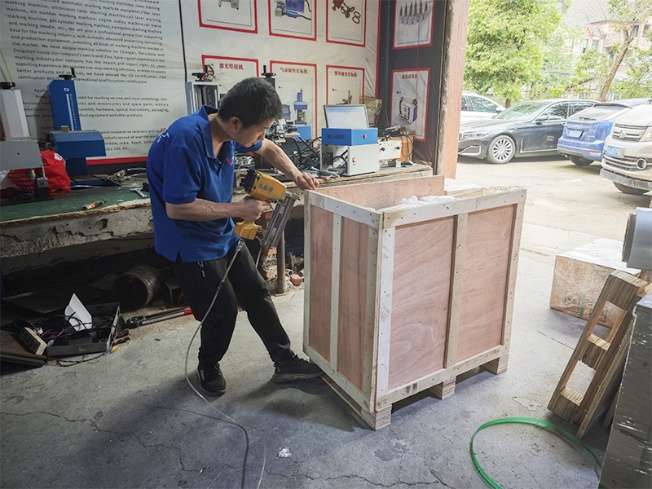
Today, we completed the stability testing of a 300W compact air-cooled pulsed laser cleaner, and following remote video verification of functionality and final payment from a UK customer, we packed it for shipment. The cost of continuous and pulsed lasers for laser cleaning has fallen over the past few years and is becoming more widely accepted across all industries, with the major laser manufacturers dropping their prices again earlier this year and releasing a range of low-cost 300W and 500W air-cooled pulsed lasers.
At the end of February, a customer in the UK contacted us about their cleaning needs from last year and was surprised to find that the price of the 200W compact air-cooled laser cleaner they wanted had dropped significantly after we provided them with an updated quote. At the same time, we were able to offer a slightly larger 300W model at a slightly higher price than they had budgeted. After a series of new cleaning test samples and efficiency evaluations, the customer ultimately decided to upgrade to the 300W model.
Meanwhile, our usual handheld cleaning vibroseis manufacturer has also repeated this year. Its new series will be 200W and 300W adaptable models have been merged, and maintain the price of the old 200W, compared to the previous generation, the demand for water-cooled cooling of the 300W system has a significant reduction in the total cost. In the rust removal, 300W compared to 200W laser cleaning efficiency improvement is not obvious physically, but in the thicker plastic spraying, multi-layer painting, or plating cleaning efficiency has a significant increase, even more than the size of the power increase. If you are also interested in similar products, please feel free to contact us.
Application Context for ZIXU's Newly Designed 300W Mini Air-cooled Pulsed Laser Cleaner was Delivered to UK Customer Today
Laser cleaning applications usually depend on substrate material, coating thickness, heat sensitivity and required throughput. For similar projects, CNMarking normally confirms the contaminant type, target surface quality and whether pulsed or CW laser cleaning is more suitable before recommending a machine configuration.
Recommended CNMarking Solutions and Internal Resources
If you are comparing equipment for a similar application, the following CNMarking pages are useful next steps:
- Pulsed Fiber Laser Cleaning Machines Guide – compare pulsed laser cleaning for rust, paint, oxide and precision surface treatment.
- 300W Pulsed Laser Cleaning for Semiconductor Reflow Carrier Trays – see a detailed customer cleaning test with process photos.
- SANY Group 3000W CW Laser Cleaner Case – review a heavy-industry laser cleaning cost reduction case.
- Live Demonstration: Laser Welding Mark Removal – understand on-site cleaning for weld marks and metal surfaces.
How to Choose a Similar Marking Setup
Before selecting a machine, prepare a short sample brief with the following information. This helps CNMarking recommend the right laser, dot peen, scribe or automation configuration instead of only matching a picture.
- Substrate material and coating thickness
- Required cleaning width, speed and repeatability
- Whether the job needs pulsed precision cleaning or high-power CW removal
- Fume extraction, enclosure and operator safety requirements
Related Reading
- 300W Pulsed Laser Cleaning for Semiconductor Reflow Carrier Trays
- SANY Group 3000W CW Laser Cleaner Case
- Live Demonstration: Laser Welding Mark Removal
- How to Choose the Right Laser Marking Machine for Your Factory
FAQ
Can CNMarking test my own samples before I choose a machine?
Yes. For most marking, cleaning and welding projects, sample testing is the fastest way to confirm contrast, depth, speed and fixture requirements before final configuration.
What information should I send for a quotation?
Please send the material, part size, marking or cleaning area, required result, production volume and any automation or traceability requirements. Photos or short videos of the current process are also helpful.