Infrastructure
Infrastructure projects need more than one marking method. Rail assets, bridge hardware, tunnel tooling, wheelsets, electrical housings, signal components, and communication equipment all require durable traceability, controlled surface preparation, and maintenance-ready workflows. We combine deep marking, laser marking, laser welding, and laser cleaning so infrastructure manufacturers and maintenance teams can build one practical process stack across production, inspection, repair, and life extension.
Technologies For Infrastructure
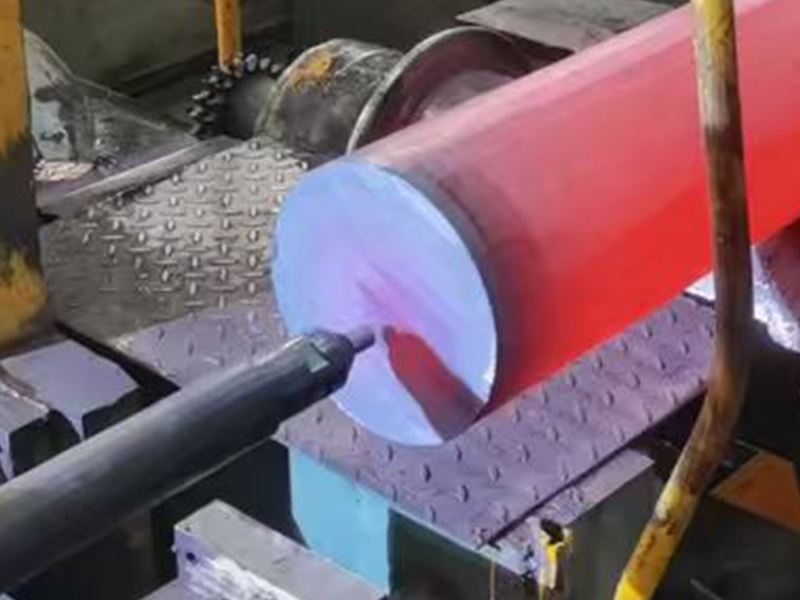
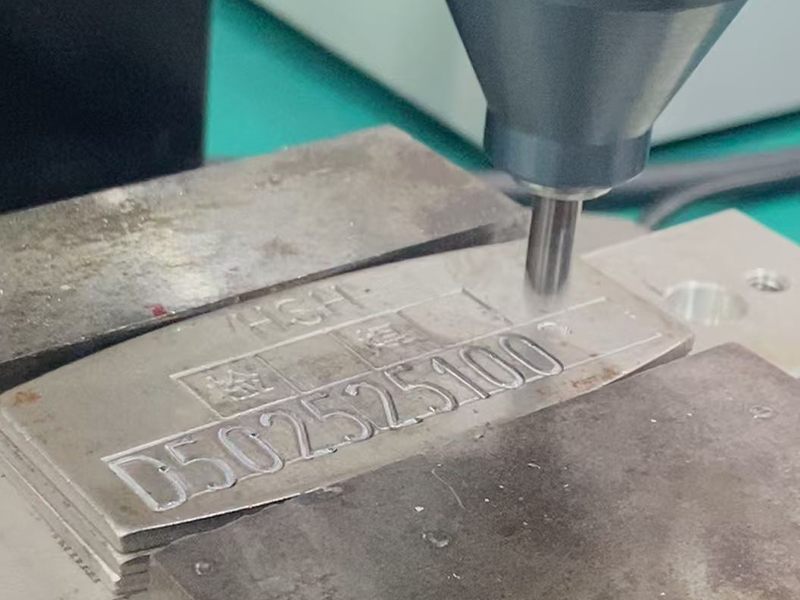
Infrastructure applications often involve standardized and non-standardized metal parts that must stay identifiable after blasting, oxidation, repainting, and long outdoor service. That is why deep pneumatic dot peen, electric dot peen, and scribe marking remain practical choices for rails, steel sections, bridge fittings, castings, fasteners, and tunnel tooling.
- Durability: deep marks remain readable after harsh handling, outdoor exposure, and repainting cycles;
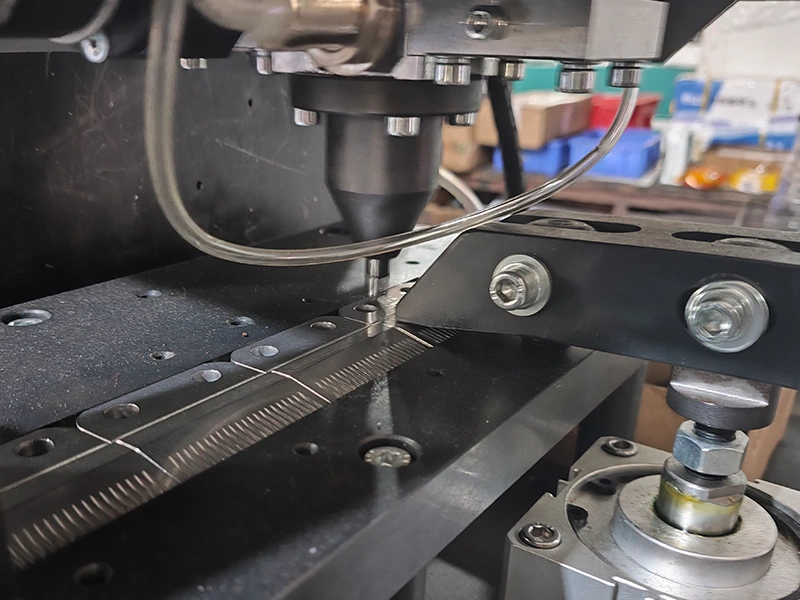
- Low-stress readability: scribe marking improves legibility on metal tags, plates, and machined parts;
- Lifecycle control: batches, tooling cycles, and inspection history can stay tied to the part itself.
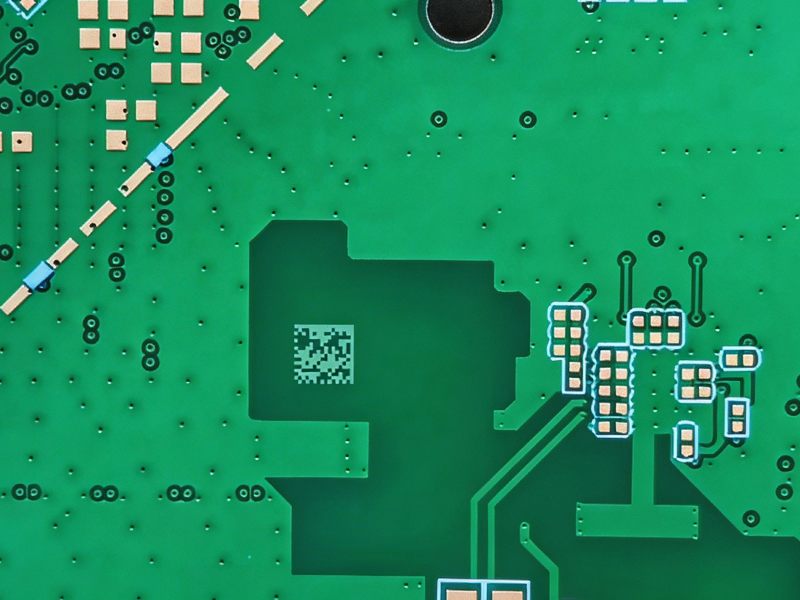
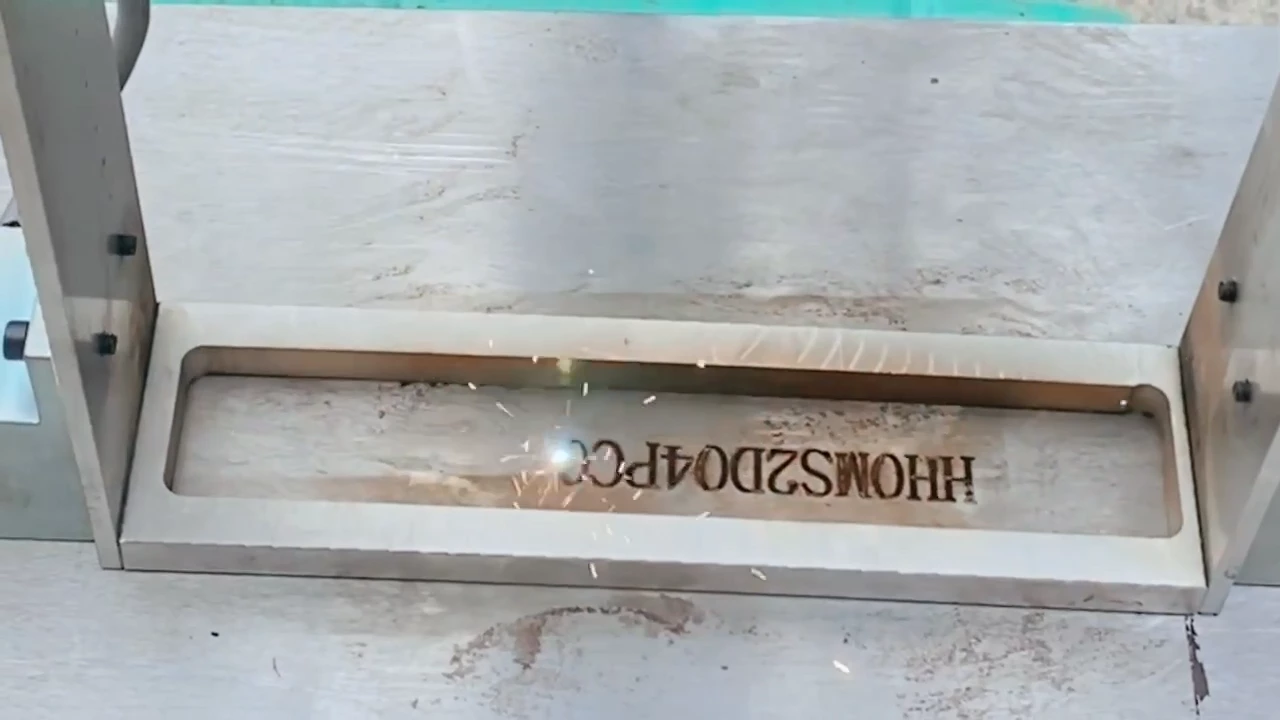
Laser marking is the better fit when infrastructure parts need dense QR codes, compact serial data, and clean readable IDs on signal housings, control boards, communication modules, precise metal assemblies, and other parts where non-contact processing matters more than mark depth.
- Quiet: laser marking supports traceability on compact parts without the mechanical impact of peen marking;
- Accuracy: small QR codes, serial data, and fine text remain readable in limited marking areas;
- Visibility: high-contrast codes help field teams identify and service signal or communications hardware faster.
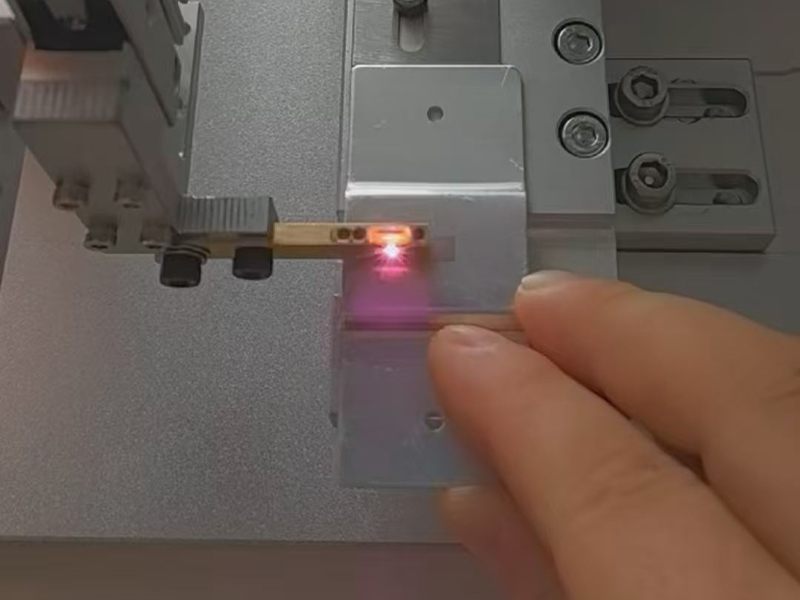
Laser welding helps infrastructure suppliers process terminals, enclosures, connectors, housings, and precision metal hardware with cleaner seams and better repeatability. It also fits automated lines where stable throughput and lower manual variation matter more than traditional rough joining methods.
- Efficiency: automated laser welding keeps joints consistent across precision electrical and metal assemblies;
- Easy to operate: repeatable welding recipes are easier to standardize in production and repair cells;
- Precise: tight spots and controlled energy input make laser welding useful for compact infrastructure hardware.
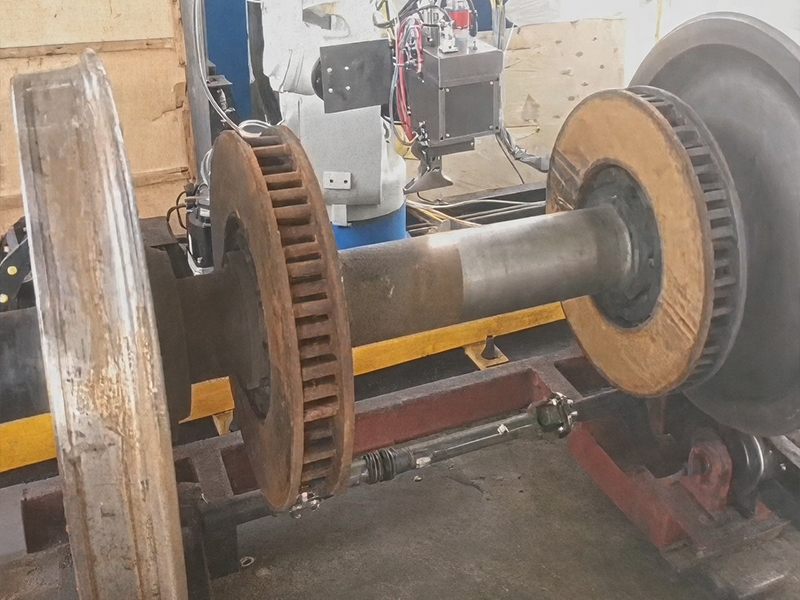
Laser cleaning is increasingly useful for infrastructure maintenance because it removes rust, oxide, paint, and contamination before inspection, recoating, welding, or repair. It is especially practical where teams need selective cleaning on rails, wheelsets, anchors, brackets, and exposed structural parts without over-treating the full assembly.
- Efficient: selective cleaning exposes the exact repair or inspection area in a short time;
- Non-consumable: cleaning can reduce dependence on chemicals and abrasive media in recurring maintenance workflows;
- Non-contact: laser cleaning can reach rails, wheelsets, brackets, and coated surfaces that are awkward to prep with conventional tools.
Explore Our Machines For Infrastructure
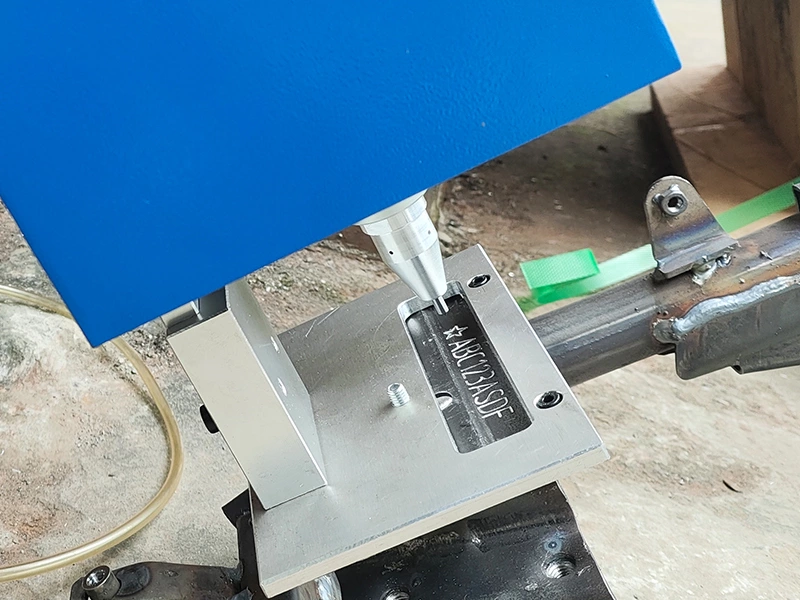
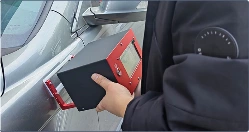
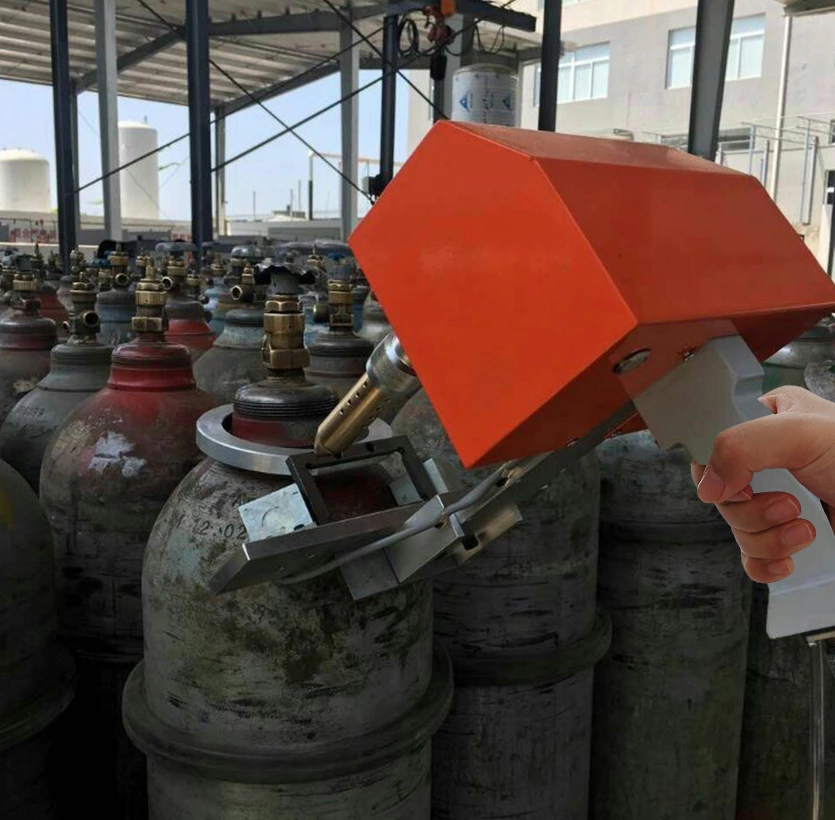
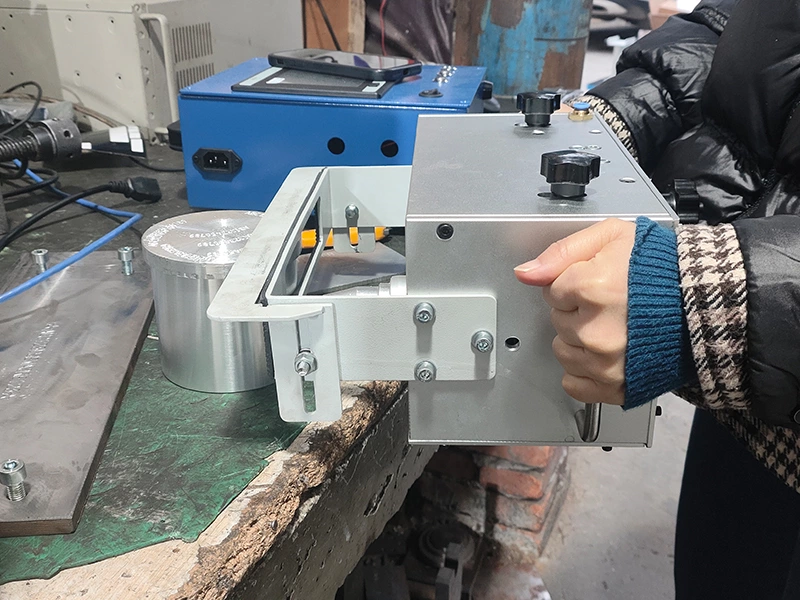
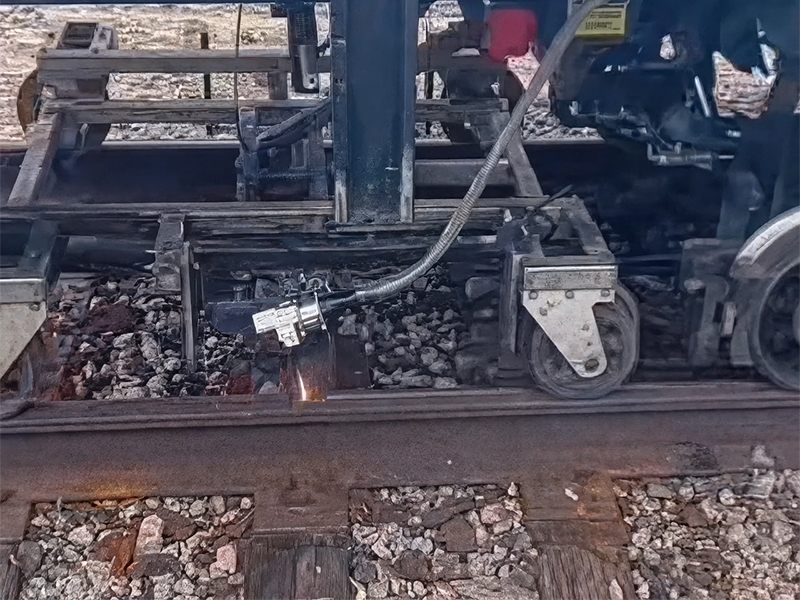
Deep marking remains essential for infrastructure steel, billets, rails, bridge fittings, and other heavy-duty metal parts that need to stay identifiable after long storage, transport, blasting, and service exposure.
Bridge hardware, fasteners, tunnel segment tooling, and asset-management tags often need readable identification that survives handling and cleaning. Smooth scribe marking is useful where maintenance teams want clean readable text without a harsh punched texture.
Laser marking supports signal devices, control housings, boards, and communications hardware that need dense QR codes, small serial numbers, and permanent traceability in compact spaces.
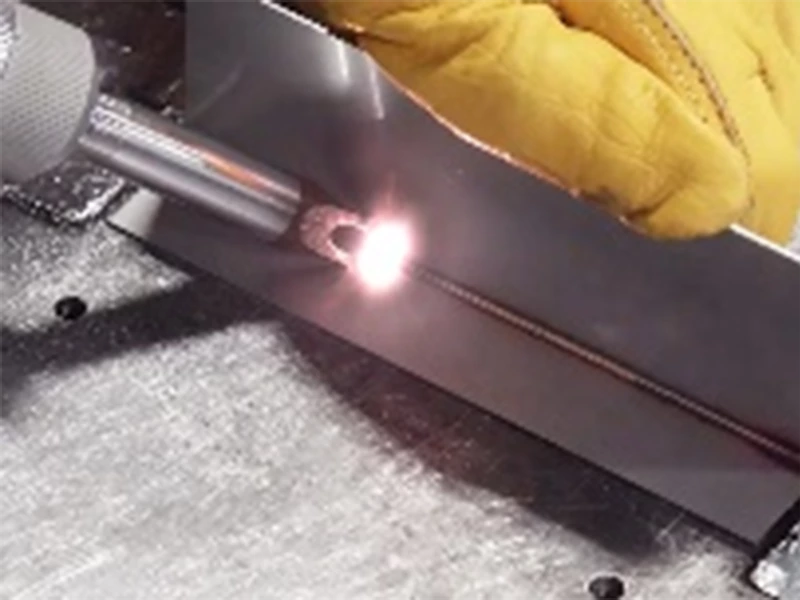
Surface processing and joining are also part of infrastructure manufacturing. Laser systems help prepare, treat, and process precise electrical hardware and metal parts where cleaner and more consistent automation matters.
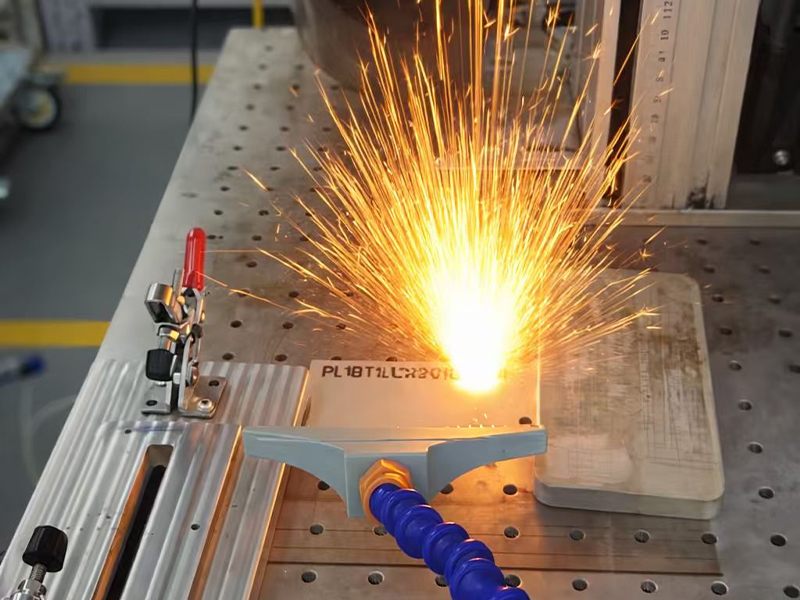
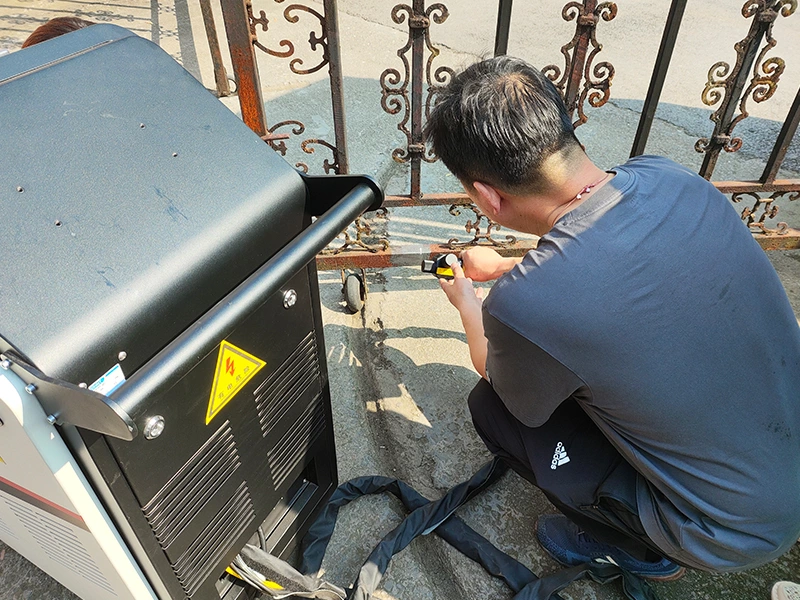
Wheelsets, rails, anchors, and exposed structures often need rust, oxide, coating, and contamination removed before inspection or repair. Laser cleaning fits these maintenance workflows when teams want selective preparation with better substrate control.
Related Cases
- Fully Automated Steel Pipe Dot Peen Marking Demonstration for durable identification on steel products.
- Automatic Nameplate MOPA Fiber Laser Marking Machine for LNG Equipment for industrial traceability and precise nameplate processing.
- Custom Laser Marking System for Seres Smart Cockpit Components for automated laser process integration and repeatable part identification.
- Pulsed Fiber Laser Cleaning Machines: History, Applications, and Trends for maintenance and cleaning workflow context.
- Thielmann Scribing Sample Test for Stainless Steel Products for low-stress readable marking on metal parts.

Want an un art handing video demonstration on specialized material? Looking for a solution to your specialized environment or automatic process demand?