
Air-Cooled vs Water-Cooled Laser Cleaning Machines
Industrial laser cleaning selection
Air-cooled and water-cooled laser cleaning machines are not just two cabinet styles. They represent different operating assumptions about duty cycle, utilities, mobility, thermal stability, maintenance rhythm and the kind of cleaning job the plant really wants to run. Industrial buyers usually get better results when they treat cooling choice as a process decision, not as a cosmetic product preference.
This B2B comparison focuses on the real evaluation questions: where each cooling route fits, what job boundaries matter, how heat management changes stability, what maintenance and downtime inputs should be compared, and how to run a fair sample review before choosing a machine. It avoids invented universal power, speed and pricing claims because those only become meaningful after the real part, contamination and shift pattern are known.
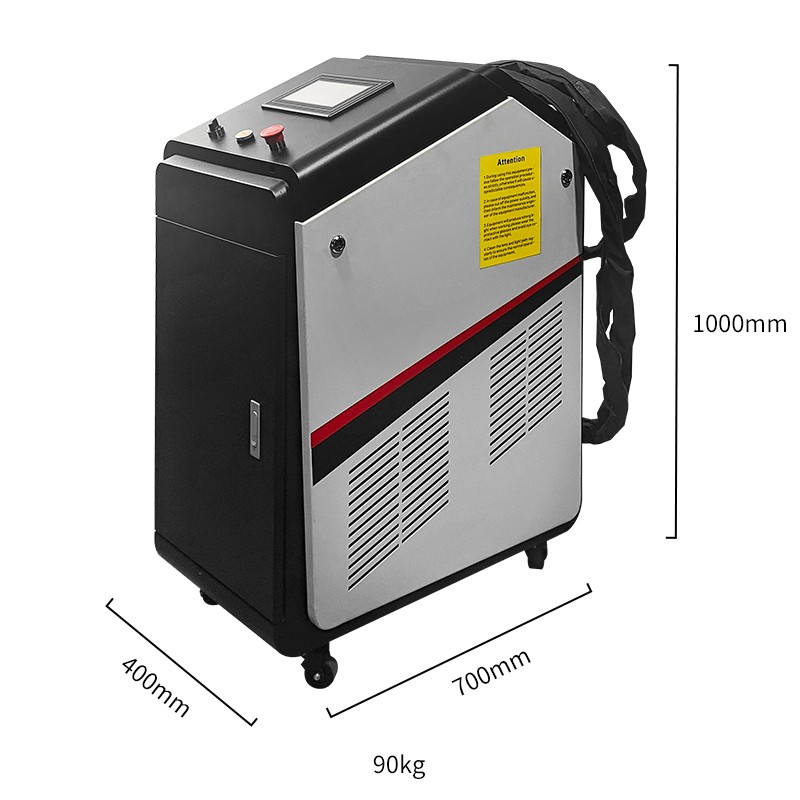
Quick Selection Answer
- Choose air-cooled first when the cleaning task benefits from mobility, smaller installation burden, easier field deployment, simpler utility expectations and moderate-duty work with shorter sustained load windows.
- Choose water-cooled first when the application needs longer sustained operating periods, stronger thermal stability, heavier or more continuous cleaning demand, or a more robust process window in a demanding production setting.
- Do not choose by headline power alone. Cooling choice should be tied to the contaminant, base material, cleanliness target, uptime expectation, plant environment, operator workflow and maintenance readiness.
Selection Table
| Decision area | Air-cooled | Water-cooled | What to confirm before approval |
|---|---|---|---|
| Typical fit | Usually stronger for mobile service, on-site maintenance, lighter utility preparation, and cleaning jobs that value portability and faster deployment. | Usually stronger for heavier-duty production, longer continuous cleaning windows and applications where thermal consistency matters across longer runs. | Write the real use case first: field repair, workshop cleanup, production-line cleaning, mold service, coating removal or weld preparation. |
| Thermal behavior | Can be simpler to deploy, but the process window should still be matched to how long the machine must run and how the plant ambient conditions behave. | Usually gives a more stable answer when the buyer expects extended operation or more demanding heat-management conditions. | Check shift length, continuous cleaning expectation, ambient temperature, ventilation, and whether the process must run without frequent pauses. |
| Mobility and footprint | Usually easier to move, position and deploy near maintenance or service tasks where flexibility matters. | Usually better when the cleaning station is more fixed and the plant can support the full operating setup consistently. | Map the real movement path, cable and hose constraints, and where the operator must clean parts in practice. |
| Maintenance focus | Compare optics protection, extraction discipline, operator handling and how the unit is used across multiple sites or shifts. | Compare optics protection plus the cooling circuit condition, service rhythm and the maintenance discipline needed to keep the machine stable over time. | Judge maintenance by the plant’s real service habits, not by what looks simpler in a product photo. |
| Downtime risk | Can reduce setup burden in lighter-duty jobs, but may be the wrong fit if the application repeatedly pushes beyond the intended operating rhythm. | Can reduce instability on tougher sustained jobs, but adds system complexity that also needs disciplined upkeep. | Track where downtime really comes from today: transport, setup, thermal drift, stoppages, maintenance delay or operator inconsistency. |
| Cost inputs | Compare equipment, utilities, extraction, operator training, service travel, deployment speed and avoided manual cleanup together. | Compare equipment, cooling-related upkeep, utilities, uptime value, process consistency and avoided rework together. | Do not reduce the decision to equipment price or brochure power numbers. |
Where Air-Cooled Laser Cleaning Is Usually Stronger
Air-cooled laser cleaning machines usually make the most sense when the plant needs a machine that can be deployed with less infrastructure friction, moved more easily between work areas, or used in service-style workflows where portability creates real operating value. Typical examples include maintenance teams, selective rust removal, localized paint stripping, and workshop tasks where the operator does not need to hold a heavy continuous cleaning load for long uninterrupted periods.
That does not mean air-cooled is only for small jobs. It means the business case is often strongest when flexibility, quick startup and lower setup burden are central to the process. If the real bottleneck today is moving bulky equipment, preparing utilities, or waiting for the right station to become available, an air-cooled route can improve response time and keep cleaning work closer to the actual production problem.
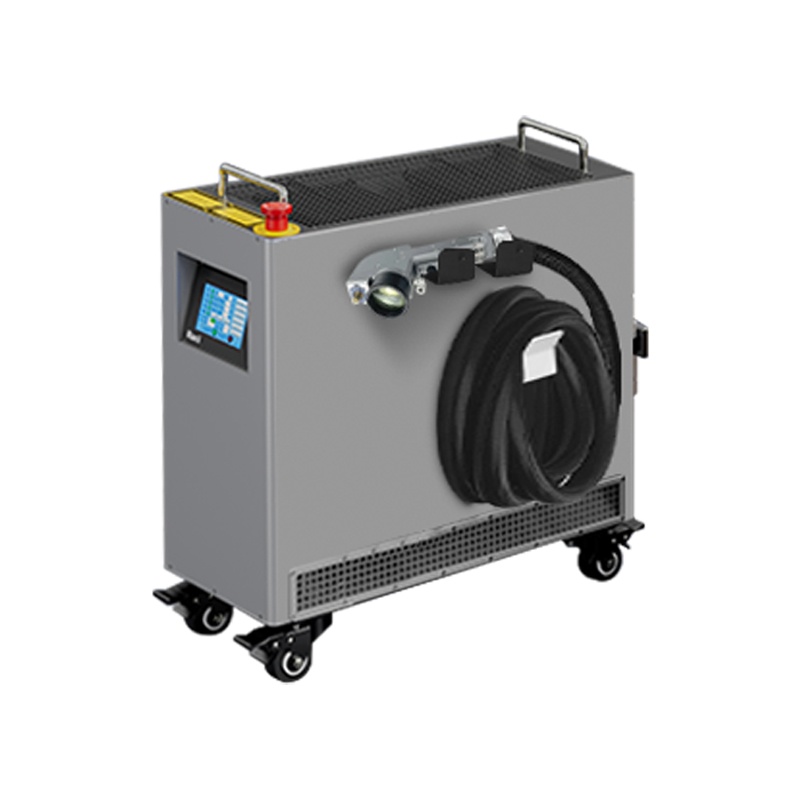
- Better fit when the team needs mobility across parts, stations or customer sites.
- Better fit when utility simplicity and faster deployment matter as much as cleaning performance.
- Better fit when the job is selective and moderate-duty rather than a long sustained heavy-load production task.
For buyers already leaning this direction, the existing air-cooled handheld pulsed laser cleaner page and air-cooled handheld CW laser cleaner page help frame which specific product family should go into the sample stage.
Where Water-Cooled Laser Cleaning Is Usually Stronger
Water-cooled laser cleaning machines are usually the better fit when the application needs stronger thermal control over longer operating windows. That is often the case when cleaning demand is heavier, shift patterns are longer, the plant expects more sustained uptime, or the buyer wants a process that is easier to keep stable under challenging workshop conditions.
Industrial buyers should especially keep water-cooled options in scope when the cleaning station is more fixed, the work is repeated day after day, and the operating model rewards thermal consistency more than mobility. The point is not that every water-cooled machine is automatically better. The point is that a buyer who ignores sustained-duty reality can accidentally choose a portable format for a job that really behaves like a production station.
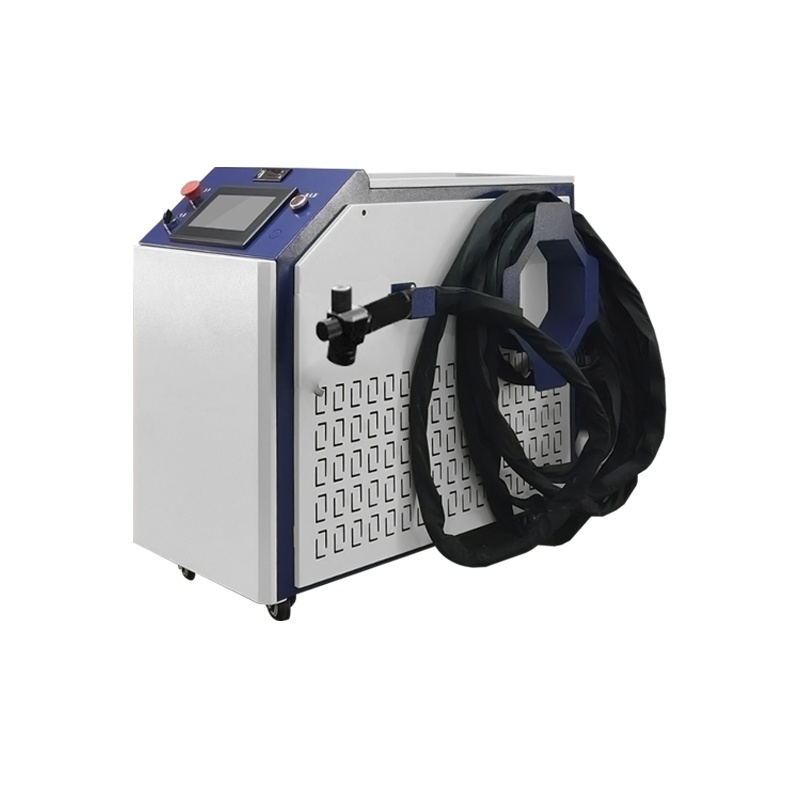
- Better fit when thermal stability under longer operation is a core requirement.
- Better fit when the cleaning cell is fixed and the plant can support a more complete operating setup.
- Better fit when uptime and process consistency across demanding jobs are worth more than maximum portability.
The corresponding water-cooled handheld pulsed laser cleaner page is a useful product reference, but buyers should still validate the final route with the real contamination and required finish instead of assuming cooling alone solves the process decision.
Heat Management, Duty Cycle and Job Stability
The biggest mistake in this comparison is to turn cooling into a brochure argument instead of an operations argument. In practice, the right cooling route depends on how the machine is actually expected to run. A maintenance team doing selective cleanup between other jobs faces a different duty-cycle reality from a production cell that must hold the same cleaning quality through repeated long operating windows.
That is why industrial buyers should define the operating boundary before judging the machine. Ask these questions in writing:
- Will the machine be used in short selective bursts, or does the plant expect long sustained cleaning periods?
- Is portability a real business need, or only a nice-looking feature on paper?
- How stable is the workshop environment, including ambient heat, dust management and ventilation?
- How costly is an unplanned pause if the process drifts or the operator must stop for recovery or maintenance?
- Does the cleaning target change from job to job, or is this a repetitive standard process that rewards a more fixed stable setup?
When this section is handled correctly, the buyer ends up comparing the total operating window instead of a single marketing moment. That is also why CNMarking should receive the job pattern together with the sample photos. Without the rhythm of the work, the cooling recommendation is incomplete.
Maintenance, Downtime and Cost Inputs
Cooling routes create different maintenance and cost profiles, so the evaluation should cover the whole station rather than only the machine headline. Air-cooled machines may reduce deployment friction and simplify certain workflows, which can save labor in maintenance-heavy environments. Water-cooled machines may repay their greater system complexity if the application needs longer sustained uptime and the plant already supports disciplined service.
| Operating question | What to compare fairly |
|---|---|
| Setup and deployment | Compare how quickly the machine can be put to work where the cleaning problem actually appears. |
| Maintenance rhythm | Compare optics care, extraction discipline, cooling-system upkeep, operator handling and who actually performs the service. |
| Downtime exposure | Compare what happens when the process must run for longer than expected, when ambient conditions shift, or when service discipline is weak. |
| Utilities and support | Compare the real plant readiness for electrical load, ventilation, maintenance access, and whether the machine is field-mobile or fixed. |
| Quality-adjusted cost | Compare not only machine ownership but also travel, setup, stoppages, rework, missed takt and cleaning consistency across the real production schedule. |
The strongest B2B decision is usually the one that matches the actual maintenance culture of the plant. A theoretically better cooling route can still fail commercially if the operator team cannot maintain it well, or if the process is deployed in a workflow it was never meant to support.
How to Run a Fair Sample Comparison
- Define the real job: material, contamination, target finish after cleaning, and whether the task is selective or broad-area removal.
- Write the operating rhythm before testing: short maintenance jobs, batch work, repeated line use, or long sustained service windows.
- Compare air-cooled and water-cooled options against the same acceptance rule: cleanliness, substrate condition, visible finish, downtime tolerance and operator workflow.
- Record setup time, warm-up or preparation burden, interruptions, ease of handling, and the inspection result after cleaning.
- Judge the result by total process stability and total operating burden, not by a single headline claim or a one-minute demo clip.
Once the job boundary is clear, the next step is to review the laser cleaning machine category, compare the likely product route, and send the part details through contact-us. That is the point where a supplier can give a responsible recommendation without inventing universal settings or unsupported duty claims.
CTA: Match Cooling Choice to the Real Duty Cycle
If your team is deciding between portable air-cooled flexibility and more sustained water-cooled operation, send CNMarking the part photos, material, contamination type, expected shift pattern, and whether the job is field service or fixed-station production. Pair that with the laser cleaning machine category, the air-cooled cleaner page, the water-cooled cleaner page, and contact-us so the recommendation is based on the real process boundary.
The best cooling route is the one that protects quality, uptime and operating discipline on the real job, not the one with the simplest generic sales claim.
Frequently Asked Questions
When is an air-cooled laser cleaning machine usually the better fit?
Air-cooled units are usually the better fit when the job values mobility, simpler utility demands, faster deployment, and moderate-duty cleaning on parts where the process does not need long sustained heavy-load operation.
When is a water-cooled laser cleaning machine usually the better fit?
Water-cooled units are usually the better fit when the application needs longer sustained operation, stronger thermal stability, heavier continuous workloads, or a process window that is easier to hold under demanding plant conditions.
Can cooling choice be decided by power headline alone?
No. Buyers should judge cooling together with duty cycle, contamination type, part value, utilities, operator workflow, maintenance capacity, and the real cleaning target instead of a single headline power or speed claim.
What should a buyer send before asking for a recommendation?
Send part photos, material, contamination type, required finish after cleaning, planned shift pattern, environment, and whether the process is selective cleanup, broad rust removal, paint stripping, weld preparation or another industrial task.