
A Comprehensive Analysis of Pulsed Fiber Laser Cleaning Machines: History, Applications, and Trends
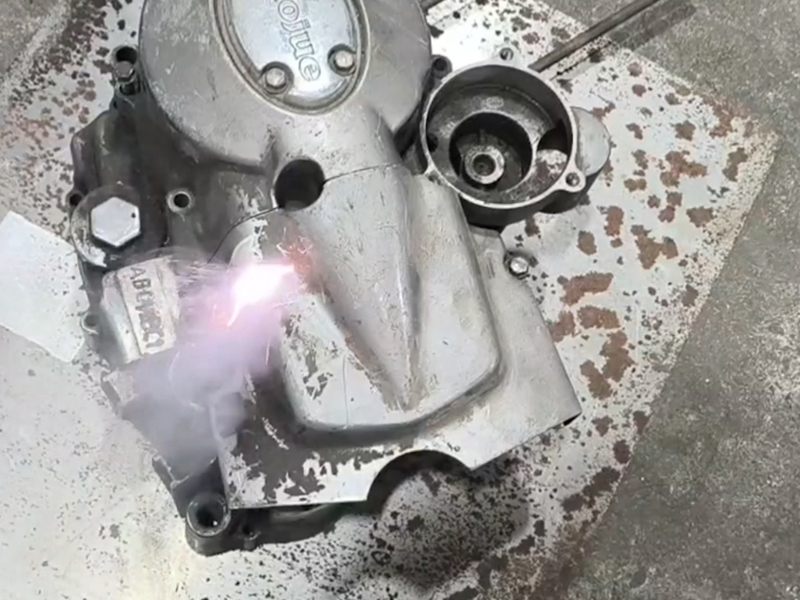
People have long used MOPA fiber laser markers for jobs such as precision paint removal and surface polishing. In recent years, the growing popularity and production of MOPA fiber lasers has lowered their price per watt. Consequently, the use of pulsed laser cleaning machines has grown in popularity and has emerged as a new application of lasers. This detailed analysis will cover the principle of pulsed laser cleaning, its application history, technical performance, and application trends. It will help you make informed purchasing decisions and avoid wasting time and money on mismatched products.
History of Pulsed Laser Cleaning Machine
In 1965, Nobel Prize winner Arthur L. Schawlow first used pulsed laser irradiation on ink-printed paper. The ink vaporized quickly while the paper remained undamaged. Then, in 1969, Bedair, S.M. and others used a Q-switched laser to remove oxygen and sulfur from the surface of nickel, introducing the concept of "laser cleaning." This concept was first introduced. Subsequently, in 1973, John Asmus team became the first to use lasers to clean cultural relics. They cleaned various relics, including Leonardo da Vinci frescoes and statues.
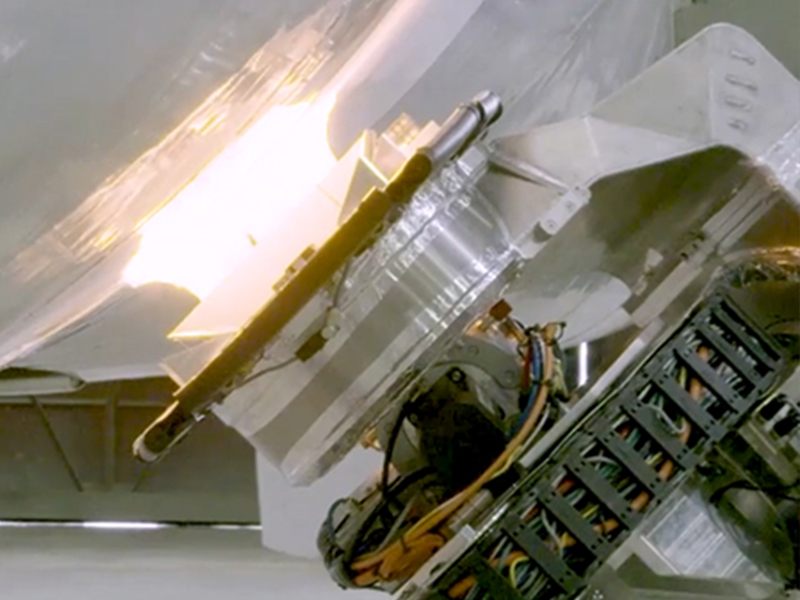
Early lab-grade applications typically used Q-switched CO₂ laser tubes to produce pulsed laser beams. These lasers have long wavelengths, such as 9.3, 10.2, and 10.6 μm. They are not easily absorbed by metals and other materials, enabling them to clean metal substrates completely non-destructively. This method is still used in some automotive and aerospace applications. For example, aircraft coatings are cleaned using lasers in conjunction with large-format robotic and mobile tools. These tools can clean large, wide-body technologies in two days, which enables airlines to quickly change coatings.
Pulsed fiber laser cleaners share similar principles and applications with CO2 pulsed laser cleaning systems. However, they were developed from MOPA fiber laser marking technology and therefore offer a cost-effective alternative for high-power laser cleaning. These cleaners typically have a wavelength of 1060–1080 nm, which metal materials can better absorb, making them more efficient at removing metal corrosion and oxides. Additionally, 532-nm green and 355-nm ultraviolet laser cleaners use solid-state fiber lasers to multiply the frequency. However, these systems are expensive and less common, so they will not be discussed in this article.
How a Pulsed Laser Cleaning Machine Works
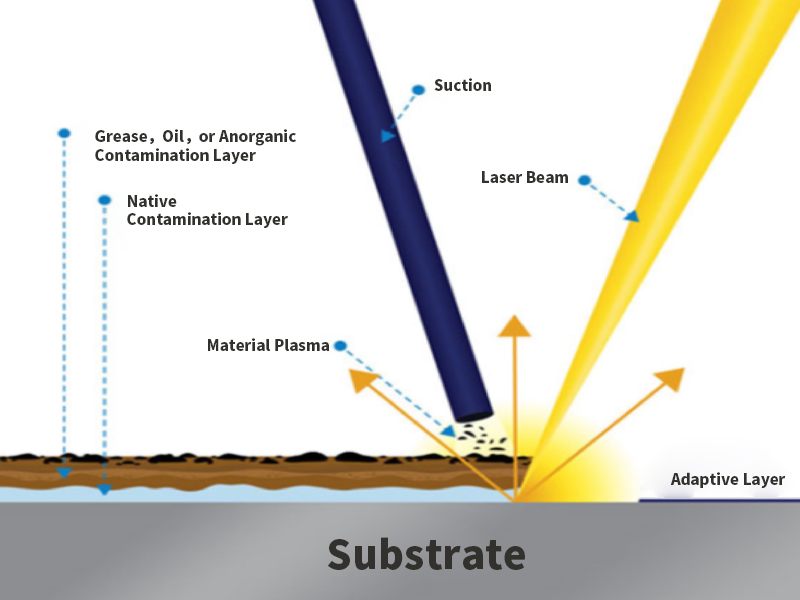
Today, most pulsed laser cleaning machines use MOPA fiber lasers. These lasers offer adjustable pulse widths and frequencies. Users adjust these settings to ensure that the laser beam's energy is sufficient to ablate and vaporize surface oxidation, rust, coatings, paint, oil, residue, and other contaminants from the substrate without damaging it.
Pulsed fiber laser cleaners are derived from MOPA fiber laser marking machines. Consequently, they typically employ an X-Y 2D scanning galvanometer to direct the laser beam and an F-Theta lens to focus it at a specific distance.
Pulsed fiber laser cleaners were developed from MOPA fiber laser markers. Therefore, they also employ diode-pumped solid-state lasers (DPSS), power amplification through doped fibers and modulation cavities, a X-Y 2D scanning galvanometer to control the laser beam's direction, and an F-Theta lens to focus the laser beam at a specific distance.
Advantages of Pulsed Fiber Laser Cleaning Machines
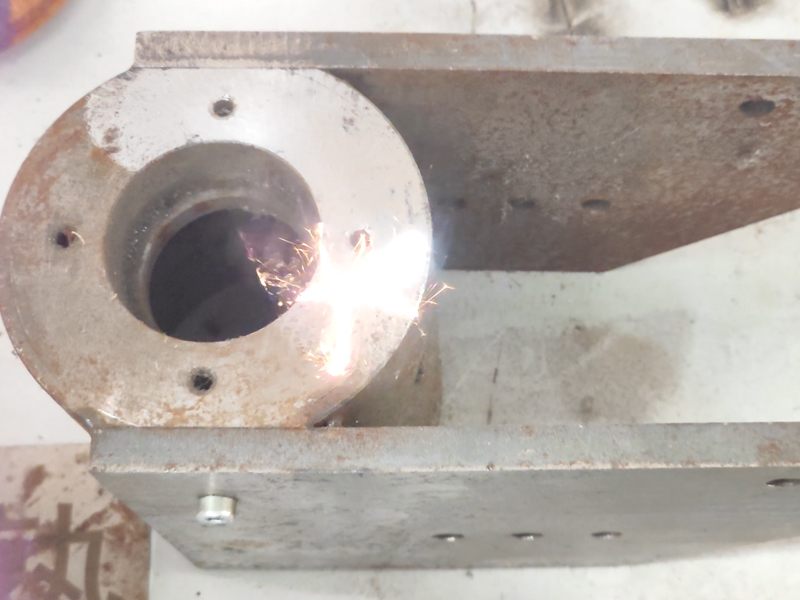
The following is a list of some of the core factors that have led to the development and application of pulsed fiber laser cleaners in recent years:
High Cleaning Efficiency: The descaling efficiency for thin rust layers of 25 μm or less is as follows:
1.1 m²/h with 100 W and 1.5 mJ of energy per pulse;
1.5 m²/h with 200 W and 1.5 mJ of energy per pulse;
4m²/h with 200 W and 5 mJ of energy per pulse;
7 m²/h with 300 W and 12 mJ of energy per pulse;
Even the most basic efficiency of 100 W is several times higher than that of conventional phosphoric or hydrochloric acid descaling.
Low Consume and Maintain: fiber laser systems are optically simple, offering excellent longevity and low maintenance. They typically last up to 100,000 hours. Pulsed laser cleaning rarely malfunctions when operated with air blowing correctly. Several systems sold as early as 2017 have not experienced any disruptive failures.
Contactless Cleaning: the non-contact cleaning method is ideal for hard-to-reach narrow corners that cannot be cleaned with manual chemical descaling. The scanning microscope can be fixed to enable semi-automatic or fully automatic cleaning. Some of our early customers have achieved fully automatic cleaning by fixing the scanner with tie-wraps or other means and using the motion of the assembly line itself.
High Quality-Price ratio: A pulsed laser cleaner provides better cleaning results than continuously wave (CW) fiber lasers and can clean a wider variety of materials. It has a lower thermal effect than CO2 lasers and is more effective at removing rust and oxides. Overall, this system is much less expensive than CO2, green, or UV laser cleaning systems.
Eco-friendly and Sustainability: pulsed fiber laser cleaning does not require the use of media or consumables, and its ablation or excitation vaporization produces only a small amount of airborne particles, generating virtually no pollutant emissions, and ensuring that the health of employees is not affected by the use of proper masks. In addition, some customers in the pharmaceutical, medical device and chemical industries require closed cabinets with silicone sealed hand zones and extraction systems to prevent particles from escaping and affecting the entire clean plant.
What Materials Can Be Cleaned by a Pulsed Fiber Laser Cleaner
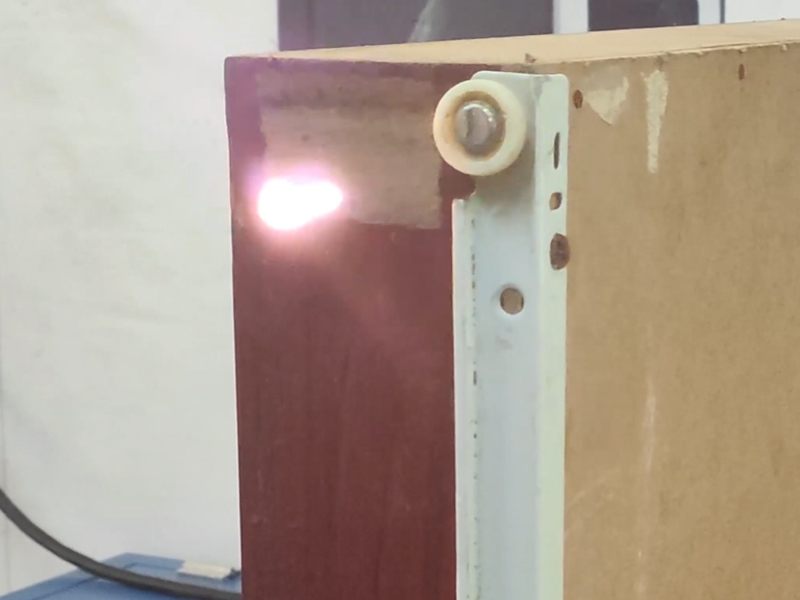
Metals: for pulsed fiber laser cleaning, metals are the most common cleaning substrates. Pulsed fiber laser cleaning can effectively remove oxidation or rust from the surface of many metal materials, including steel, aluminum, copper, brass, titanium, nickel-based alloys, galvanized metals, aluminum alloys, titanium alloys and more metallic materials without damage.
Oil and Water-based Paint: Pulsed laser cleaning is particularly effective at selectively removing oil and oil- or water-based paint layers. Setting the laser parameters so that no damage is caused to the substrate — usually metal, such as steel or iron — allows for the fast, non-destructive removal of oils and lacquers.
Plastics and Rubber: pulsed fiber laser cleaning is an effective method for cleaning plastics and composites that can withstand high temperatures. However, to prevent roughening, melting, and changes in physical properties (e.g., shear and tensile strength), the frequency, pulse width, and power of the laser must be precisely controlled. Additionally, coatings formed by spraying and residues from plastic and rubber in injection or blow molds can be efficiently removed by pulsed fiber lasers.
Silicon Wafers: silicon wafers are used as the core material for IC manufacturing, and the cleanliness of their surface directly affects the performance and yield of the chip. The pulsed fiber laser cleaning technology can effectively remove tiny particles on the surface of silicon wafers, such as alumina, silicon dioxide, gold, molybdenum, and silicon.
Glass and ceramics: when appropriate laser cleaning parameters are used, pulsed laser cleaning can effectively remove contaminants from glass and ceramic surfaces without harming the substrate. Although it has become an irreplaceable cleaning method in some industries, it has not yet become widespread, as discussed in the industry section below.
Stone and Concrete: pulsed fiber laser cleaning removes graffiti, paint, dirt, and other contaminants from stone, concrete, and masonry. Although not as efficient as using high-pressure water jets or traditional chemical cleaners for large areas, this method has become popular because it does not require the use of large quantities of clean water and has no pollutant emissions.
How Industries Deploy Pulsed Laser Cleaning
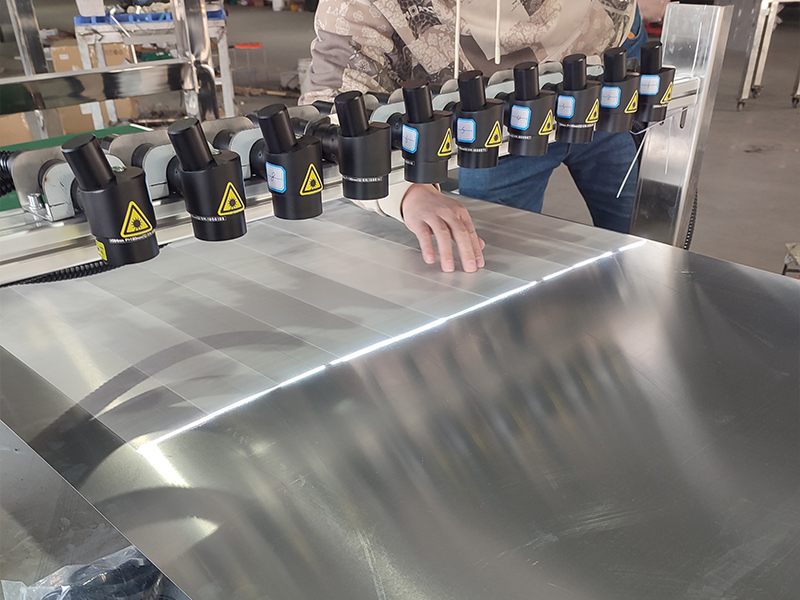
Automotive: pulsed fiber laser cleaners are used to clean weld seams, remove oxidation from aluminum frames and engine surfaces on new vehicles, and on older vehicles to remove engine carbon deposits, exhaust oil, and old paint for repainting and refurbishing.
Aerospace: this industry uses pulsed laser cleaning to remove oxides and weld marks from parts, thereby ensuring their overall mechanical strength.
Electronics and Appliance: Pulsed fiber lasers are now commonly used to clean gallium nitride (GaN) and silicon carbide (SiC) wafers. These wafers are used in electrical parts, optical glass (used in lens sets and displays), and precision ceramic parts, especially in small sizes.
Railway: descaling and maintaining railway tracks is essential to railroad transportation. Some railroad operators have installed multiple pulsed fiber laser cleaners on a trolley to efficiently descale tracks while ensuring no area is left untouched.
Artifact Cleaning: Pulsed fiber lasers have a long history of use for non-destructive cleaning and restoration of wooden and porcelain artifacts. Additionally, the copper statues, doors, windows, knobs, and railings of old buildings can be cleaned and restored.
Municipal Cleaning: Using pulsed fiber lasers to clean graffiti from building surfaces, metal guardrails in public areas, statues, bridges, and steel cables has become a popular trend that significantly reduces long-term maintenance costs.
Key Points to Consider When Choosing a Pulsed Fiber Laser Cleaner
Power & Energy Per Pulse: send your samples for real-world testing of different combinations of power and energy per pulse to find the best configuration that balances cleaning efficiency, quality, and price;
Single- or Multi-mode Laser: single-mode lasers typically have lower power and higher beam quality, with values closer to 1. They have concentrated energy that can clean surfaces efficiently but is more likely to damage them. In contrast, multimode lasers have more uniform beam quality, can be used at higher powers, and are better suited for precision cleaning with minimal damage. However, they are usually more expensive than single-mode lasers of the same power.
Air- or Water-Cooling: currently, air-cooled pulsed fiber laser cleaners of 500W or less can meet most users' needs, but the temperature and humidity of the environment in which they are used must be monitored. For heavy-duty automated cleaning, especially in unmanned factories operating 24/7, water-cooled lasers and water-cooled scanning mirrors are more stable.
If you are looking for an optimal solution or a reliable partner for laser cleaning in the long term, feel free to contact us.