
Contact Us
What Affects Dot Peen Marking Consistency on Metal Parts?
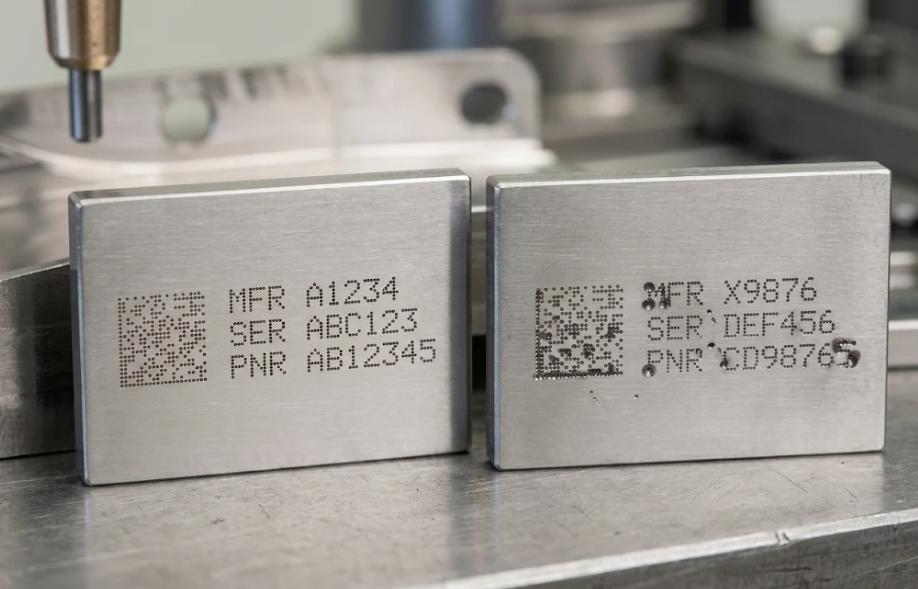
In industrial manufacturing, dot peen marking should yield consistent results from one piece to another, as well as from batch to batch. Even when using the same machine and settings for marking, inconsistencies such as varying marking depth, dot size, character legibility, and positioning may arise.
It is important to note that these inconsistencies do not necessarily mean machine failure. Inconsistencies in air pressure, stylus wear, material characteristics, workpiece positioning, and marking settings can all affect the outcome.
Understanding how these factors interact helps manufacturers maintain consistent identification marks, reduce rework, and improve the reliability of part traceability.
How Does Marking Consistency Affect Metal Part Identification?
Marking consistency is the capability of a dot peen marking machine to generate comparable results through repeated marking processes. It is not just about being able to make the same marking depth.
Three factors are especially important:
- Marking depth: The individual marking should have consistent depth to ensure clear and durable characters.
- Dot shape and spacing: The size and spacing of each dot should be consistent to avoid distorted characters or inconsistent patterns.
- Character and code readability: The serial numbers, identification codes, and Data Matrix code should remain legible and meet the necessary inspection standards.
These factors are interlinked but may not always vary at the same time. For instance, the mark may appear visually consistent but fail in a barcode scan. When considering permanent identification for traceability purposes, both aspects need to be taken into account.
What Machine-Related Factors Affect Dot Peen Marking Consistency?
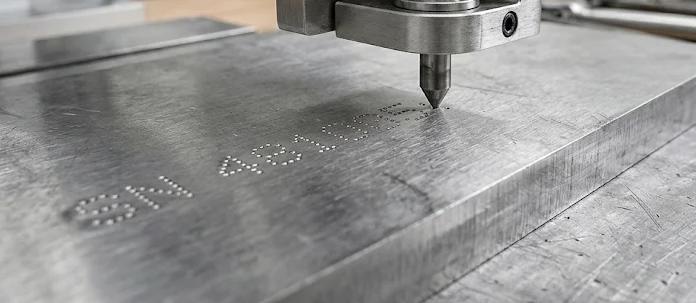
The effectiveness of the machine and pneumatics will directly impact the consistency of the impact made by the stylus on the metal. There are several aspects of the machine to consider.
Air Pressure and Pneumatics
During the process of pneumatic dot peen marking, the stylus is powered by compressed air to create each impression on the metal surface. Variations in air pressure can affect the impact energy delivered by the stylus, resulting in differences in marking depth and dot formation.
However, simply checking the pressure gauge is not enough. It is necessary to check the pressure that is available during use. Unstable air supply, small-diameter air lines, leaks, and lack of compressor capacity can negatively impact the machine’s performance.
Stylus Wear and Tip Geometry
The stylus is the part of the machine that comes into contact with the workpiece; therefore, its condition will have an important effect on the quality of the markings.
Repeated impacts will cause wear of the stylus tip. Changes in tip geometry will influence the size and shape of individual marks, causing less consistent characters. An inappropriate tip will also make marks less consistent on various materials.
Periodic checking of the stylus and replacement of worn parts will ensure consistent results. The appropriate tip geometry must be selected as well.
Marking Gap and Head Alignment
The Marking Gap and head alignment will affect the contact between the stylus and the workpiece.
An incorrect or inconsistent marking gap can affect the stylus’s impact conditions, potentially resulting in variations in marking depth and quality. The wrong head alignment will create variations in the contact conditions, especially on curved surfaces.
It is therefore vital to keep the Marking Gap constant and have proper head alignment, especially in cases where there are varied heights of the workpieces.
How Do Material and Workpiece Conditions Influence Marking Results?
Not even a well-calibrated machine can create identical marks on all metallic surfaces due to the influence of material and workpiece factors.
Material Hardness and Surface Finish
Various materials react to the force applied by the dot peen stylus in their own way. Different metals like aluminum, carbon steel, and stainless steel have different mechanical properties and thus would react differently to identical machine settings.
Surface conditions also play a role. Rough surfaces will make each individual dot less visible, and surface oxidation, rust, coating, or contamination can influence the appearance of the final mark.
For manufacturers working with various materials, machine settings need to be calibrated according to the specific material of the workpiece. A setting that works for one type of steel may not work for another.
Positioning of Workpieces and Fixture Stability
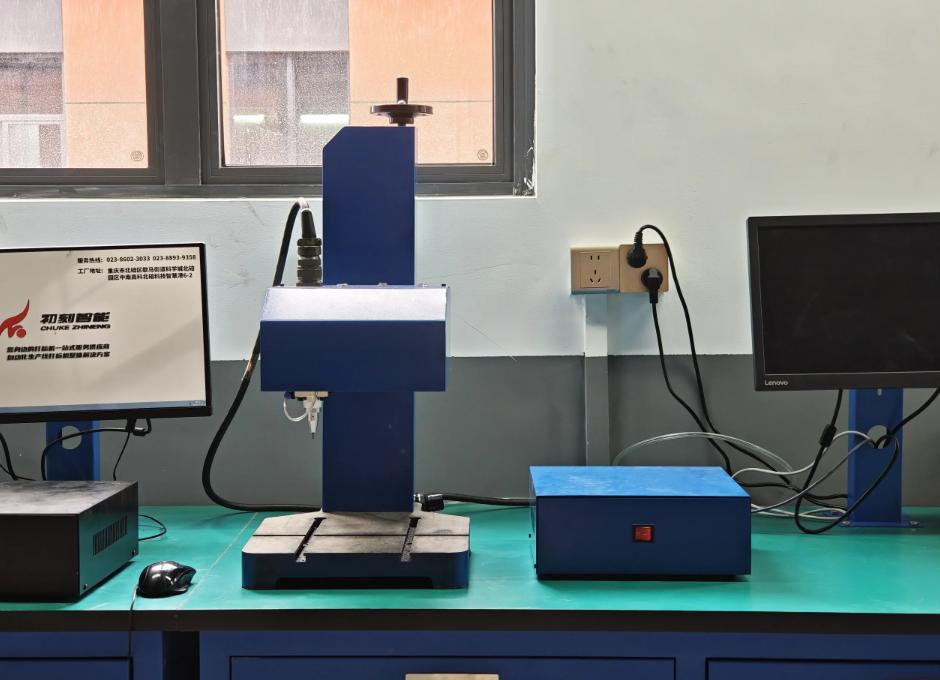
Uncontrolled movement of the workpiece is another common cause of inconsistent marking results.
When workpieces are moved or vibrated during marking, individual dots may be out of place. It will cause deformed letters, incorrect spacing and distorted identification codes.
It gets even more obvious when marking smaller parts, round parts, or odd-shaped objects.
To avoid any problems, it’s better to use good fixtures and clamping mechanisms that ensure stability for each part. For mass production, positioning of each workpiece must be consistent.
Even small differences in workpiece height, clamping position, or surface orientation can change the relationship between the marking head and the metal surface. In batch production, these variations may accumulate and lead to noticeable differences between individual parts.
How Do Marking Parameters and Maintenance Affect Repeatability?
Consistency in marking also hinges on the configuration and maintenance of the machine during production. In spite of identical conditions for both equipment and workpieces, changes in parameters or wear of parts can gradually influence the outcome.
Marking Speed, Impact Frequency, and Dot Spacing
Parameters of marking speed, impact frequency, and dot spacing interplay to influence the appearance of the finished character.
If the appropriate relationship between marking speed and impact frequency is not provided, the spacing between each dot will be irregular. Too much spacing will produce an effect of separation of characters, while too little will result in overlapping impressions.
This will depend on the necessary size of characters, properties of materials, depth of marking, and dimensions of codes. It is recommended that manufacturers test representative workpieces before production.
Routine Maintenance and Parameter Control and Routine Maintenance
Routine maintenance aids in avoiding any gradual deterioration in the quality of marking.
Key things to check:
- Wear, damage, and geometry of the stylus.
- Pneumatic connections and stable airflow.
- Looseness and unusual wear of mechanical parts.
- Alignment of the marking head and the substrate.
- Marking parameters recorded for various workpieces and applications.
It is especially beneficial to keep records of proven parameters for routine production. If a new batch of workpieces comes up, people could use the information on those parameters that were tested before and adjust in case of any variations.
How Can Manufacturers Achieve Consistent Dot Peen Marking Results?
Consistent marking entails control over the whole process and not just controlling one of the machine settings. There are some steps manufacturers can take to enhance repeatability:
- Test Representative Workpieces: This includes checking the type of material, its surface, and geometry prior to production.
- Define the right marking parameters: Adjust the air pressure, marking speed, impact frequency, and dot spacing depending on the required results.
- Use stable fixtures: This involves ensuring that the workpiece is securely placed during the marking process.
- Check the important components: This includes checking the stylus, pneumatic system, and mechanical connections.
- Check the marking quality: This can be done through visual inspection and barcode scanning.
The marking equipment itself also plays an important role. The ideal pneumatic dot peen marking machine would fit the workpiece size, marking area, production volume, and required identification quality.
Zixu Marking offers pneumatic marking solutions for various industrial metal marking applications. Manufacturers can check the best machine configuration based on their workpieces and production needs.