
Contact Us
Malaysian Customer Completes Factory Acceptance Test on a Fully Enclosed Laser Label Marking & Cutting System
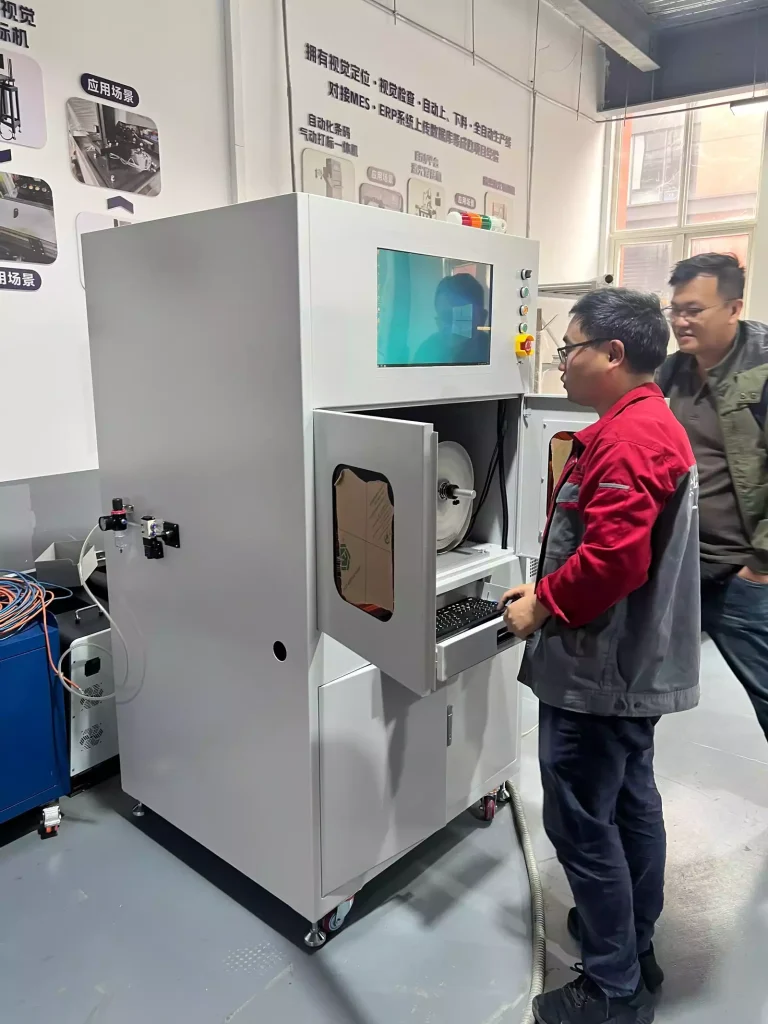
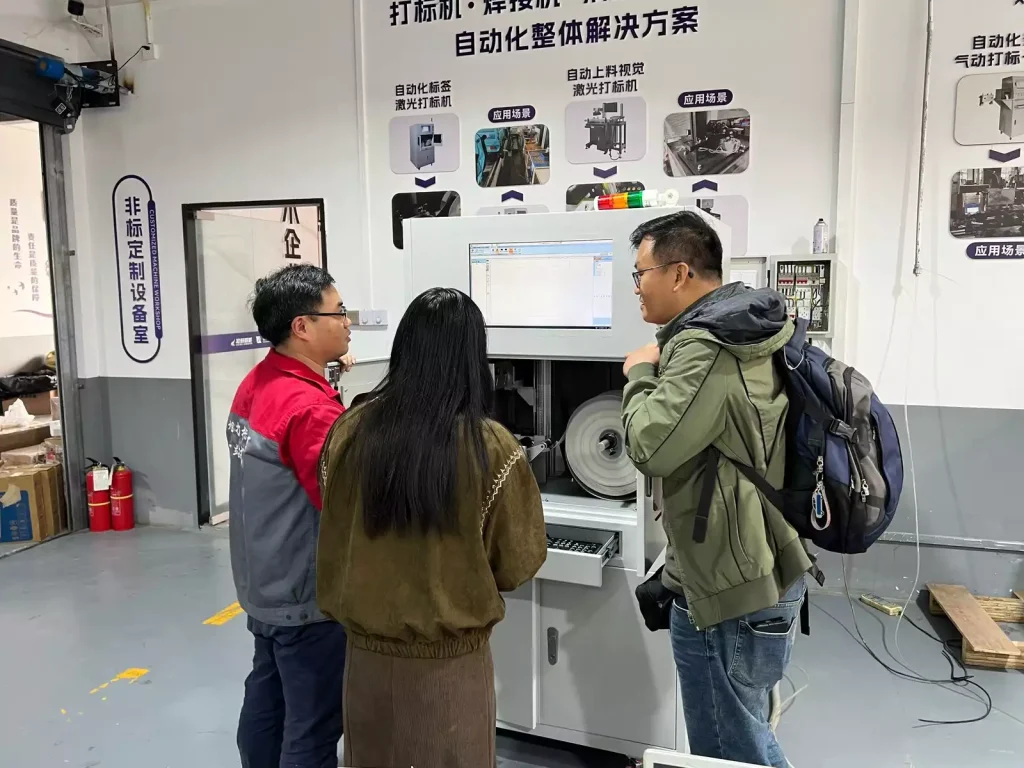
Chongqing, November 2026 — A customer delegation from Malaysia visited the factory of Chongqing Zixu Machine Works. to run the factory acceptance test (FAT) on a custom fully enclosed laser system that marks and cuts labels in a single pass. The test covered six areas — machine structure and safety, web feeding and tension, mark position and content, cutting quality, software data handling, and continuous operation — after which the machine moved into disassembly and export packing.
Two Machines' Work, Now Done in One Pass
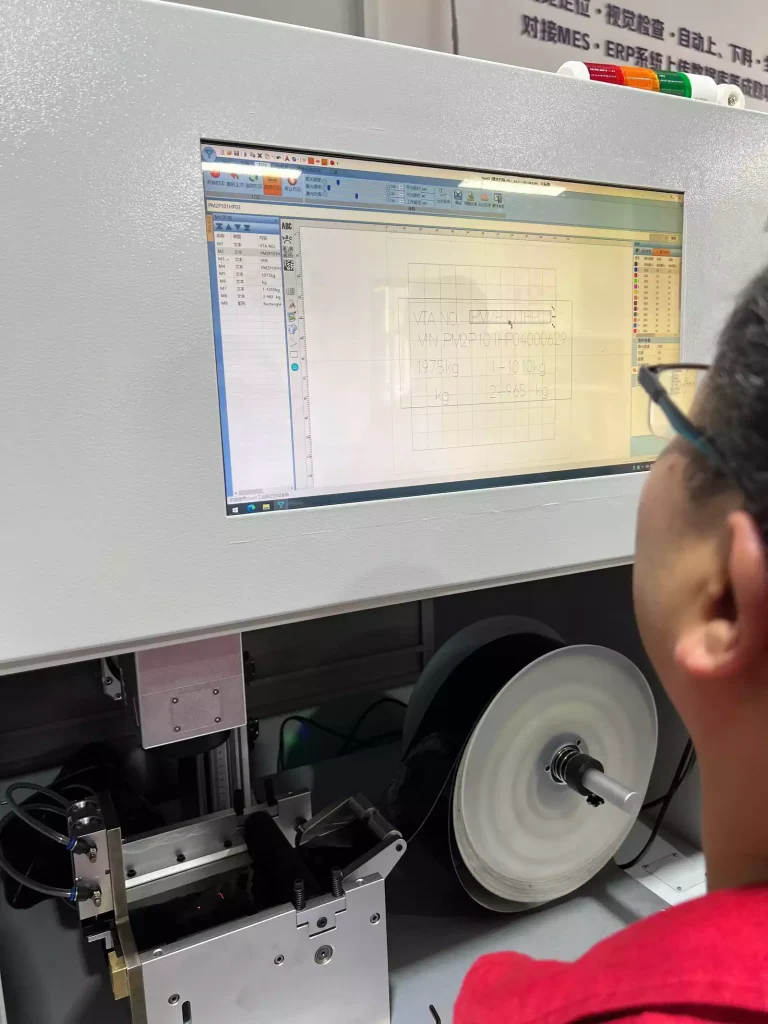
The customer's labels carry traceability data: VTA NO. (vehicle type approval number), VIN, and unit weight. Under conventional processing, this kind of label is marked on a marking machine first, then transferred to a die cutting or slitting machine for separation — two loadings, two alignments, and a manual transfer in between. That transfer and re-registration is exactly where offset and misprint most often originate.
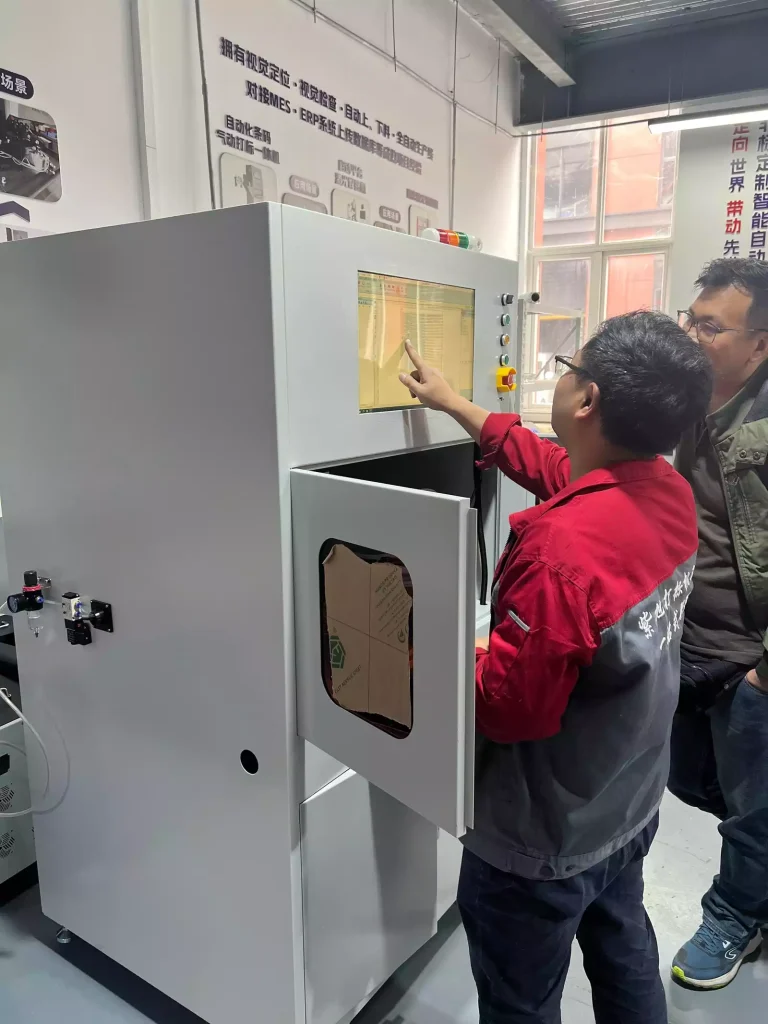
This system puts the marking station and the cutting station on one continuous web path. The label roll unwinds through a guide and tension unit into the marking zone; once marking is complete the web runs straight into the cutting unit. One loading completes both operations. During the acceptance test, the customer entered their own production data directly into the machine's industrial touchscreen — VTA NO., VIN, unit weight, and batch — and checked the marked content and layout line by line.
Fully Enclosed: Three Operations Inside One Cabinet
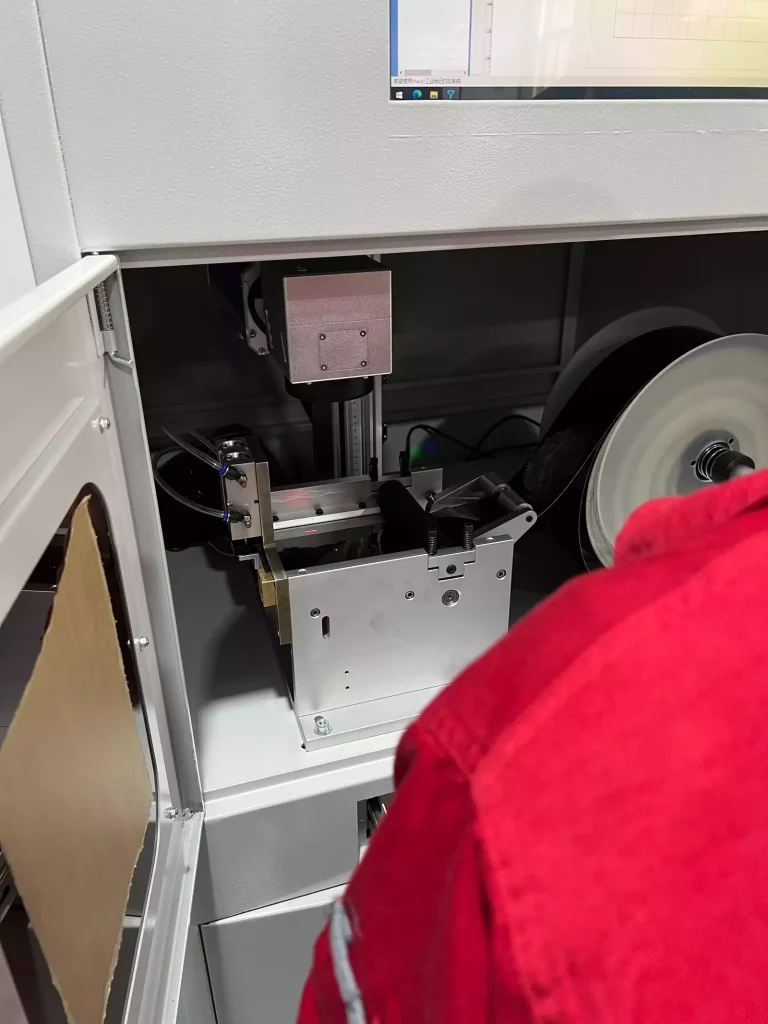
The machine is a floor-standing enclosed cabinet. The laser marking head, web feeding mechanism, and cutting unit all sit inside; the front panel has a service door with an observation window, and the operator side carries a large industrial touchscreen.
- Dedicated working chamber — the marking head is mounted on an adjustable lifting column, above precision linear guides and pneumatic clamping; the full web path stays visible through the window.
- Controls and safety on one panel — the operator panel integrates the emergency stop, and a three-colour status tower on top makes running, standby and alarm states readable from several metres away.
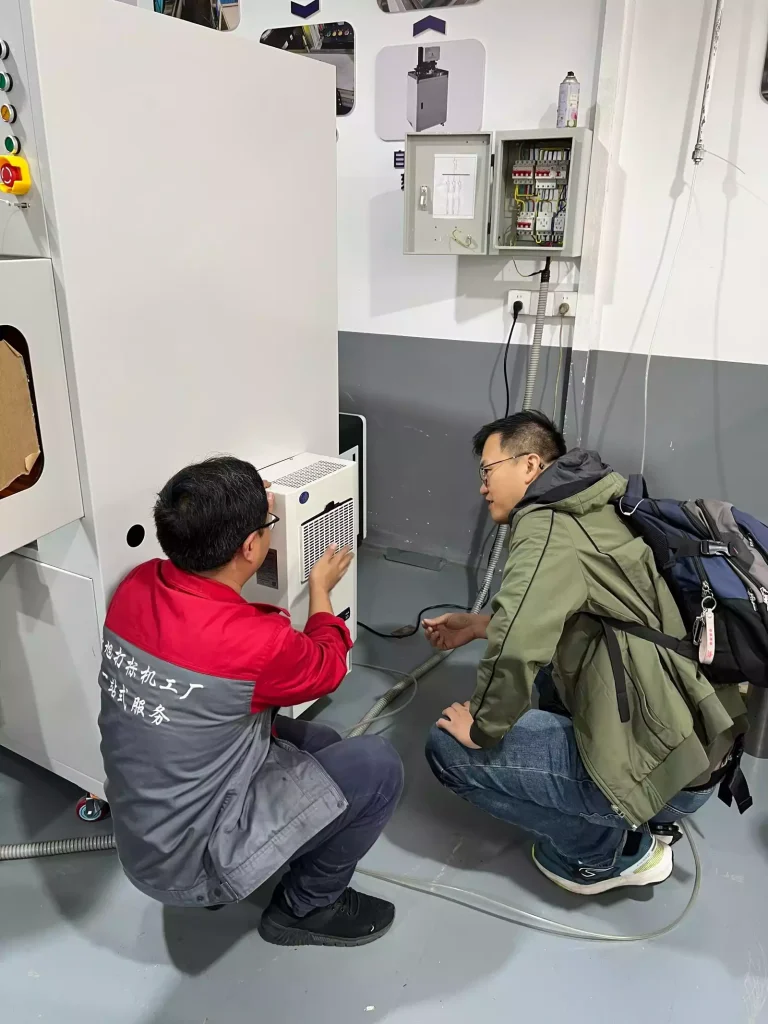
- Separate air circuit — the pressure regulator and filter assembly is mounted on the cabinet side, outside the main enclosure, for easier routine maintenance.
- Mobile and levelable — casters plus adjustable leveling feet support in-plant relocation and a stable floor setup.
The practical value of the enclosure is not cosmetic. Feeding, marking and cutting all happen inside the cabinet, so labels are never exposed or transported between process steps, operator intervention points are consolidated in one place, and the shop floor stays cleaner.
What the Acceptance Test Covered
Items 3 and 5 took the longest. The content printed on each label maps directly to the customer's line-level traceability requirements — fields cannot shift, and batch changes cannot introduce errors. The customer's own staff ran template and batch switching on the touchscreen while our engineers checked the marked output item by item; both sides then confirmed the acceptance results.
| # | Test item | Scope |
| 1 | Structure and safety | Cabinet structure, service door operation, emergency stop and status light, air connections |
| 2 | Web feeding and tension | Unwind stability at full and partial roll, web tracking, take-up neatness |
| 3 | Mark position and content | Position, font and barcode/QR readability checked against the customer's actual data fields |
| 4 | Cutting quality | Cut edge cleanliness, label dimensional consistency, no adhesion after cutting |
| 5 | Software and data fields | Template recall, field replacement, batch job switching |
| 6 | Continuous operation | Extended mark-and-cut run, monitoring position drift and restart consistency |
How a Custom Build Actually Comes Together
The workshop carries a sign reading “非标定制设备室 / Customized Machine Workshop”, and this machine followed that route:
Requirement review → sample marking and process validation → structural and web-path design → assembly and in-house debugging → customer FAT on site → disassembly and moisture-proof packing → sea freight → overseas installation, commissioning and operator training
For custom equipment, the FAT is the step that cannot be skipped. The machine runs the customer's actual material, actual data fields and actual cycle before it leaves the factory — so problems are solved in Chongqing rather than after the machine has crossed an ocean.
Next Steps
Following acceptance, the system will be disassembled, packed with moisture protection, and shipped to Malaysia by sea. Zixu engineers will travel with the machine to handle installation, commissioning and operator training, and to finalise the label specification for the customer's production line.
Evaluating an Integrated Marking-and-cutting setup?
These are the situations where a single-pass system usually pays off:
- Fully enclosed structure — labels are never exposed or transferred between operations.
- Roll-to-roll production — long single-roll lengths with infrequent roll changes.
- Production-data driven — label content comes from VIN, batch and weight fields and must be replaced batch by batch.
- MES / ERP integration — traceability fields printed directly onto the label, less manual entry.
Send us your label material, dimensions, roll length and throughput requirement. We will run a sample marking test first to confirm mark quality and cut edge, then discuss the machine configuration.