
Contact Us
Laser Cleaning Before Welding: How to Prepare Metal Surfaces for Better Weld Quality
The quality of weld is influenced by many factors including welding parameters and the state of the metal surface. The presence of rust, oxides, oils, greases, or any other protective surface layer may prevent successful welding, leading to porosity, spatter, or uneven fusion.
Surface cleaning is done using traditional methods of grinding, wire brushing, or chemical treatment. Laser cleaning is an advanced non-contact method which removes unwanted layers using focused laser energy. Laser cleaning is beneficial when used correctly, as it provides a more consistent surface for welding.
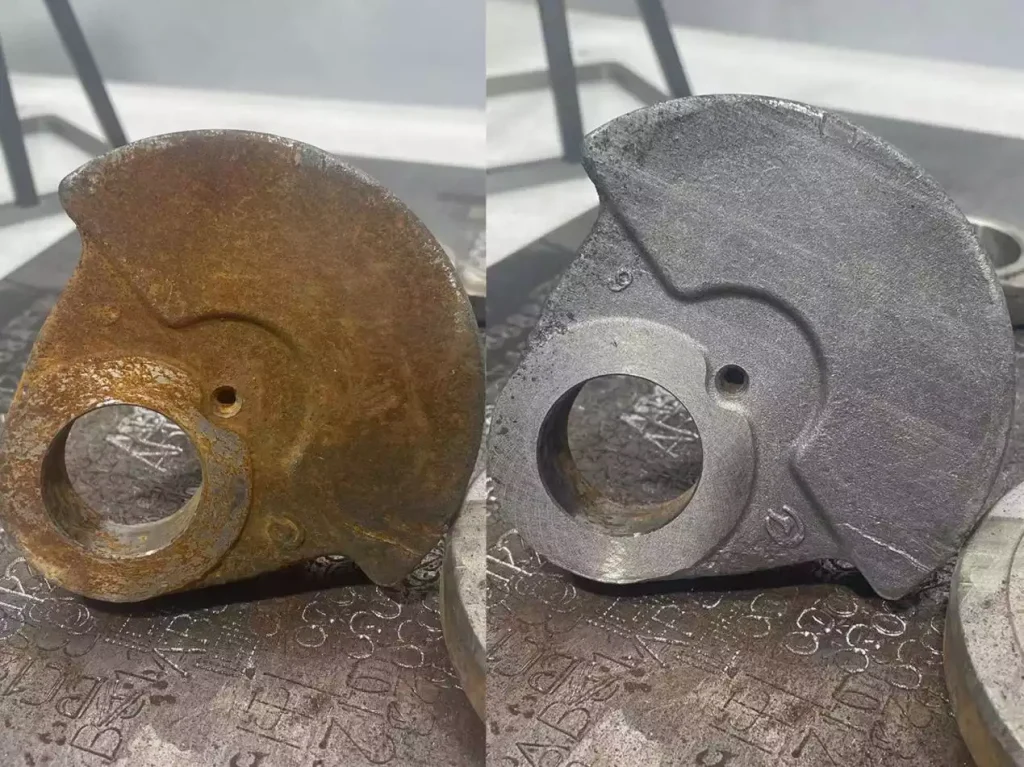
Why Surface Preparation Matters Before Welding
The contaminants present on the surface of the metal become exposed to heat during the welding process. The oil and grease will be subject to decomposition leading to emission of gases, hence increasing the likelihood of porosity. The rust and oxide films can prevent the metal from fusing, while the paint and other coating layers will generate fumes and residues.
Cleaning the surfaces will minimize the chances of defects in the welding process since it will create relatively uniform working conditions.
However, merely cleaning alone cannot guarantee defect-free welding. The joint design, shielding gas, welding parameters, and material condition also play a role in determining the final outcome.
Common Surface Contaminants and Their Impact on Welding
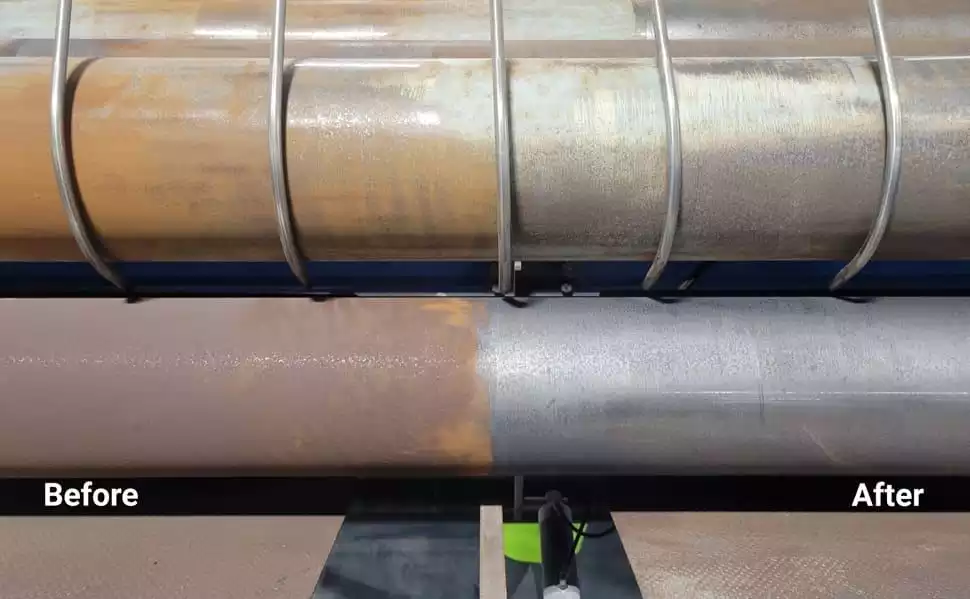
Different contaminants require different cleaning approaches. Understanding their sources and potential effects helps determine the appropriate preparation method.
| Surface contaminant | Typical sources | Potential impact on welding |
| Rust and mill scale | Storage, moisture, hot rolling | May cause inconsistent fusion and unwanted residues |
| Oxide layers | Natural oxidation, heat treatment | Can interfere with wetting and fusion, especially on aluminum |
| Oil and grease | Machining, lubrication, handling | May release gases under heat and contribute to porosity |
| Paint and coatings | Protective finishes, primers | Can generate fumes and contaminate the weld area |
The cleaning method should be matched to the type and thickness of the pollutant. Loose rust stains, firmly adhered oxide scale, thin oxide films and organic residues may require different treatment methods.
Special attention should be paid to paints and unknown coatings. Before laser processing, their composition should be checked and appropriate smoke extraction and safety measures should be taken.
Laser Cleaning for Different Metal Materials
Cleaning requirements vary with the material’s surface characteristics and welding application.
Aluminum Alloys
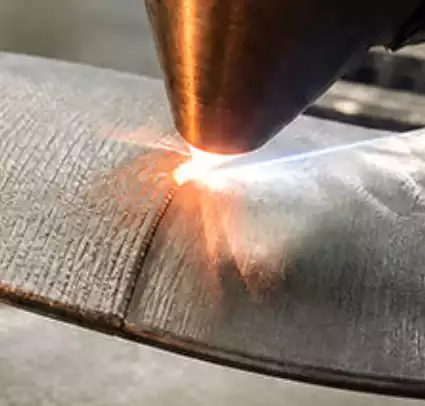
Aluminum will quickly form a stable oxide layer in the air. Due to the fact that the melting point of this oxide layer is much higher than that of the underlying aluminum, it makes the welding process more complicated.
Laser cleaning can remove the oxide layer and surface residues before welding. However, the energy input must be controlled to avoid excessive heating or damage to the substrate.
Stainless Steel
The surface of stainless steel may still have residual processing oil, fingerprints, oxide discoloration and processing residues. Laser cleaning can remove some contaminants without the need for grinding.
For applications that require high corrosion resistance and surface appearance, the cleaning parameters should be strictly controlled to avoid unnecessary changes to the surface.
Carbon Steel
During the storage and processing of carbon steel, rust and oxide scales are usually formed. Laser cleaning can remove these contaminants before welding, which helps to improve the surface uniformity.
For severe corrosion or thick oxide scales, multiple cleanings or pre-mechanical treatment may still be necessary.
Explore our 3-in-1 Laser Cleaning, Cutting and Marking Machine
Laser Cleaning vs. Traditional Weld Preparation Methods
Laser cleaning is not suitable for every situation. Its advantages and limitations should be evaluated against the requirements of the workpiece and production process.
| Cleaning method | Cleaning precision | Surface impact | Consumables | Typical applications |
| Laser cleaning | High, with controlled scanning | Non-contact; requires parameter control | No abrasive media or chemical agents | Localized rust and oxide removal |
| Grinding | Depends on operator | May remove base material | Grinding discs | Heavy rust and scale |
| Wire brushing | Suitable for loose contamination | Mechanical contact may leave scratches | Wire brushes | Light rust and loose residues |
| Sandblasting | Suitable for broad areas | Changes surface texture | Abrasive media | Large components and heavy contamination |
| Chemical cleaning | Depends on formulation | Depends on chemical compatibility | Cleaning chemicals | Selected oils and surface residues |
Laser cleaning offers precise, non-contact processing and can be integrated into automated production lines. However, grinding and sandblasting may remain more practical for heavy corrosion, while chemical cleaning can suit certain types of residue.
The best method depends on the contaminant, required surface condition, and production volume.
How to Achieve Effective Pre-Weld Cleaning
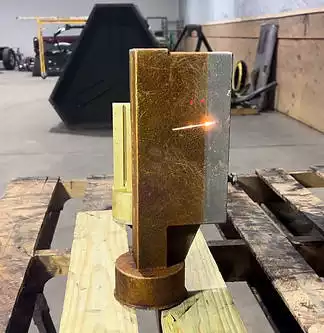
Effective laser cleaning requires matching the process to the material, contamination, and subsequent welding procedure.
Adjust Laser Parameters
Several parameters directly affect cleaning performance:
- Laser power: Influences cleaning capacity. Excessive power may damage or alter the base material.
- Pulse frequency: Affects how frequently laser pulses interact with the surface.
- Scanning speed: Determines the laser’s exposure time on each area.
- Focus position: Changes the spot size and energy density on the workpiece.
These parameters should be tested together. Suitable settings depend on the laser source, material, and thickness of the surface contamination.
Control the Cleaning Area and Inspect the Surface
It is important that the laser covers the welding area but without any unnecessary repeated coverage. Excess energy input could have an impact on the base metal. Therefore, representative workpiece testing prior to actual production is recommended.
Prior to welding, it is necessary to examine the surface for any remaining rust, oxide, oil or coatings.
Protection of the workpieces against moisture, dust and handling after cleaning but before welding is required.
Pre-weld cleaning is one step in the whole process of production. It is possible to improve the process consistency and decrease the risk of any contamination by choosing the right technique, controlling laser parameters and examining the surface before welding.
As far as the equipment selection is concerned, the testing using real metal material, surface contaminations and production needs is recommended.