
Handheld Pneumatic Scribe Marking Machine
Handheld pneumatic scribe marking machines are designed for marking workpieces that are too large, heavy or inconvenient to move to a fixed marking station. The operator positions the scribing head directly against the workpiece, allowing identification marks to be applied where the part is located.
Driven by compressed air, the scribing stylus moves along the marking path to create permanent grooves on the surface. This process produces no ejected metal chips and does not create a laser-related heat-affected zone. It is particularly suitable for applications such as VIN marking on steel plates, chassis components, and other metal structures.
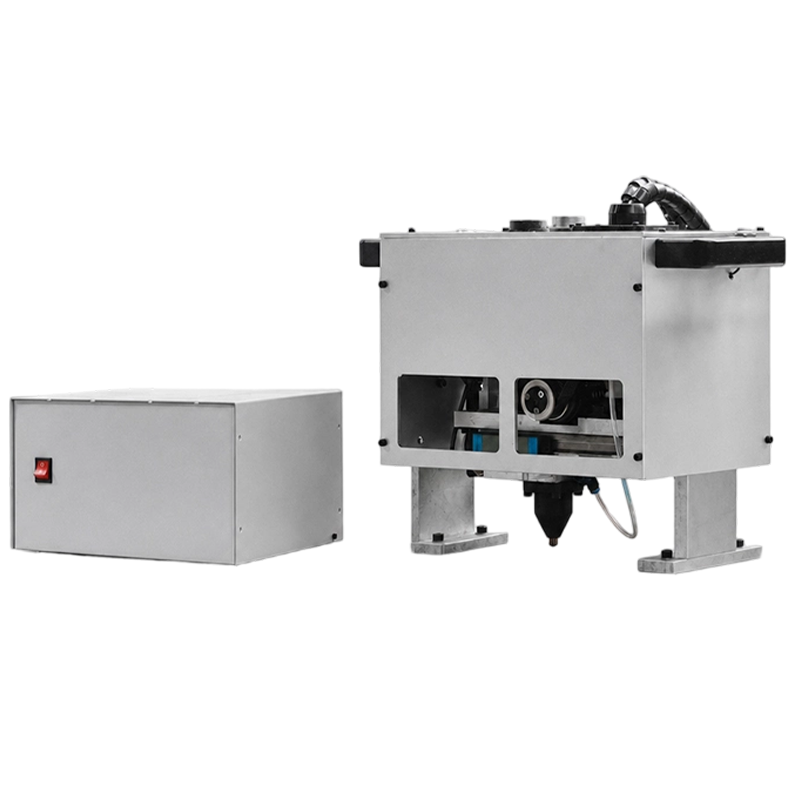
Key Features
- Portable, Direct-to-Part Marking: The handheld scribing head can be positioned directly on the workpiece, making it practical for large components and parts that are difficult to transport.
- Permanent Scribe Marks: The stylus forms grooves in the workpiece surface rather than printing on top of it, helping identification marks remain legible during subsequent handling and processing.
- No Ejected Metal Chips: The scribing process displaces the material along the marking path without the metal chip ejection associated with some machining processes.
- Adjustable Marking Depth: Marking depth can be adjusted from 0.01 to 1 mm, with repeatability of 0.02 mm.
- Flexible Marking Area: Standard marking fields include 120 × 30 mm and 150 × 40 mm, with other sizes available for customization.
- Low-Noise Operation: Operating noise is below 60 dB, with a compressed-air pressure requirement of 0.2–0.8 MPa.
Applications
Handheld pneumatic scribing is suitable for identification and traceability marking on metal workpieces that cannot easily be placed on a benchtop machine. Typical applications include VIN and serial number marking on vehicle chassis, steel frames, structural components and other large metal parts.
The operator can bring the scribing head to the marking position instead of moving the entire workpiece to a machine. This makes the equipment useful for production areas, workshops, and other settings where direct marking on assembled or oversized components is required.