
Laser Plastic Welding in 2026: Process Control, Thermal Stability and Production Planning
Laser plastic welding is becoming a more practical joining method for manufacturers that need clean welds, stable sealing and repeatable production quality. The technology is no longer limited to a few high-end automotive or electronics projects. It is increasingly discussed for sensor housings, automotive lighting, battery-related plastic components, microfluidic parts, medical device assemblies and waterproof electronic modules.
Recent market research points to steady growth. 360iResearch estimates the global laser plastic welding market at about USD 1.64 billion in 2025 and projects it to reach about USD 2.31 billion by 2032. Different reports use different market boundaries, but the direction is clear: buyers are paying more attention to precision plastic joining where ultrasonic vibration, adhesives or mechanical fastening create quality or cleanliness problems.
For production teams, the key question is not only whether laser plastic welding can make a strong joint. The real question is whether the complete process can stay stable across batches, operators, materials and production shifts. That is where material selection, fixture design, laser control, cooling, traceability and inspection planning become important.
How Transmission Laser Welding Works
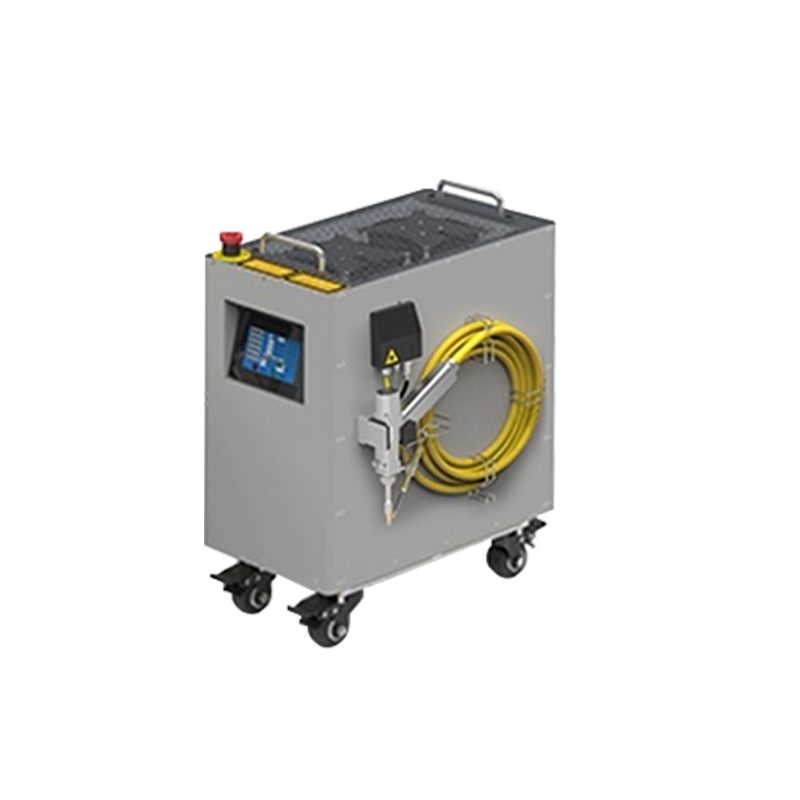
The most common plastic laser welding method is transmission laser welding. In this process, the upper plastic layer allows the laser beam to pass through, while the lower layer absorbs the laser energy. The absorbed energy turns into heat at the interface, and the heat melts the joining surfaces. With the right pressure and cooling behavior, the two layers form a sealed joint.
This method is valuable because it is non-contact, low-vibration and cleaner than many mechanical or adhesive processes. It can be a good fit for assemblies where particles, vibration or extra consumables are unacceptable. However, the process depends heavily on the optical behavior of the plastics. The upper material, lower material, colorant, absorber, part thickness and joint design all affect the final result.
Before choosing equipment, buyers should confirm the material stack. Important questions include:
- Is the upper layer transparent enough at the selected laser wavelength?
- Does the lower layer absorb energy consistently?
- Will additives, colorants or glass-fiber content change the weld window?
- Is the joint area flat enough for stable clamping pressure?
- Does the part require airtight, waterproof or only structural bonding?
If these questions are not answered early, even a high-power laser system may produce inconsistent welds.
Where Laser Plastic Welding Is Growing
Automotive applications are one of the strongest demand drivers. Tail lamp assemblies, sensor housings, battery-related connectors, fluid system parts and smart vehicle modules often need clean joining with stable sealing. Electric vehicle production also increases the need for repeatable plastic joining around electrical insulation, lightweight structures and compact housings.
Medical and bioengineering applications are another important area. Microfluidic chips, diagnostic cartridges, device housings and implant-related parts may require clean joining without particles or vibration. In these projects, process stability and documentation can be just as important as welding speed.
Electronics and consumer devices also create demand. Waterproof sensors, wearable devices, compact housings and small internal assemblies may need controlled heat input so sensitive components are not damaged during joining.
For each industry, the best welding setup is different. A small medical component may need fine beam control, precise clamping and strict inspection records. An automotive housing may need higher throughput, automatic loading, vision positioning and production-line communication.
Thermal Stability Is A Process Requirement
Temperature control is often treated as an accessory topic, but it directly affects weld quality. In laser plastic welding, the process window can be narrow. Too little heat may produce weak bonding or incomplete sealing. Too much heat can cause bubbles, discoloration, carbonization or material degradation.
Thermal stability matters in three areas:
- Laser source and optics. Laser power, wavelength stability and beam quality can drift when the source or optics are not cooled properly.
- Welding interface. The part itself needs controlled heat input so the melt zone forms at the interface without overheating the surrounding plastic.
- Fixture and production environment. Clamps, supports and repeated cycles can store or remove heat, which changes part behavior during long production runs.
Cooling selection should therefore start from the laser supplier’s required heat load, flow rate, pressure and coolant quality. For many diode-based plastic welding systems, a single-circuit industrial chiller may be enough. Higher-power, multi-head or automated systems may need more careful thermal planning. Buyers should also check temperature stability, alarm output, flow monitoring, maintenance access and communication options such as RS485 or Modbus if the line needs centralized monitoring.
The important point is simple: the cooling system should be sized for process stability, not chosen only by matching laser wattage on a catalog page.
What Production Buyers Should Specify
A useful request for quotation should include more than a target weld length. A supplier needs enough part and process information to judge whether the application is suitable for laser plastic welding.
Zixu recommends preparing the following information before sample testing or equipment discussion:
- Part photos and drawings
- Upper and lower plastic material names
- Color, additives and absorber information
- Joint geometry and required weld width
- Required sealing level or strength target
- Cycle time expectation
- Manual, semi-automatic or fully automatic production mode
- Fixture constraints and loading direction
- Inspection method, such as visual check, leak test, pull test or code verification
- Any traceability requirement, including serial number, QR code, Data Matrix or MES connection
This is also where laser marking and laser welding planning can meet. Many factories do not only need a welded part. They need the part to carry a readable ID, batch code or inspection record after the joining process. For electronics, automotive and medical-related parts, marking and verification should be considered together with welding instead of being added as a late production step.
How Zixu Can Support Related Projects
Zixu’s current website already covers laser marking systems, laser welding machines and customized industrial marking solutions. For customers exploring laser plastic welding or adjacent laser-processing projects, the practical starting point is an engineering review rather than a generic equipment recommendation.
For metal welding projects, Zixu can discuss handheld and automated laser welding options, including production layout, workpiece access, welding mode and operator workflow. For plastic laser welding projects, the first step should be material and sample validation. If the material stack, absorber design and joint geometry are suitable, the next discussion can move into laser configuration, fixture pressure, cooling requirements, inspection and traceability integration.
For customers who also need permanent codes or production data on parts, Zixu can help connect the welding process with laser marking, dot peen marking, QR or Data Matrix code planning, scanner verification and production-line workflow design.
Selection Checklist
Before investing in a plastic laser welding project, buyers should check:
- Material compatibility at the target wavelength
- Whether the joint design supports uniform pressure
- Required weld strength, sealing grade and inspection method
- Laser power, beam delivery and motion-control requirements
- Cooling capacity, temperature stability and alarm handling
- Fixture repeatability and production loading method
- Need for marking, code verification or MES data connection
- Sample testing plan before full equipment purchase
Laser plastic welding is not only a laser purchase. It is a controlled joining process. The best results come from matching the plastic materials, laser source, fixture, cooling system, inspection method and production data flow as one system.
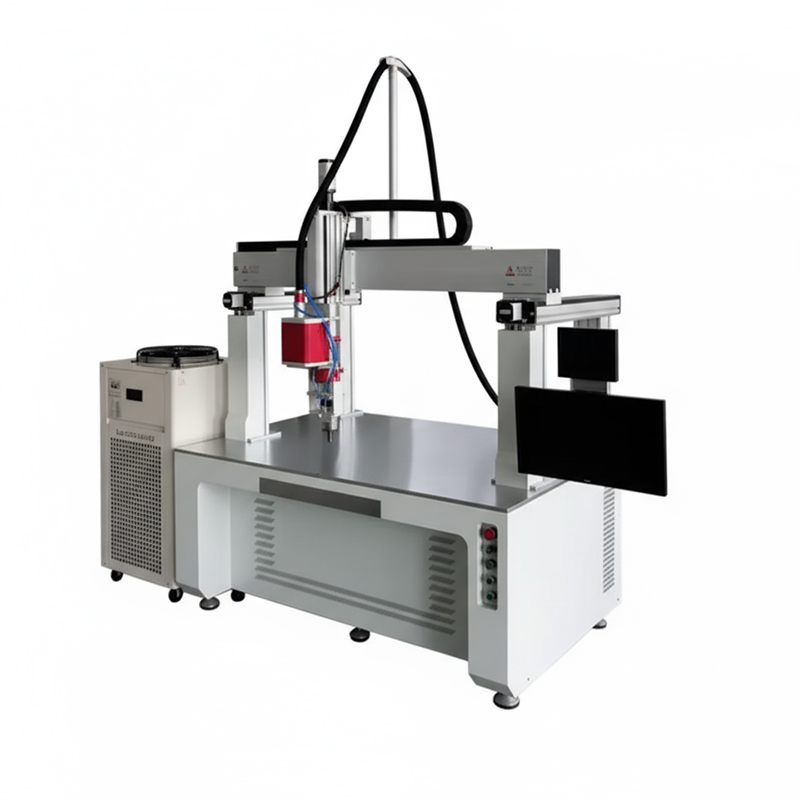
If you are evaluating a laser welding or laser marking project, send Zixu your part drawing, material, target mark or weld requirement, and production mode. Our team can help review whether the process should start with sample testing, fixture planning, laser marking integration or a complete welding station discussion. You can also review Zixu’s automatic platform laser welding machine page or contact us for a project discussion.