
Contact Us
Laser Cladding vs. Laser Welding: Key Differences in Process and Applications
Both laser cladding and laser welding use high-energy laser beams to melt metal, but they serve different industrial purposes. Laser welding joins two or more metal components, while laser cladding deposits additional material onto an existing surface to restore dimensions, improve wear resistance, or enhance corrosion protection.
For industrialists, these differences are important for manufacturers selecting equipment for metal fabrication, component repair, or surface treatment. Understanding the capabilities of each process helps determine which technology is better suited to a particular production requirement.
What Are Laser Cladding and Laser Welding?
Although both processes rely on laser-generated heat and localized melting, they have different material-handling and processing objectives.
How Laser Cladding Works
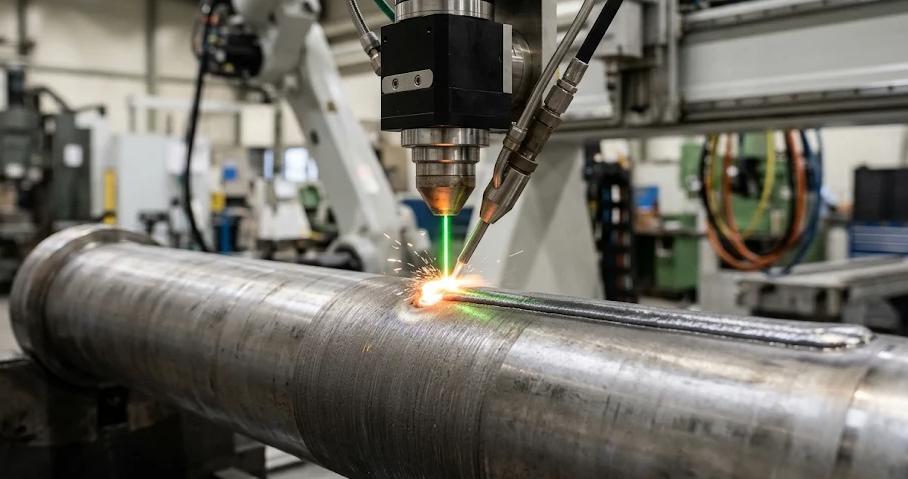
Laser cladding uses a laser beam to create a molten pool on the surface of a base material. Metal powder or wire is simultaneously fed into this area, where it melts and combines with the substrate. As the molten material cools, it forms a deposited layer with a metallurgical bond to the underlying component.
The process is mainly used to restore worn surfaces, rebuild damaged dimensions, or apply functional coatings that improve resistance to wear, corrosion, and other operating conditions. By selecting a deposited material that matches the required surface properties, manufacturers can use laser cladding to extend the service life of industrial components.
How Laser Welding Works
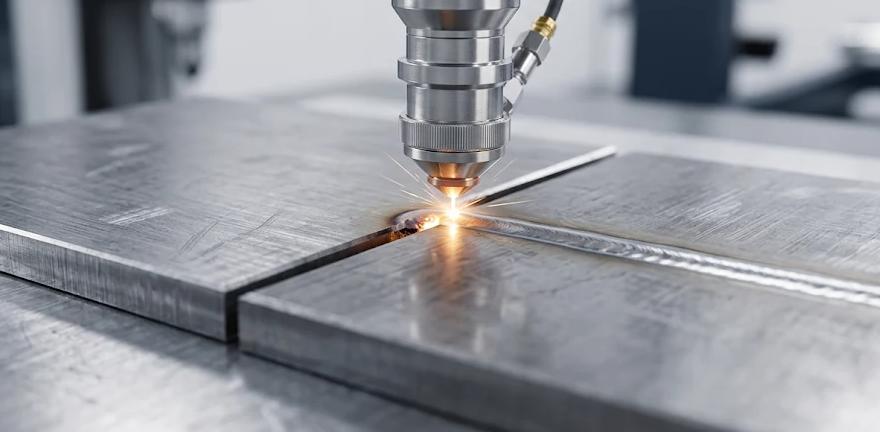
Laser welding uses a focused laser beam to melt the edges or surfaces of metal components at their intended joint. The molten metal solidifies to form a continuous weld that connects the parts. Proper surface preparation is also important before welding, as contaminants on metal surfaces can affect weld quality.
Unlike laser cladding, welding does not primarily aim to build up a surface layer. Filler material may be added when required by the joint design, but many laser welding applications use no additional filler material. The main objective is to achieve a reliable connection while controlling weld penetration, distortion, and heat input.
Laser Cladding vs. Laser Welding: 6 Key Differences
The primary distinctions between laser cladding and laser welding include their purposes, methods of adding materials, and results.
| Comparison | Laser Cladding | Laser Welding |
| Primary purpose | Surface repair and enhancement | Joining metal components |
| Material addition | Powder or wire is typically deposited | Filler material is optional |
| Melting area | Deposited material and a controlled portion of the substrate | Joint edges or surfaces |
| Final result | A metallurgically bonded surface layer | A welded joint |
| Typical applications | Shaft repair, roller restoration, surface protection | Sheet metal fabrication, frames, metal assemblies |
| Equipment configuration | Laser source, cladding head, material feeder, motion system | Laser source, welding head, positioning or motion system |
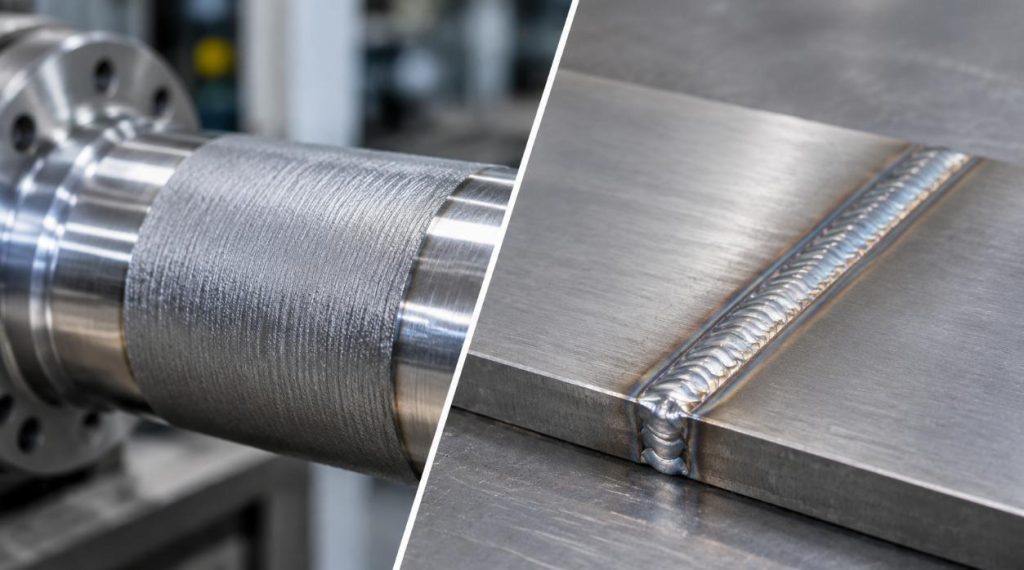
Dilution plays an important role in laser cladding. It refers to the proportion of melted substrate material incorporated into the deposited layer. Excessive dilution can alter the coating’s chemical composition and affect its intended properties. Therefore, controlling the interaction between the laser beam, feed material, and substrate is essential for achieving consistent cladding quality.
Heat-affected zones (HAZ) are relevant to both processes. The base material adjacent to the fusion zone may undergo microstructural or property changes due to heat exposure, even if it does not melt. The size of the HAZ depends on factors such as laser power, processing speed, material properties, and heat input. Neither process automatically guarantees a smaller HAZ in every application.
In the end, it comes down to the necessity of producing a surface layer or joining parts together.
Laser Cladding vs. Laser Welding: Industrial Applications
The most realistic approach to identify is to evaluate the state and purpose of the workpiece.
When to Use Laser Cladding
Laser cladding is appropriate if a previously manufactured metal part requires repair or enhancement of its surface properties.
Some common uses are:
- Hydraulic rods and shafts: Repairing worn-out surfaces and dimensions, along with enhancing wear and corrosion resistance.
- Industrial rollers: Repairing worn-out surfaces to increase their lifespan and reduce the need for replacements.
- Valve seats and molds: Applying proper alloy to areas subjected to wear, erosion, or corrosion.
In this case, the layer applied could be selected according to the operating conditions of the component.
When Laser Welding Should Be Used
It is preferable to use laser welding when different metal parts need to be put together as an assembled unit.
Some examples where this technology is used include:
- Stainless steel assemblies: The joining of metal sheet parts in enclosures, casings, and fabricated goods.
- Metal frames and structures: The joining of metal frames, brackets, and structural assemblies.
- Automotive components: Joining metal parts that require controlled weld formation and consistent production quality.
For applications involving particularly thin metal materials, laser welding of ultra-thin metal materials requires carefully matched processing parameters and motion control to prevent excessive heat input and deformation.
How to Choose Between a Laser Cladding Machine and a Laser Welding Machine
Equipment selection begins with determining the true processing purpose instead of simply comparing machine specifications.
Four key considerations include:
- Processing purpose: In cases where there is a need to repair a worn surface, rebuild the dimensions, or apply a functional coating, the laser cladding machine will be a better choice. In cases where there is a need to join separate metal pieces, a laser welding machine will be the best choice.
- Workpiece geometry: Shafts, rollers, valve seats, and other components requiring controlled surface deposition may be better suited to platform or robotic laser cladding systems. Sheet metal, frames, and fabricated parts may need a handheld or automated welding machine.
- Material and process requirements: Base material composition, filler compatibility, desired coating properties, joint design, and heat input all influence equipment and process selection.
- Production configuration: Consider whether the workpiece requires a fixed processing path or multi-axis movement. Automated production may also require coordinated positioning, material feeding, fixtures, and process control.
For restoration and protection of surfaces, Zixu provides various configurations for its laser cladding system, such as the Heavy-Duty Platform Laser Cladding System for proper workpiece positioning and the Automated Robotic Laser Cladding System for complicated paths.
When it comes to metal joining applications, you can consider its laser welding configurations, which include the handheld and gantry systems.
Can Laser Cladding and Laser Welding Be Used Together?
Yes. Laser cladding and laser welding can complement each other within the same manufacturing or repair workflow.
For instance, one can apply welding to ensure that a connection is restored to a metal object, then perform laser cladding to protect certain surfaces from wear or corrosion. Thus, welding solves the problem of a connection, while cladding creates an extra protective layer.
The key is to select each process according to its specific function rather than treating the two technologies as interchangeable.
Find the Right Laser Processing Solution for Your Application
Choosing between laser cladding and laser welding depends on your workpiece material, component geometry, processing objective, and production requirements. Zixu provides laser cladding and laser welding systems for different industrial applications. Contact our team with your workpiece details to discuss a suitable equipment configuration and processing solution.