
Contact Us
Laser Welding Machine Joins Ultra-Thin Foil Accurately
How a smart swap from 400W to 800W servo motors unlocked a precision laser welding machine on 0.01mm aluminum - and earned two signed contracts on the spot.
Foil So Thin, One Wrong Pulse Destroys It
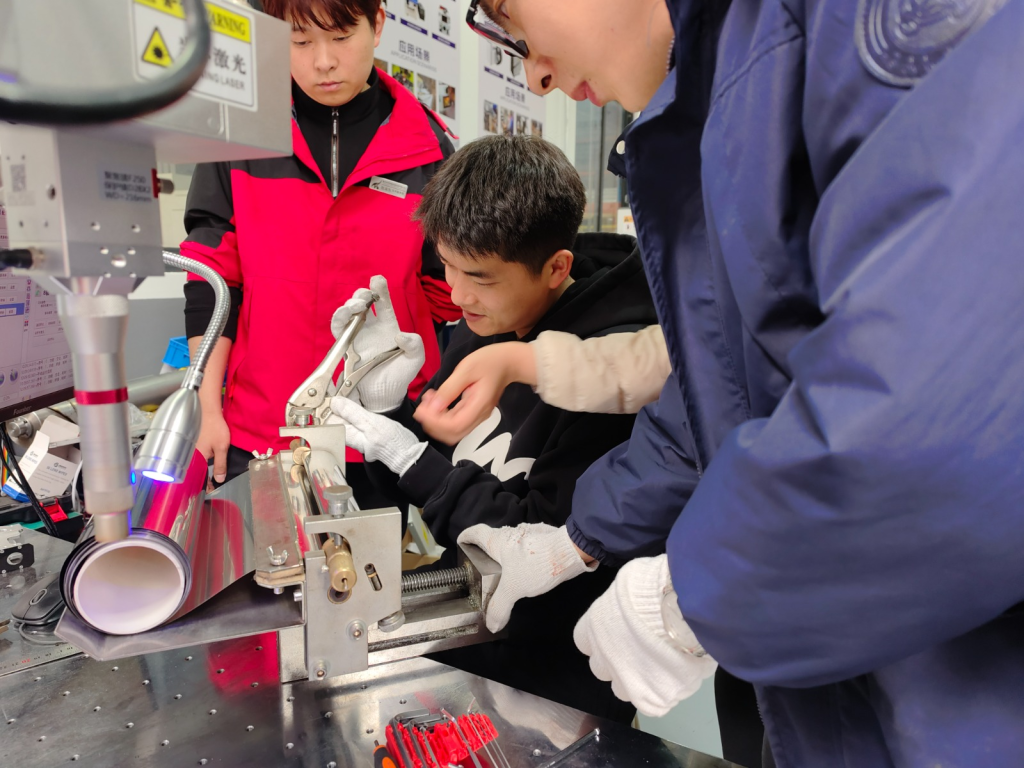
The customer arrived with fixtures and samples ready for live testing. Their goal was simple with the laser welding machine but technically steep: weld medium-gauge aluminum foil at just 0.01mm thick. Aluminum that thin reacts fast to heat. Too much energy, and it melts. It deforms. In the worst cases, it can even ignite. Any welding solution had to act quickly and leave almost no thermal footprint behind.
- 0.01mm Foil thickness tested
- 1500W Laser power used (CW)
- 2 laser welding machines ordered after test
Speed Over Power: The QCW Platform Decision
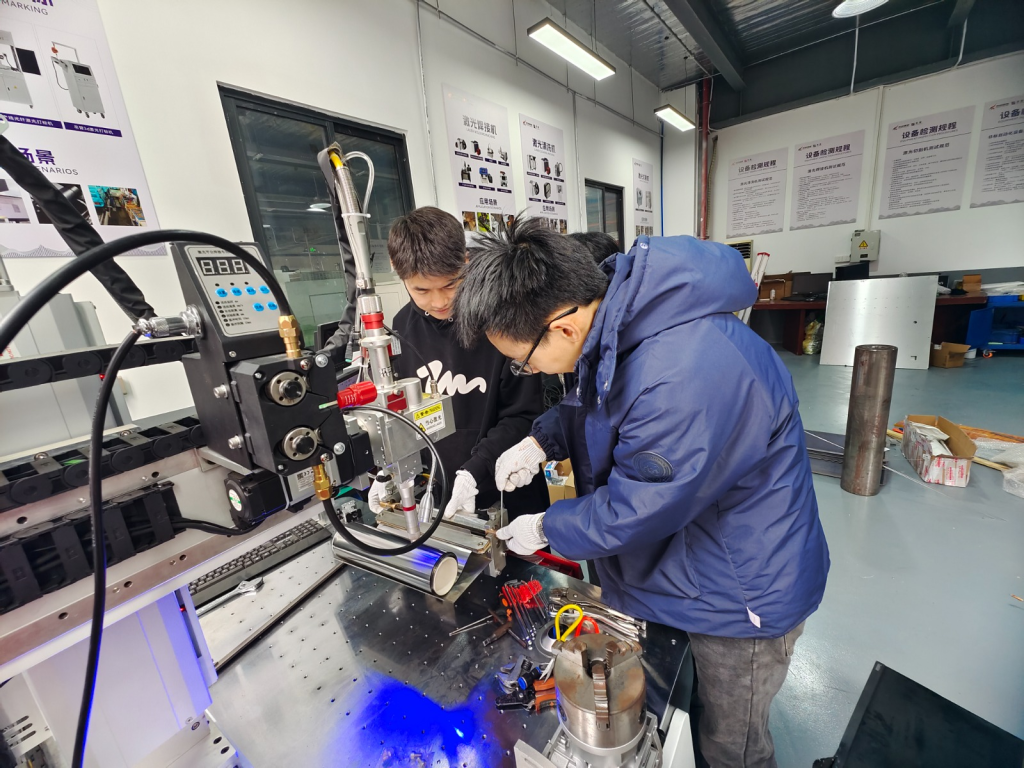
The engineering team immediately identified the QCW platform laser welder as the right match. QCW - Quasi-Continuous Wave - gives short, controlled energy pulses. This limits heat spread, which is exactly what fragile foil needs. There was one problem. The standard 75W QCW laser was not in stock. A delay was not acceptable. So the team consulted Chuangxin's process technology group and came up with an alternative - one that proved just as effective.
"We replaced the 400W servo motor with an 800W high-speed servo motor. Then we ran a 1500W continuous laser in low-power, high-speed mode. The logic was sound: move fast, apply less heat per unit area."
Clean Seams, Zero Sticking, Full Customer Sign-Off
The weld quality impressed with the laser welding machine. The seam showed minimal heat deformation. The foil held its shape. Tooling rolls moved without sticking - a key performance requirement for the customer's production line. The customer reviewed the samples carefully. They inspected the weld up close. No warping. No burn marks. No material loss. That level of precision in a live test gave them the confidence to act.
They signed a purchase contract for two laser welding machines - both configured with the 800W high-speed servo motor and 1500W laser setup. Production-ready. No rework needed.
Why High-Speed Mode Works on Delicate Materials
Running a high-wattage laser at low power sounds counterintuitive. But paired with a faster servo motor, it changes the dynamic entirely. The laser spends less time on each point of the foil. Less dwell time means less heat builds up locally. The weld line forms cleanly before the aluminum has a chance to absorb damaging energy. This is a smart workaround that trades raw power for precision motion control.
This kind of adaptive configuration - matching machine specs to a specific material challenge - is where experienced laser integrators add the most value. It is not just about the laser. It is about the whole system working together.
Foil Welding Opens Doors in Key Sectors
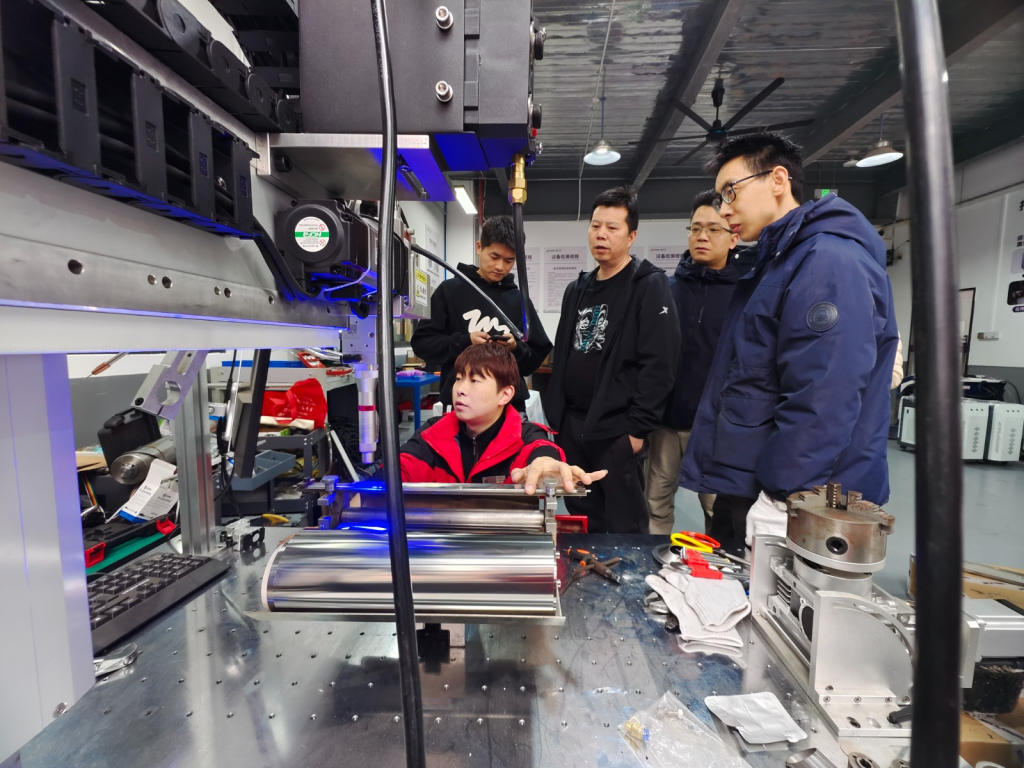
Ultra-thin foil welding with the laser welding machine has broad use across sectors. Battery production, packaging, electronics shielding, and flexible circuits all rely on thin aluminum joining. The ability to weld without deformation is a competitive edge. This application proves that with the right configuration, laser welding can meet even the most delicate material requirements. It also shows how engineering agility - not just catalog specs - solves real production problems.
Chongqing Zixu Machine: Built for Hard Problems
Chongqing Zixu Machine specializes in laser welding systems designed for demanding industrial applications. Their team works closely with customers - from first test to final contract - to dial in the right configuration.
Whether your material is thin foil, coated sheet, or complex multi-layer assemblies, their engineers have the process knowledge to find the right solution fast.