
Contact Us
How Battery-Powered Marking Machines Improve On-Site Metal Marking
The process of marking serial numbers, part numbers, and identification markings on metallic parts is a common procedure during the manufacturing process. Nevertheless, there are times when not all workpieces can be moved to a marking station. Huge steel constructions, equipment that has been installed, and parts under repair need to be marked right there.
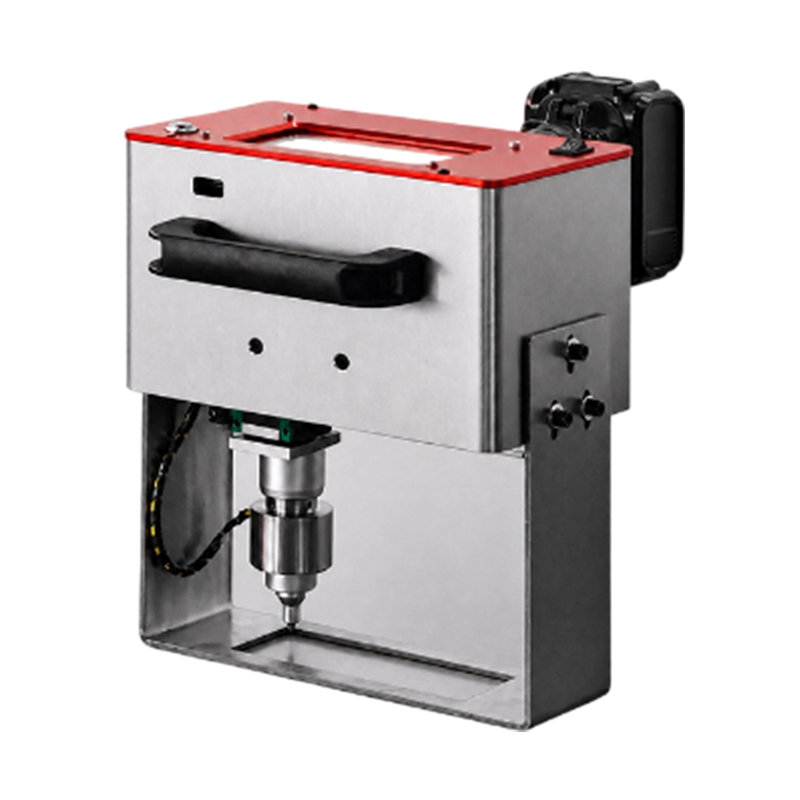
Limitations in the availability of compressed air connections and fixed power supplies may affect the usability of traditional marking machines as well. A battery powered marking machine offers another option. With rechargeable batteries and a portable design, operators can bring the equipment directly to the workpiece without relying on an external air source.
Why On-Site Metal Marking Can Be Challenging
Marking metal parts in locations far from fixed production stations is subject to certain practical limitations. The main considerations usually include equipment access, the size of the workpieces, and the availability of utilities.
When Compressed Air Is Not Available
The pneumatic dot peen marker machine uses compressed air to move the marking pin. Where there is a presence of compressed air in the workshop setting, this type of machine may function perfectly. But when there is no air source around, the process may become inconvenient.
In some cases, maintenance crews handling machinery that is already installed will have to set up an extra air hose or an air compressor in order to start the marking. Long air hoses may also hinder movement when dealing with large machines.
The electric dot peen machine does not require this because it has an electromagnetic system instead of compressed air.
When Metal Parts Are Too Large to Move
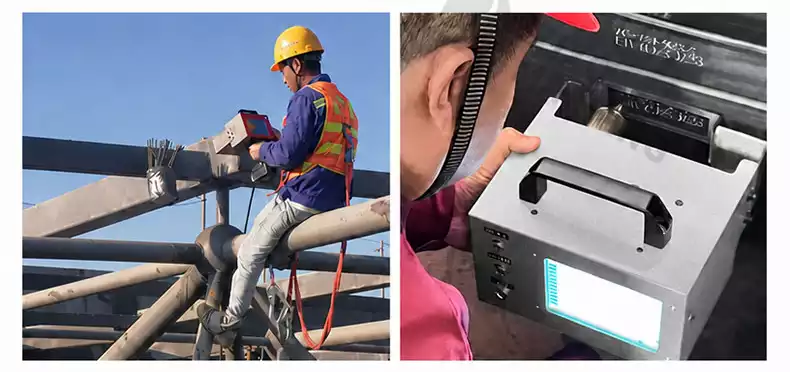
Some workpieces are simply too large or heavy to transport to a marking station. Examples include:
- Large steel frames and structural components
- Industrial machinery housings and bases
- Metal pipes and fixed equipment
- Components already installed at a production site
Moving these pieces just for the purpose of identification marking may be unnecessarily laborious in terms of lifting, maneuvering, and handling of the pieces. A hand-held identification marking device makes it possible to carry out marking operations at the spot where the piece is situated.
How Battery-Powered Electric Marking Machines Work
The battery-powered electric dot peen machine uses electricity to generate the impact force required for mechanical marking. Understanding its drive system and power source is helpful in explaining why it is suitable for field operations.
Electromagnetic Drive Creates the Marking Impact
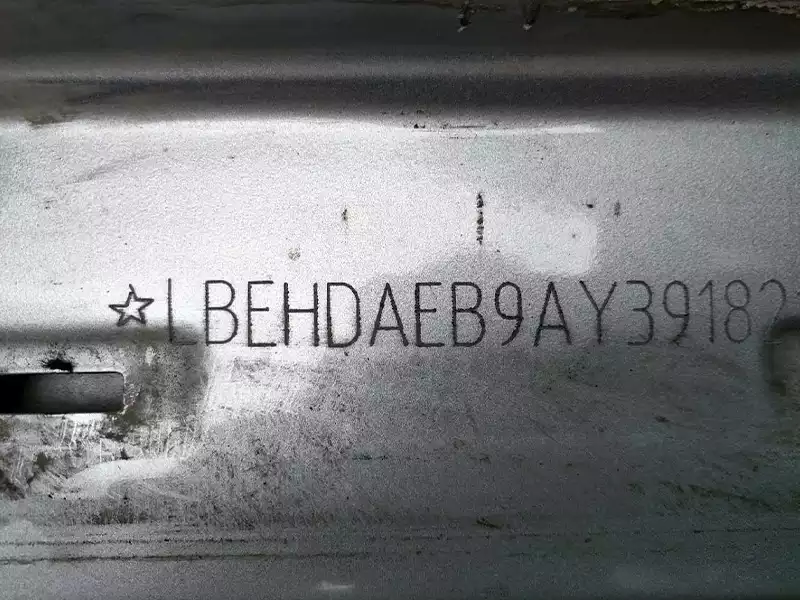
Unlike pneumatic equipment, an electromagnetic marking system does not use compressed air to move the marking pin.
The basic process involves:
- Electrical power activates the electromagnetic drive mechanism.
- The mechanism moves the marking pin repeatedly toward the workpiece.
- Each impact creates a small indentation on the metal surface.
- A sequence of controlled impacts forms letters, numbers, or other identification marks.
The result is a dot-peen mark formed directly on the material, rather than an image printed with ink or applied as a surface label.
Battery Power Removes the Need for a Fixed Power Connection
The rechargeable battery is used as the source of electricity for powering the machine. This eliminates the need for keeping the equipment connected to the outlet power supply during the process of marking.
In case of servicing activities, warehouse work, or in areas of production with many workstations, this will be convenient to relocate the equipment.
With the use of an electromagnetic drive, a battery-driven portable marking machine will be able to work without an external power supply or air hose.
What the Marking Looks Like on Metal
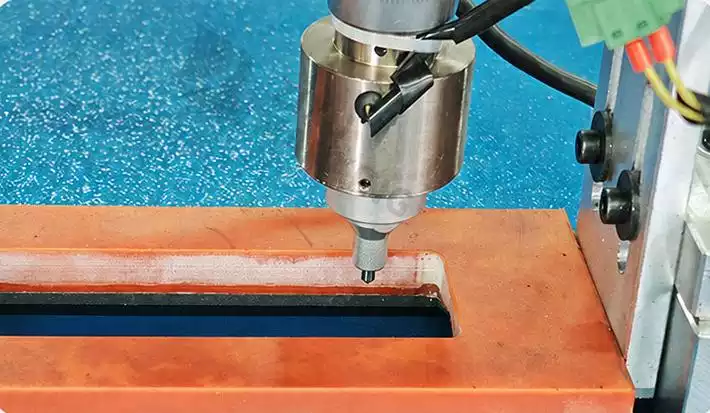
Dot peen marking creates physical indentations that form readable characters and symbols. It is commonly used for identification information such as:
- Serial numbers
- Part numbers
- Model codes
- Production batch numbers
- Equipment identification details
Because the information is physically marked into the surface, it is generally more resistant to rubbing and handling than ordinary surface printing. Actual marking depth and readability depend on material hardness, pin condition, and machine settings.
Where Portable Marking Machines Are Most Useful
A portable metal marking machine is particularly useful when the workpiece cannot easily be brought to a fixed marking station.
Marking Large Steel Structures and Machinery
Identification marks need to be created for steel structures, machinery bases, and big equipment housing for ease of inspection and maintenance.
There is no need to move the whole object when a mark needs to be applied. Instead of that, the operator just needs to take the hand-held device and apply it to the available surface.
Adding Identification Marks During Equipment Maintenance
The replacement parts and repaired parts may require new identification markings. It is also possible that the maintenance crew will have to include serial numbers or reference codes for equipment after repair work.
A battery-operated marker can be taken to the maintenance area without making any provision for compressed air lines. This becomes especially helpful when there are occasional marking jobs and not a continuous production line.
Marking Parts at Different Production Stations
In facilities handling different component types, marking tasks may take place at several stages of production.
For example, a metal component may need identification after machining, before assembly, or during final inspection. A portable marking machine can be moved between these work areas when a dedicated marking station is not practical.
What to Check Before Choosing a Battery-Powered Marking Machine
Portability alone does not determine whether a machine is suitable for a particular application. Buyers should check the following details against their actual marking requirements.
How Long Can the Battery Support Daily Work?
Check the battery capacity, charging time, and expected operating duration. If the machine will be used throughout a work shift, confirm whether its battery performance matches the frequency and volume of marking tasks.
It is also worth considering how convenient it is to recharge the equipment between jobs.
Can It Mark Your Metal Materials?
Different metals have different hardness levels, which affect marking performance.
Before purchasing, confirm that the machine is suitable for the materials being processed, such as carbon steel, stainless steel, or aluminum. Ask the supplier about achievable marking depth and character clarity for your specific workpieces.
Is the Marking Area Large Enough for Your Parts?
It is necessary to check for the available marking area, character sizes that can be accommodated, and the physical size of the marking head.
For larger parts, the capability of positioning the machine against the workpiece becomes equally critical. A portable machine is useless if the operators cannot reach the marking surface.
In situations where metallic parts are immovable and the availability of compressed air is not convenient, the use of a battery-operated electric marking machine becomes a viable option compared to fixed or pneumatic types of machines.
Zixu Electric Marking Machine is a machine that incorporates electromagnetic drive and battery-operated power source for the marking pro components, carry out maintenance work, or perform marking operations in different work areas, this is a solution worth considering.cess of workpieces. For manufacturers who frequently handle large