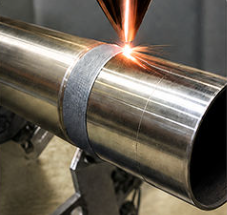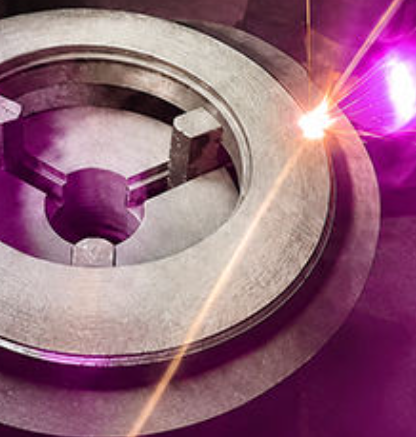
Heavy-Duty Platform Laser Cladding System
Heavy bed, ground rails, three-jaw chuck and tailstock: shafts and discs clamped once, positioning +/-0.05 mm, repeatability +/-0.01 mm, layers 0.3-2.0 mm, dilution 5-8%, eight hours continuous.
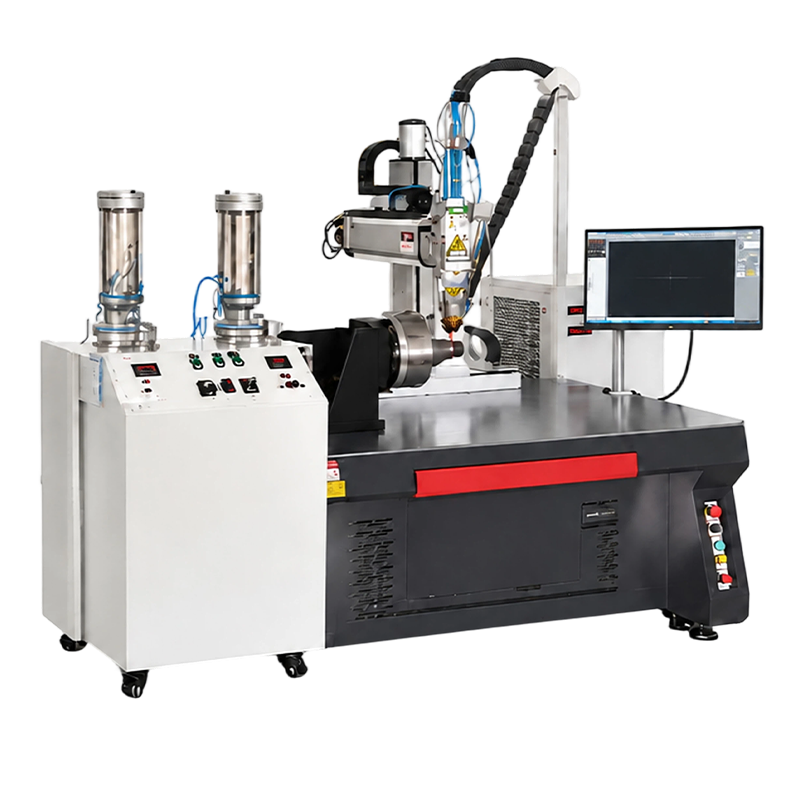
Delivers ±0.05 mm positioning accuracy, ±0.01 mm repeatability, and 0.3–2.0 mm layer thickness with ±0.05 mm tolerance for consistent cladding results.
Supports conventional cladding at 10–25 mm/s and high-speed scanning at 100–300 mm/s, with dilution of 5–8% or below 3%. Achieves 0.3–0.8 m²/h output, ≥85% powder utilization, and ≤1% coating porosity.
Offers inert atmosphere protection with oxygen and moisture below 50 ppm, or down to 1 ppm for reactive materials. Features ≥40 kW power, flexible voltage options, a dual-circuit chiller, and 8+ hours of continuous operation.
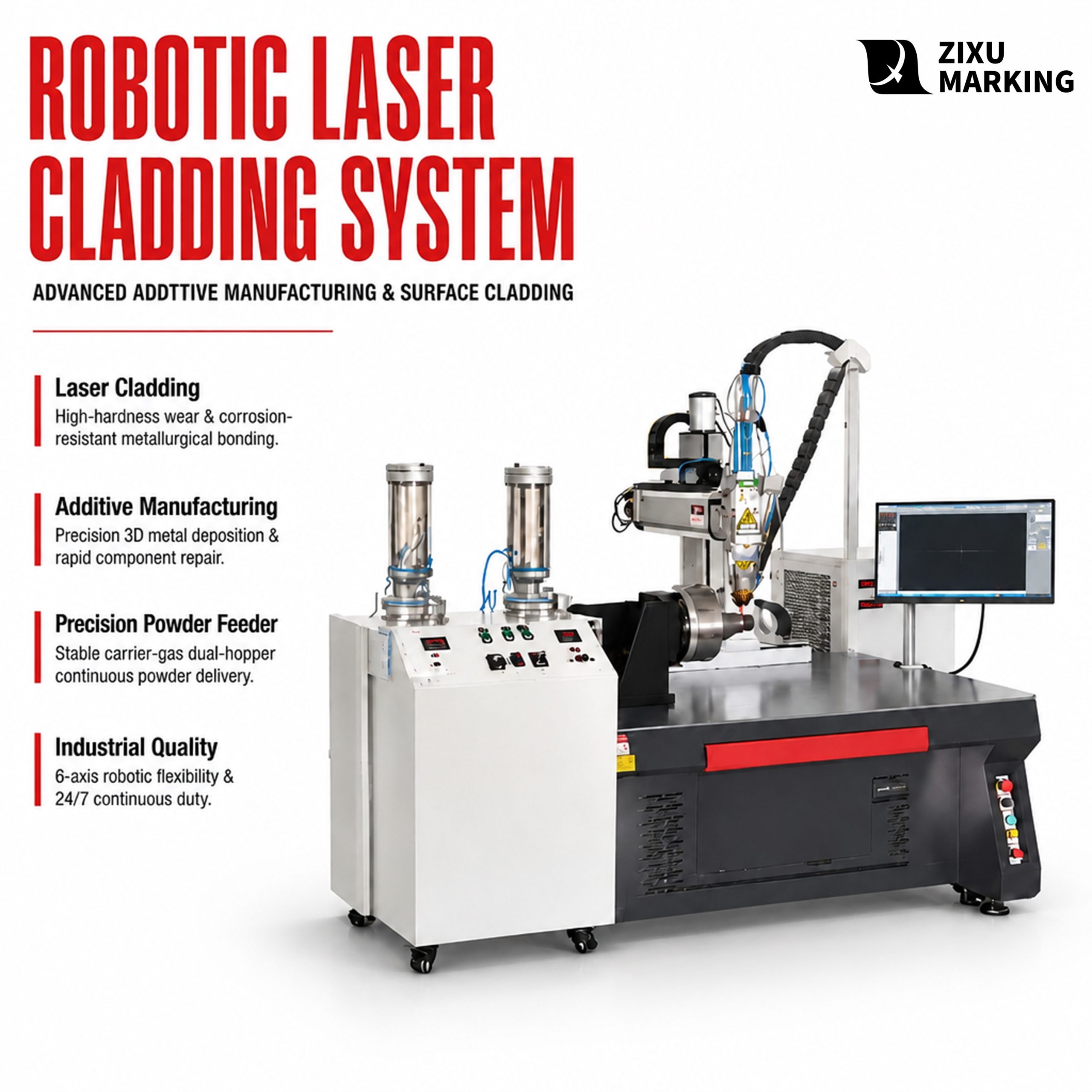
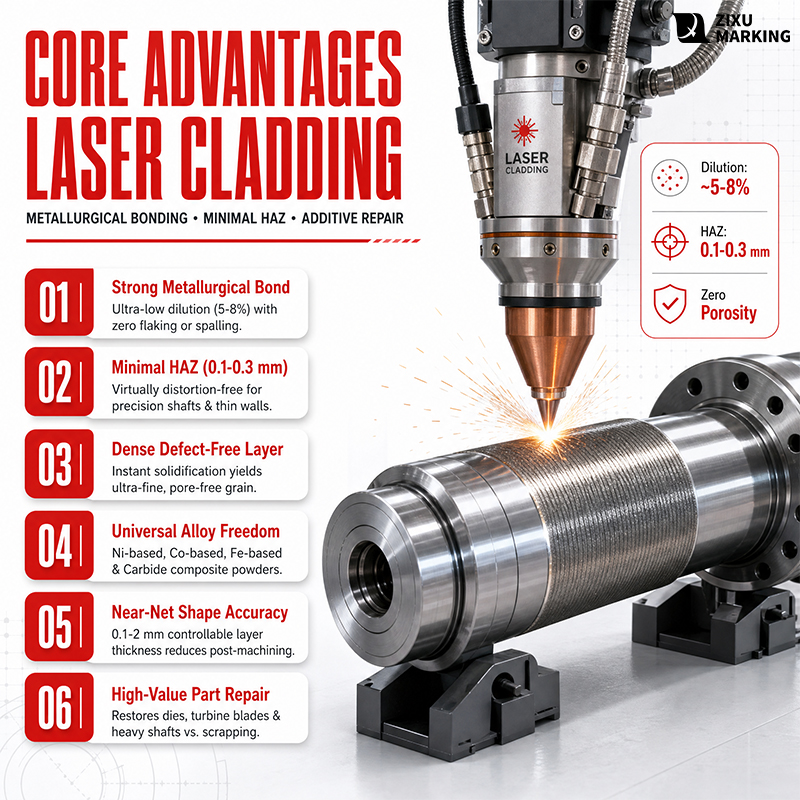

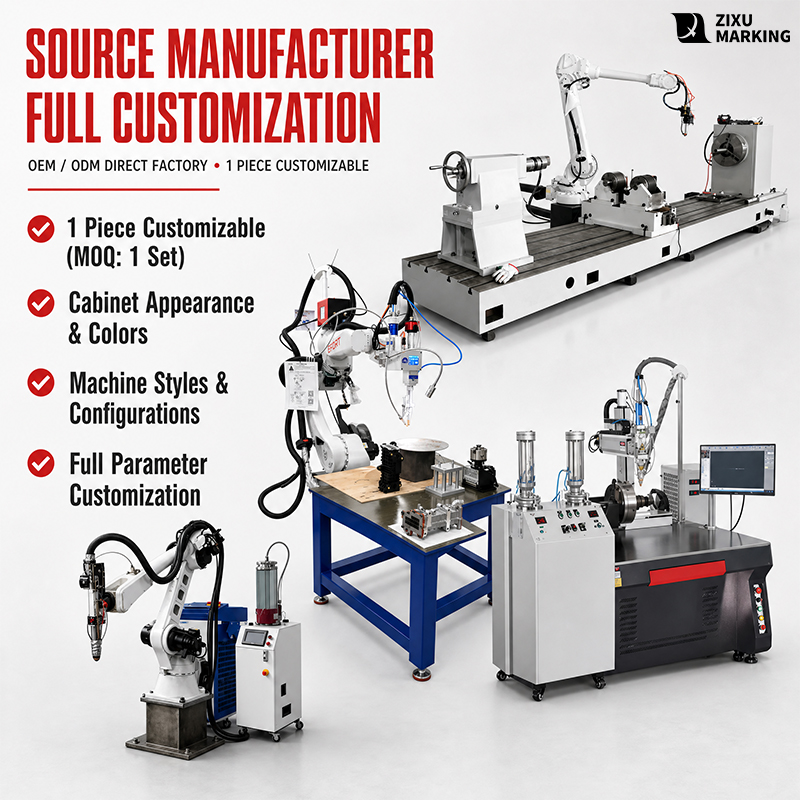

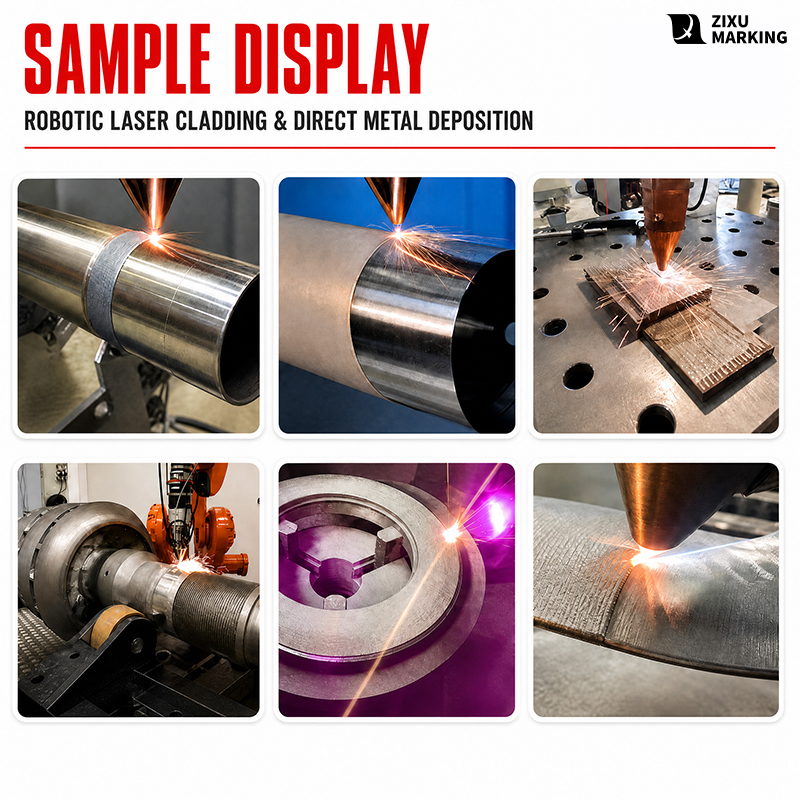
Platform cladding: heavy bed, ground rails, rack drive, chuck and tailstock. Positioning +/-0.05 mm, repeatability +/-0.01 mm, layers 0.3-2.0 mm, dilution 5-8%, powder use 85% or better.
| Category | Parameter | Unit | General baseline (6 kW standard) |
| A System | Structure | – | Heavy bed + precision linear rails + rack-and-pinion drive + three-jaw chuck + rotary spindle + adjustable tailstock + cladding head + cabinet / chiller / feeder (split) |
| A System | Working envelope | mm | 2000 x 2000 |
| A System | Installed power | kW | >= 40 (laser + chiller + drives + auxiliaries) |
| A System | Power supply | V / Hz / phase | 380 V / 50-60 Hz / 3-phase (220 / 440 / 480 V built to destination) |
| A System | Positioning accuracy | mm | +/-0.05 |
| A System | Repeatability | mm | +/-0.01 |
| A System | Cladding accuracy (layer tolerance) | mm | +/-0.05 |
| A System | Cladding linear speed | mm/s | 10-25 (with powder) |
| A System | Single layer thickness | mm | 0.3-2.0 |
| A System | Cladding rate (area) | m2/h | 0.3-0.8 |
| A System | Dilution | % | 5-8 |
| A System | Powder utilisation | % | >= 85 (coaxial feed) |
| A System | Bond | – | Metallurgical (not the mechanical bond of spraying) |
| A System | Coating porosity | % | <= 1 |
| A System | Continuous working time | h | >= 8 (with dual-temperature chiller) |
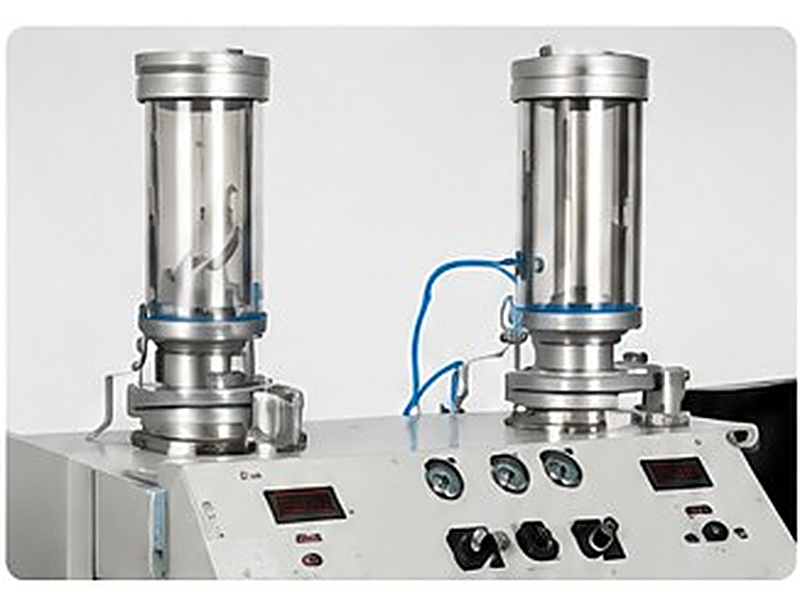
Dual-hopper precision powder feeder: continuous, without pulsing
Two independent hoppers sit side by side: one feeds while the other is refilled, so the powder stream never stops at the change. The panel gives the flow meter, pressure gauges, feed-gas and carrier-gas knobs and a digital readout directly, so rate and carrier are trimmed without going back to a main screen. With coaxial feed, this continuous supply is what holds powder utilisation at 85 percent or better and keeps dilution in the 5-8 percent band. Loaded with two different powders, nickel and tungsten carbide can be switched or blended inside one job.
Heavy-duty rotary spindle chuck: 360-degree seam cladding in one pass
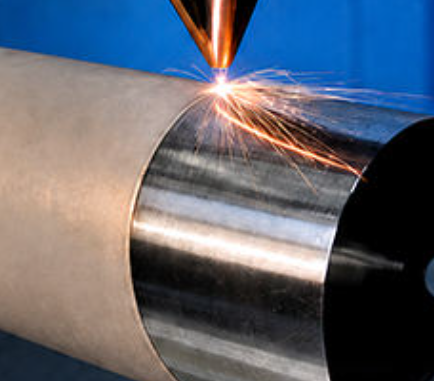
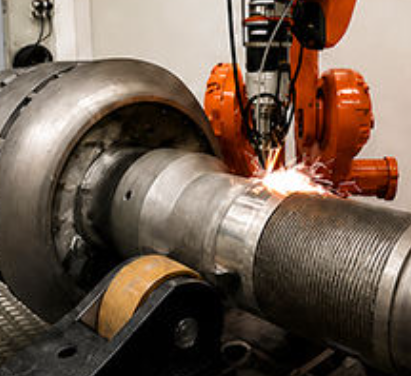
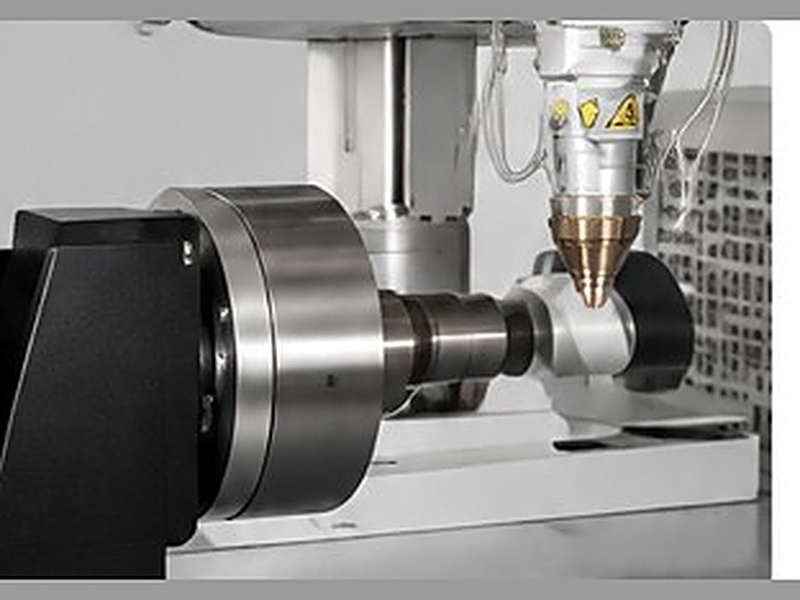
A large three-jaw chuck on a heavy spindle housing turns with high torque and synchronised rotation. The shaft is clamped at one end and held by the adjustable tailstock at the other; interpolated with the head’s linear motion, helical, conical and circumferential seams run continuously. Chuck centring keeps runout small, which is where +/-0.01 mm repeatability and +/-0.05 mm layer tolerance actually land. It is also the difference from a robot cell: the workpiece is clamped, not held up.
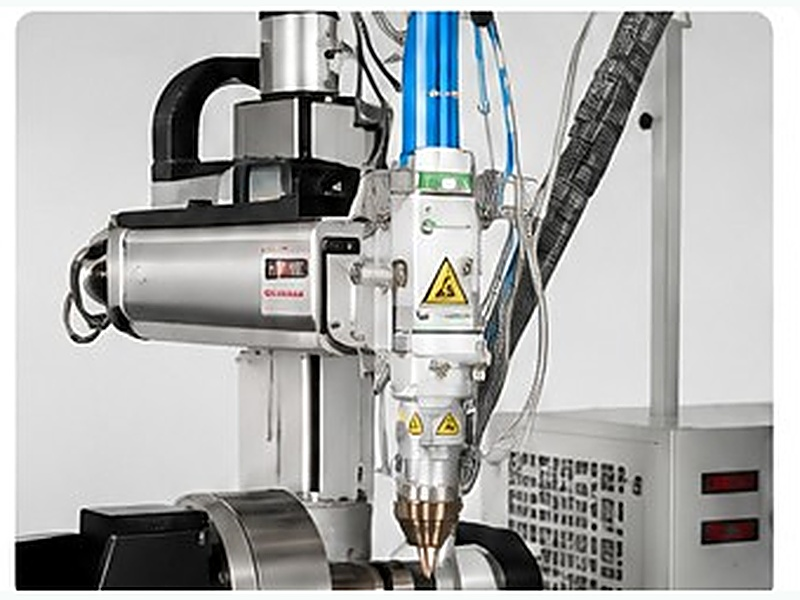
High-precision cladding head: a tight optical path, little thermal distortion
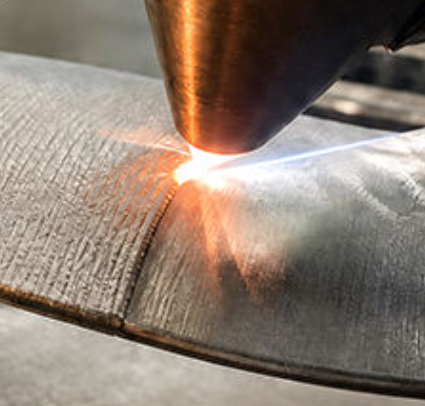
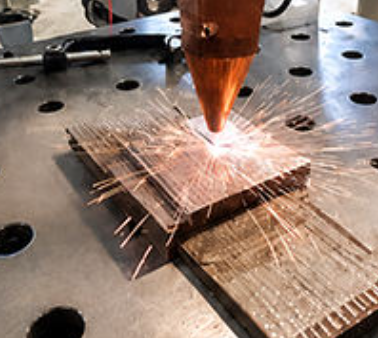
The optical path is shaped and paired with a coaxial nozzle, so powder and beam converge inside the same cone. Energy density arriving at the work is even, which is why a track does not come out thick in the middle and thin at the edges. Heat input is concentrated and controlled: a narrow heat-affected zone and little thermal distortion are what let thin-wall and heat-treated parts go on the machine at all. Single layers of 0.3-2.0 mm and porosity at or below 1 percent come from this stability, not from grinding afterwards.
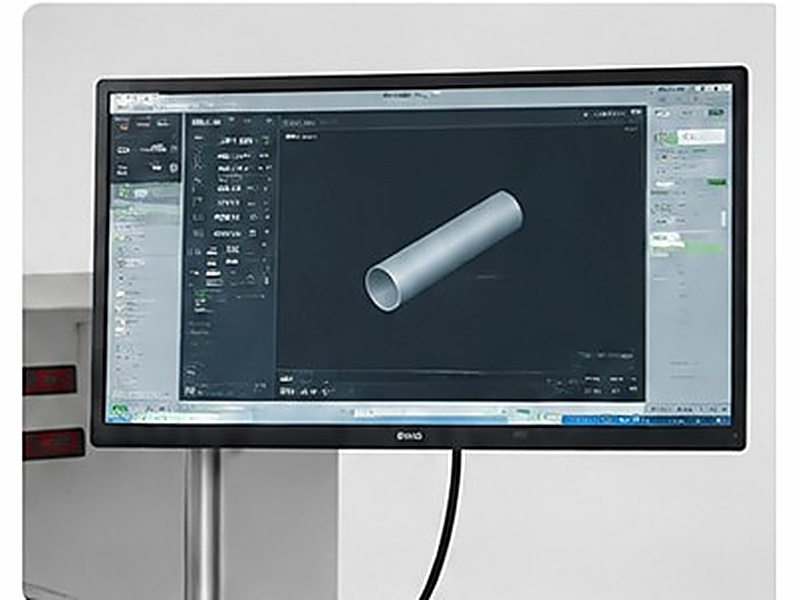
Intelligent CNC control: widescreen interface and multi-axis motion
On the industrial widescreen: program and parameter tables on the left, the workpiece model and toolpath in the middle, running status on the right – the whole job on one page. Cladding parameters (power, feed rate, scan speed, overlap, layer thickness) are stored in the system, so a changeover is a recipe recall rather than a re-teach; multi-axis motion is interpolated, with spindle indexing locked to head travel. ‘Part N matches part one’ is ultimately settled on this screen.
Material and Workpiece Fit
Deposits are starting points per workpiece family; the clamping column is the real advantage over a robot and should not be dropped.
| Workpiece | Typical failure | Deposit | Clamping and process note |
| Hydraulic rods (45#, 27SiMn) | Scoring, eccentric wear, chrome spalling | Ni self-fluxing / Ni + WC | Chuck plus tailstock; grind to Ra 0.2 after cladding |
| Long transmission shafts | Journal wear, bending | Nickel-based | Adjustable centre height; steady rest on high length-to-diameter |
| Rolls | Surface wear, heat checking | Cobalt-based / Ni + WC | Spindle indexes continuously; 30-50 percent track overlap |
| Discs, flanges, gear blanks | Face wear, pitting | Nickel / cobalt-based | Circular passes on the face; chuck centring keeps runout low |
| Cutter picks, mining parts | Abrasive wear | High-chrome / WC composite | Dual-station builds alternate for the shortest cycle |
| Hydraulic props, cylinders | Corrosion, scoring, oversize | Nickel / stainless class | 3 t capacity; long parts clamped once, never grounded |
| Drill collars, boiler tubes | Eccentric wear, corrosion | Nickel 625 class | Needs a gantry build with travel above five metres |
What this machine is not for
| Condition | Why not |
| Single large odd-shaped parts, in-situ repair of immovable equipment | The workpiece cannot enter the working space – that is robot or mobile territory |
| Deep cavities needing multi-angle access | A platform has limited attitude freedom; a multi-axis arm does not |
| Small batches with frequent changeover | Fixtures and chucks are built for a workpiece family, so changing over costs more than re-teaching a robot |