
Customized Automatic Nameplate MOPA Fiber Laser Marking Machine Delivered for European LNG Equipment Supply
Industry: Energy and chemical equipment
Material: Plastic nameplates
Watch the delivery and marking demonstration video
After the Nord Stream disruption and the Russia-Ukraine war, Europe has faced severe natural gas supply pressure. Sichuan Energy Development Group Co., Ltd. contacted us because its German customer needed LNG filling and distribution equipment for imported gas. The project required durable plastic nameplates for instruments and valves, but the original inkjet process produced barcodes that became blurry after repeated cleaning and consumed too many supplies.
The customer wanted a greener marking method that could improve barcode readability, reduce consumables, and satisfy strict European environmental requirements. We therefore delivered a customized automatic MOPA fiber laser nameplate marking system built specifically for this application.
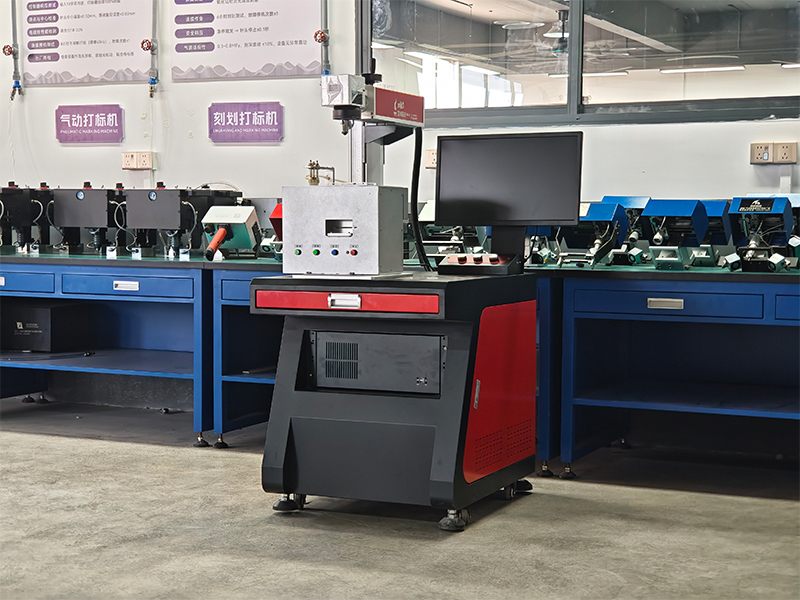
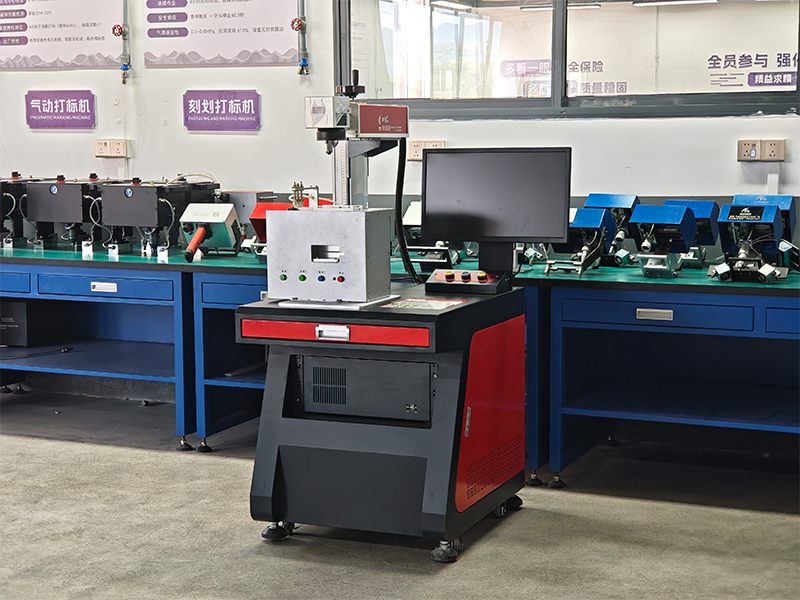
The machine combines a MOPA fiber laser marking platform with an integrated PLC-controlled automatic nameplate fixture. Because the target nameplates were optimized for laser marking, the white marking area can be etched with very low energy density. We tested both a Raycus 30W fiber laser and a JPT M7 30W MOPA fiber laser, and the customer selected the JPT M7 for the final configuration.
The loading fixture uses a vertical motor module and photoelectric sensors to raise each nameplate into an exact marking position. Adjustable side walls and positioning stops make it easy to adapt the fixture to different shapes and sizes while maintaining consistent marking quality.
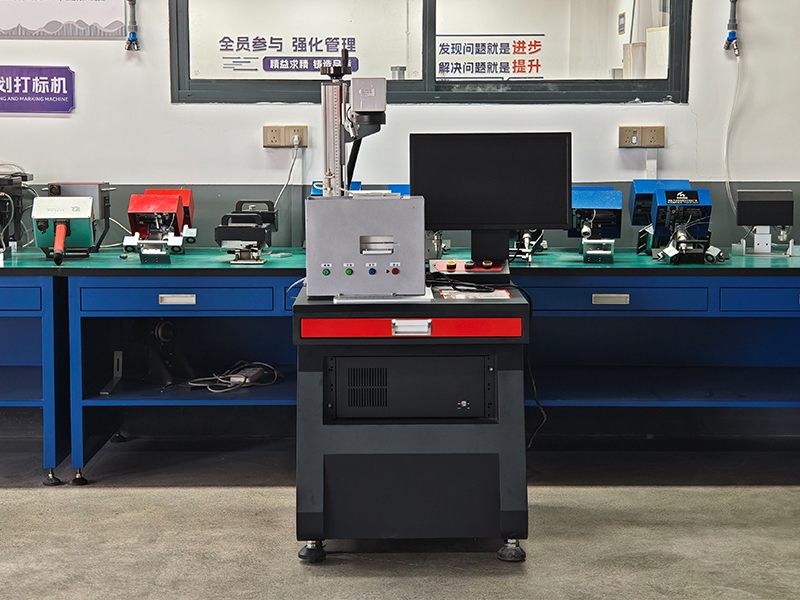
For unloading, we use a motor-driven X-axis cylinder suction cup that removes each completed nameplate and places it in the discharge area automatically. The result is a one-button workflow that improves productivity dramatically compared with a standard fiber laser plus a manual fixture, while keeping the extra investment under control.
Automatic nameplate marking systems like this have already been successful in China in power, water, and industrial utility applications. As fiber laser sources keep improving and becoming more affordable, laser nameplate marking will continue replacing inkjet and dot peen processes in more export-oriented industries. Contact us if you need a similar automated marking solution.
Application Context for Customized Automatic Nameplate MOPA Fiber Laser Marking Machine Delivered for European LNG Equipment Supply
Fiber and MOPA laser marking projects are often used for metal parts, anodized layers, nameplates and electronics housings. The key is to match laser power, pulse width and beam delivery to the desired contrast, depth and cycle time.
Recommended CNMarking Solutions and Internal Resources
If you are comparing equipment for a similar application, the following CNMarking pages are useful next steps:
- Fiber Laser vs CO2 Laser Marking Machine – choose the right laser source by material.
- Enclosed High Peak Power MOPA Fiber Laser for Anodized Layer Ablation – review a dedicated MOPA solution for anodized layer removal.
- Semi-enclosed 3-in-1 MOPA Fiber Laser Marking Machine – see a three-side marking and ablation workstation.
- Notebook Anodized Aluminum Laser Marking Case – learn how laser marking supports notebook surface treatment.
How to Choose a Similar Marking Setup
Before selecting a machine, prepare a short sample brief with the following information. This helps CNMarking recommend the right laser, dot peen, scribe or automation configuration instead of only matching a picture.
- Base material and surface coating
- Required contrast, depth or ablation result
- Cycle time target and marking area
- Enclosure, extraction and automation needs
Related Reading
- Enclosed High Peak Power MOPA Fiber Laser for Anodized Layer Ablation
- Semi-enclosed 3-in-1 MOPA Fiber Laser Marking Machine
- Notebook Anodized Aluminum Laser Marking Case
- How to Choose the Right Laser Marking Machine for Your Factory
FAQ
Can CNMarking test my own samples before I choose a machine?
Yes. For most marking, cleaning and welding projects, sample testing is the fastest way to confirm contrast, depth, speed and fixture requirements before final configuration.
What information should I send for a quotation?
Please send the material, part size, marking or cleaning area, required result, production volume and any automation or traceability requirements. Photos or short videos of the current process are also helpful.