
Custom Rotary Dot Peen Marking Machine with Split Lifting Bench for Oil Drilling Rods and Bits
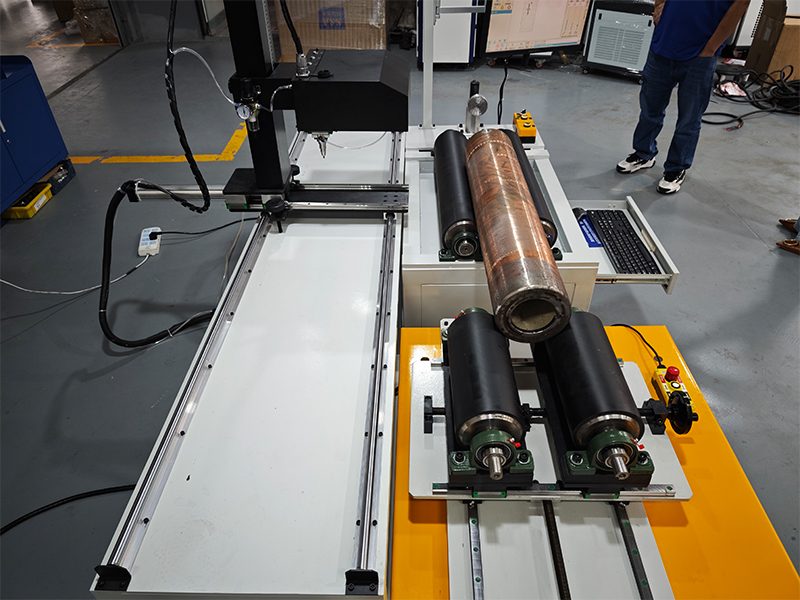
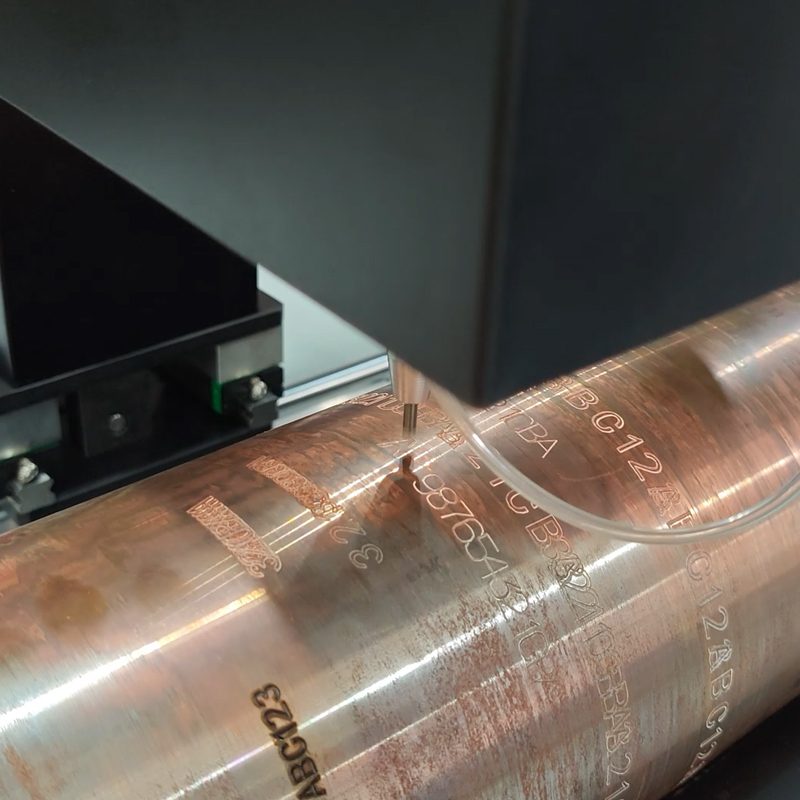
CNMarking, the overseas brand of Chongqing Zixu Machine Works, delivered a custom rotary dot peen marking workstation for oil drilling rods and bits that could not be handled efficiently by a standard benchtop setup. The project started from a standard 140 x 80 mm dot peen marking head, then added rotary workholding, split lifting benches, and long-travel positioning so the customer could mark irregular heavy parts more safely and consistently.
According to the source brief, the customer needed permanent identification on oil well rods, drill rods, drill bits, and related irregular parts while keeping loading and unloading practical for crane-assisted handling. That requirement shaped every part of the final layout, from the roller supports to the retracting marking head position.
The supplied project video shows the customized rotary marking process in motion and helps explain why the workstation was designed around split benches rather than a single flat table.
Why Oil Drilling Rods and Bits Need a Different Marking Layout
Oil drilling components are long, heavy, and often irregular. Some parts need clearance for shape changes, offsets, or crank-like sections, while others need the marking location adjusted along a much longer axis than a normal benchtop machine is built to cover. A standard fixed table would make loading awkward and could easily interfere with the part or with lifting equipment.
That is why this case is not simply about adding a rotary unit. The workstation had to support rotation, leveling, position adjustment, and safe loading space at the same time.
Split Bench Design for Rotation and Leveling
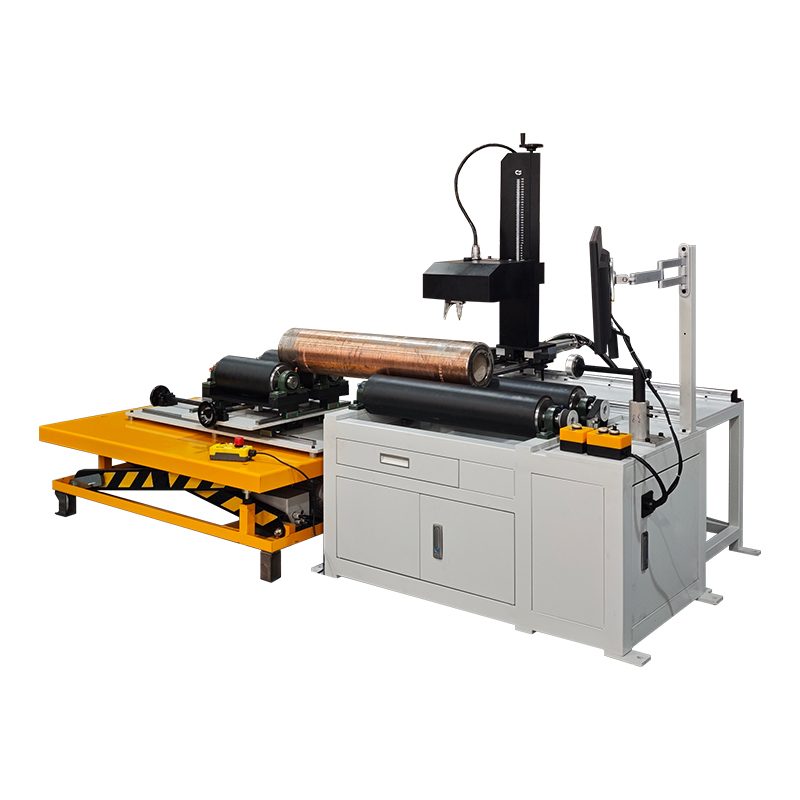
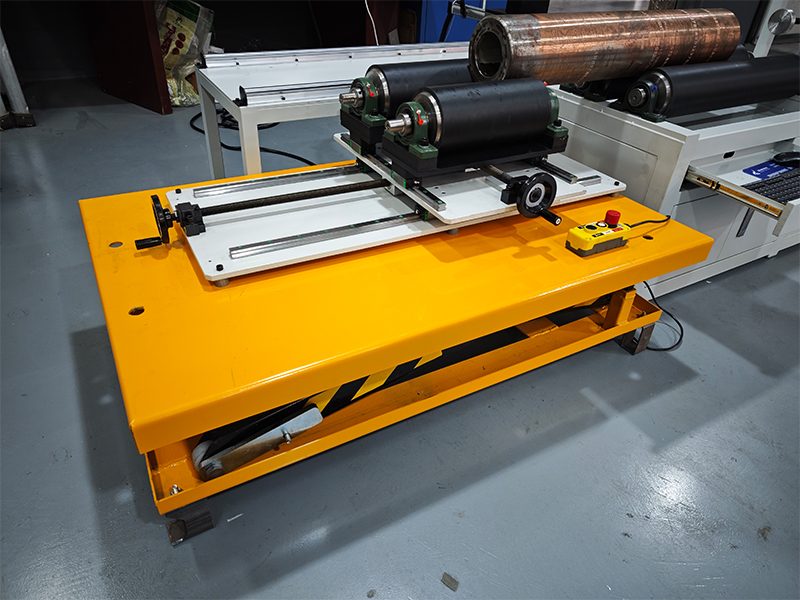
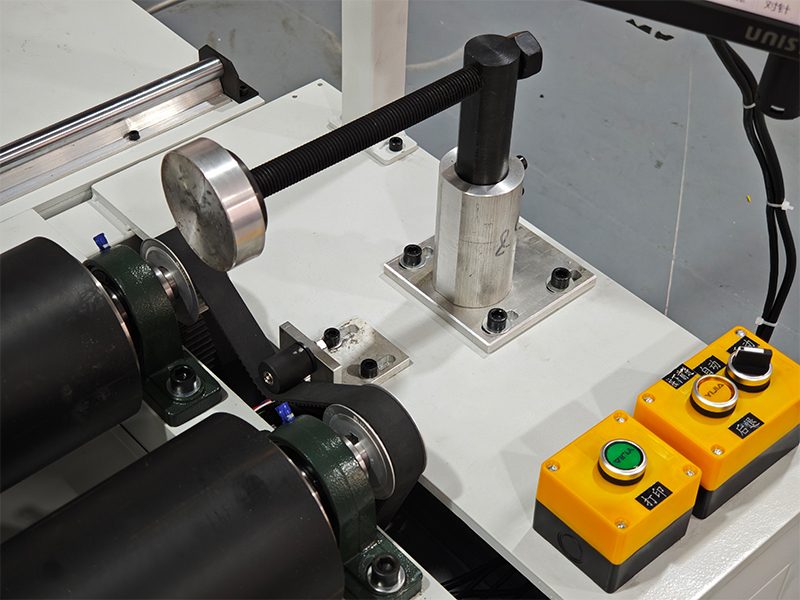
CNMarking used two separate worktables so one side could drive rotation while the other side could adapt to part geometry. On the active side, a high-power stepper motor, reducer, and roller assembly rotate the rod or bit during marking. On the passive side, the roller support includes X-Y screw adjustment plus electric lifting on the Z direction so the operator can level the workpiece before marking.
This split design is especially useful for irregular drilling parts because it leaves clearance where a conventional table would get in the way. It also makes it easier to align the marking zone without building a different fixture for every part shape.
Long Travel Positioning and Collision Avoidance
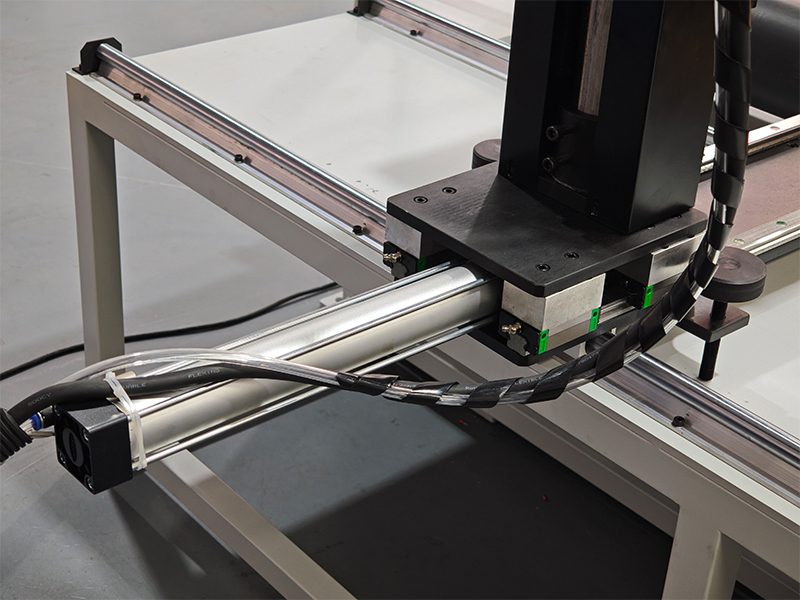
The marking head is mounted on a manual slide with approximately 2000 mm travel in the X direction, allowing the operator to move to the required marking position along the part length. In addition, a motorized Y-axis module handles automatic approach and return so the head can move into position for marking and then retract to a safer loading position afterward.
That automatic return behavior matters in real production because the customer planned to use a crane or similar lifting device for loading and unloading. By moving the head back to the initial position before and after marking, the workstation reduces the risk of contact during handling.
Practical Operating Details from the Delivered Workstation
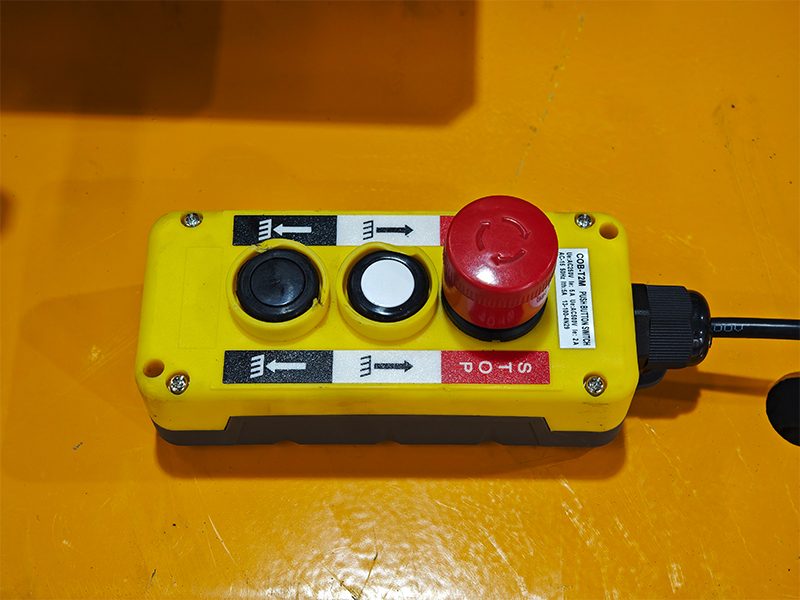
The source notes also highlighted several practical details: the passive-side support includes visible X-Y screw adjustment, the lifting controller is used frequently during leveling, and the emergency stop was integrated into the lift bench hand control so it stays close to the operator during real use. These are not cosmetic changes. They are the kind of details that determine whether a custom marking cell is comfortable to run every day.
What This Case Shows for Oilfield Traceability
For oil drilling manufacturers, permanent identification is rarely just a marking-head question. The harder part is often how to present a long, heavy, irregular workpiece to the marking system safely and repeatably. This case shows how a standard dot peen platform can be extended into a purpose-built rotary workstation when the application needs split support, leveling, long-travel positioning, and crane-friendly clearance for serial numbers, tool IDs, batch codes, and other permanent traceability content.
Readers comparing other cylindrical or heavy-part marking applications can also review this fully automated steel pipe dot peen demonstration and our dot peen vs laser comparison.