
Pulsed vs Continuous Laser Cleaning: Surface, Heat Input and Throughput
Industrial buyers comparing pulsed and continuous laser cleaning do not need a generic “which is better” answer. They need to know what substrate is being cleaned, how much heat the part can absorb, how much removal rate the line needs, and how much rework risk is acceptable. This guide compares pulsed and continuous laser cleaning for real B2B evaluation, using process boundaries instead of universal machine settings.
If you are still defining the equipment family, review the laser cleaning machine range first. If you already have sample parts and want a recommendation for rust, paint, oxide, mold, or weld-prep work, contact CNMarking with the substrate, contaminant, target finish, and takt expectations.
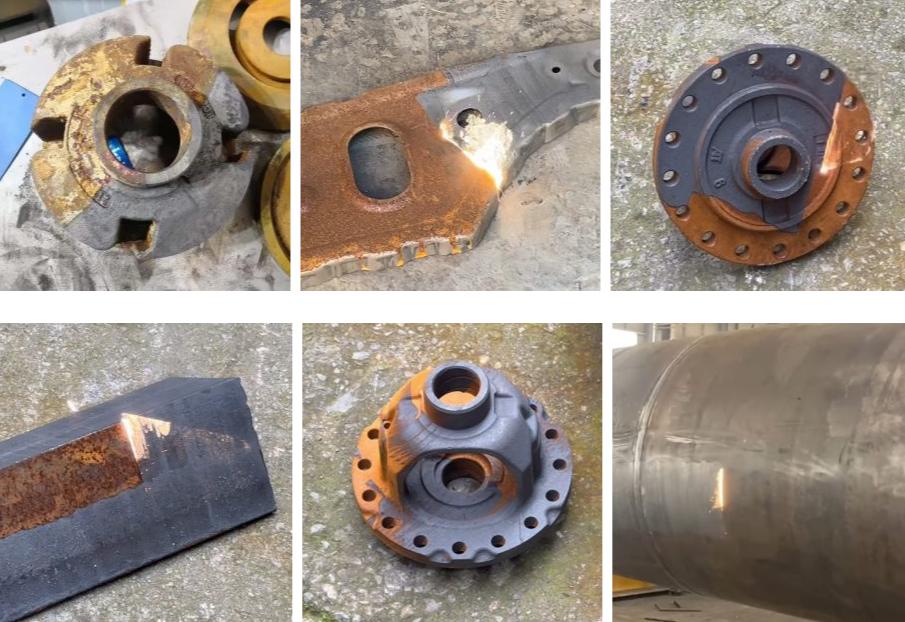
Quick selection answer
- Choose pulsed laser cleaning when substrate protection, low heat input, controlled layer removal, or edge/detail work matters more than maximum area rate.
- Choose continuous laser cleaning when the job is heavy rust, thick paint, weld prep, or broad-surface cleaning on robust metal parts and throughput matters more than ultra-fine control.
- Do not choose by headline power alone. The correct decision depends on material, contaminant adhesion, acceptable discoloration, allowable roughness change, dust extraction, operator skill, and sample-test evidence.
Selection matrix for B2B buyers
| Decision point | Pulsed laser cleaning | Continuous laser cleaning | What to confirm in a sample test |
|---|---|---|---|
| Applicable materials | Better for heat-sensitive metals, coated parts, thin sections, decorative surfaces, molds, and assemblies where the base material must stay visually stable. | Better for robust steel structures, heavy oxidation, weld-prep surfaces, thick paint removal, and broad industrial cleaning where the substrate can tolerate more thermal load. | Check whether the same contaminant can be removed without changing substrate color, edge sharpness, or downstream coating adhesion. |
| Heat input and substrate response | Short energy delivery windows help limit heat accumulation and reduce tint, warping, or micro-damage risk. | Steady energy supports aggressive removal but can increase heat build-up if the line speed, focus, or overlap are not controlled. | Inspect discoloration, heat tint, oil bleed-out, warpage, and any roughness change after repeated passes. |
| Removal depth and control | Stronger for controlled layer-by-layer cleaning, selective paint stripping, and detailed boundary work. | Stronger for fast bulk removal when the goal is throughput rather than selective stopping on a thin layer boundary. | Measure whether the operator can stop at the required cleanliness level without under-cleaning or over-processing. |
| Throughput and takt time | Usually slower but easier to tune for high-value parts where scrap cost is high. | Usually faster on large surfaces and more suitable when labor hours or line takt time are the main bottleneck. | Time the full operation including setup, positioning, extraction checks, repeat passes, and final inspection-not only the laser-on time. |
| Maintenance focus | Requires disciplined parameter control, optics cleanliness, and process repeatability for precision work. | Requires attention to thermal stability, optics contamination, cooling, and keeping aggressive cleaning consistent across long runs. | Track nozzle and lens cleanliness, extraction effectiveness, spatter/dust behavior, and how often settings drift during a shift. |
| Cost inputs | Often justified when reduced rework, lower scrap risk, and better surface control save more than the slower cycle time costs. | Often justified when labor reduction, line speed, and broad-area productivity outweigh the higher heat-management burden. | Compare machine cost, utilities, extraction, consumables, fixture time, operator training, rework, and downtime together. |
Continuous laser cleaning: where it makes operational sense
A continuous laser cleaning machine emits a steady beam that is well suited to heavy-duty removal on broad, durable surfaces. It is often chosen for rust removal on steel, paint stripping before rework, weld preparation, and cleaning jobs where the production team values speed and labor reduction.
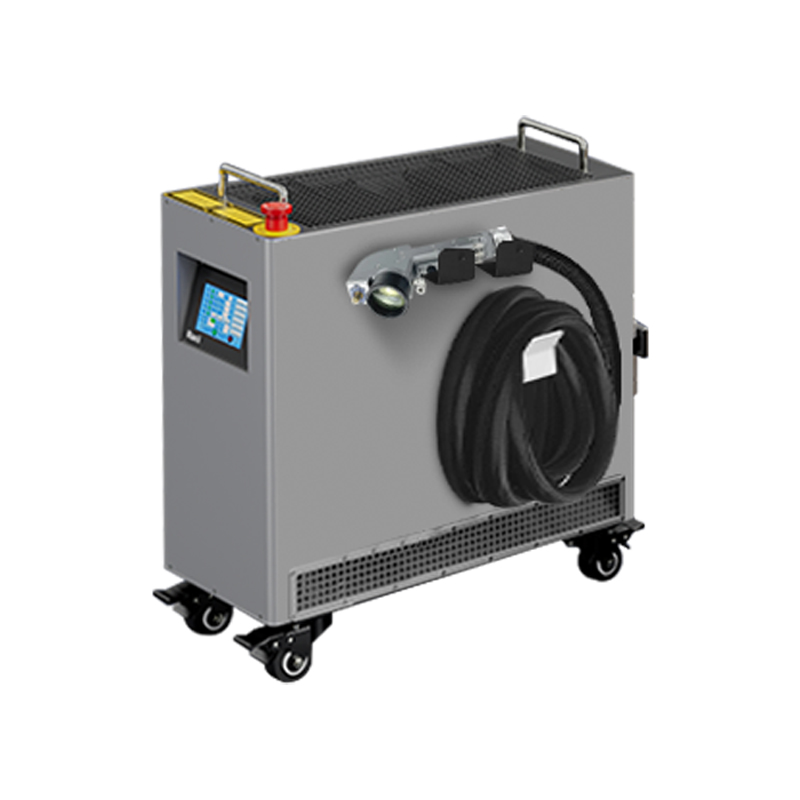
- Best fit: thick rust, thick paint, scale, weld-prep cleaning, and broad industrial metal surfaces.
- Main advantage: faster area coverage and a simpler throughput story for production managers.
- Main risk: if line speed, stand-off distance, overlap, and part temperature are not controlled, the process can introduce unnecessary heat into the substrate.
Pulsed laser cleaning: where it protects margin and quality
A pulsed laser cleaning machine delivers energy in short bursts, which makes it easier to manage heat input and stop at the right cleaning boundary. It is typically the safer choice for sensitive substrates, cosmetic surfaces, molds, selective paint removal, and parts where over-cleaning would create scrap or rework.
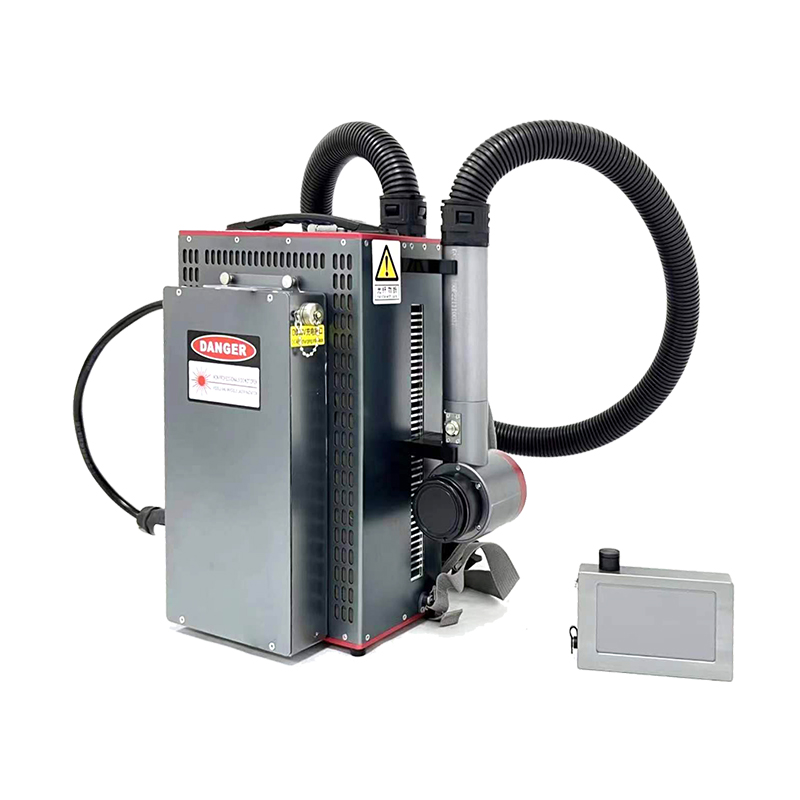
- Best fit: selective coating removal, delicate metal components, detailed edges, molds, heritage or precision surfaces, and high-value parts where rework is expensive.
- Main advantage: lower heat impact and better control over how much of the surface layer is removed.
- Main risk: buyers sometimes underestimate the value of sample-test tuning and compare only nominal speed instead of total quality-adjusted productivity.
Material and surface condition boundaries
The same machine type can look excellent on one surface and uncompetitive on another. Start with the contaminant and the substrate together:
- Robust carbon steel with thick rust or heavy coatings: continuous cleaning often has the economic advantage if heat tint or texture change is acceptable.
- Stainless, aluminum, coated parts, molds, and components with cosmetic requirements: pulsed cleaning usually gives a safer process window.
- Assemblies with edges, corners, labels, seals, or mixed materials: pulsed cleaning reduces the chance of damaging adjacent features.
- Large repetitive cleaning zones on a line: continuous cleaning may deliver the better takt story when paired with stable fixturing and extraction.
Heat input, surface response, and rework risk
For most industrial buyers, the real question is not just whether the contamination disappears. The real question is whether the cleaned part still passes the next process. That means checking heat tint, roughness change, paint adhesion after recoating, weld quality after prep, and dimensional stability after repeated passes.
Pulsed cleaning usually gives a wider safety margin when those downstream quality checks matter. Continuous cleaning can still be the better business decision, but only after the sample test proves that the faster removal rate does not create hidden scrap, touch-up work, or inconsistent visual results.
Throughput, labor model, and maintenance burden
Do not compare pulsed and continuous systems using laser-on speed alone. Compare the full operating model:
- fixture and positioning time
- how many passes are needed for the required finish
- how often the operator has to re-tune settings for part variation
- dust and fume extraction interruptions
- lens cleaning and optics inspection frequency
- downtime caused by overheating, over-processing, or rework
Continuous systems often win when labor hours per square meter are the main constraint. Pulsed systems often win when scrap avoidance, finish stability, and repeatable selective cleaning matter more than raw surface coverage.
How to run a fair sample comparison before purchase
- Prepare matched sample coupons or real production rejects with the same material, coating, and contamination condition.
- Define the acceptance target first: visual cleanliness, adhesion, weld prep condition, dimensional stability, or downstream process pass/fail.
- Start from the supplier baseline and adjust one parameter family at a time rather than chasing a universal number copied from another job.
- Time the full process, including setup, part handling, repeat passes, and inspection.
- Inspect heat tint, edge damage, residual contamination, roughness change, and whether adjacent zones were affected.
- Compare the total cost inputs: machine investment, utilities, extraction, training, optics maintenance, expected downtime, and rework exposure.
When buyers usually choose pulsed, and when they usually choose continuous
Pulsed is usually the safer choice when the project involves delicate substrates, selective cleaning boundaries, visual-finish protection, or expensive parts where over-processing is unacceptable.
Continuous is usually the stronger business choice when the job is broad-surface, high-volume, and tolerant of a more aggressive thermal profile, provided the sample test confirms the substrate stays within quality limits.
CTA: match the process to your real parts, not to generic settings
If you need help selecting between pulsed and continuous cleaning, send CNMarking the part material, contaminant type, surface target, and expected takt. That makes it possible to recommend the right process route instead of guessing from a generic power label.