
Dot Peen Marking for Valves: How Deep Should the Marking Be?
Valves used in industrial scenarios such as petroleum and natural gas, chemical engineering, power generation, and water treatment generally require permanent identification. The valve serial number, material grade, furnace number, pressure grade, and manufacturer information need to remain clear and legible throughout the valve’s entire lifecycle.
Dot peen marking machine is perfectly suitable for such conditions. It uses a hard punch to create multiple controllable indentations on the metal surface, directly generating permanent identification that is not prone to falling off. However, for marking on key components such as valve bodies, it is not the case that the deeper the indentation, the better the effect. The marking must be clear, wear-resistant, and should not cause unnecessary deformation of the workpiece or introduce additional stress.
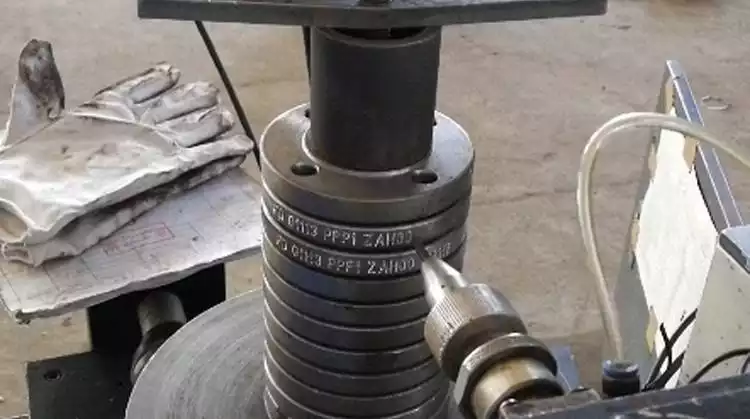
Valve Marking Requirements and Common Applications
Valve marking is primarily about identification and traceability. A valve may pass through casting, machining, inspection, assembly, testing, and installation, so permanent identification helps manufacturers and end users connect the physical component with its production and inspection records.
Depending on the valve type, customer requirements, and applicable industry standards, common marking information can include:
- Manufacturer name or identification
- Valve size and pressure class
- Material grade
- Heat or melt number
- Serial number
- Model or product code
- Manufacturing information
- Data Matrix or other traceability codes
Dot peen marking is well suited to these applications because the mark is physically formed into the metal rather than printed onto the surface. This makes it suitable for industrial environments where labels or ink-based identification may become damaged or difficult to read.
The technology can also be used on different valve components and geometries. Depending on the production setup, manufacturers may mark valve bodies, flanges, covers, or other metal parts. For large valves, the marking system and workholding arrangement need to provide sufficient access and stability during marking.
For manufacturers handling different valve materials and sizes, the ability to adjust marking parameters is particularly important. A setting that produces a good result on one valve may not be suitable for another.
How Deep Should Dot Peen Marking Be on a Valve?
There is no universal marking depth that is suitable for every valve. The appropriate depth depends on the material, component geometry, marking location, character requirements, and the level of permanence and readability required.
The basic principle is straightforward: the mark should be deep enough to remain clear and permanent, but not deeper than necessary.
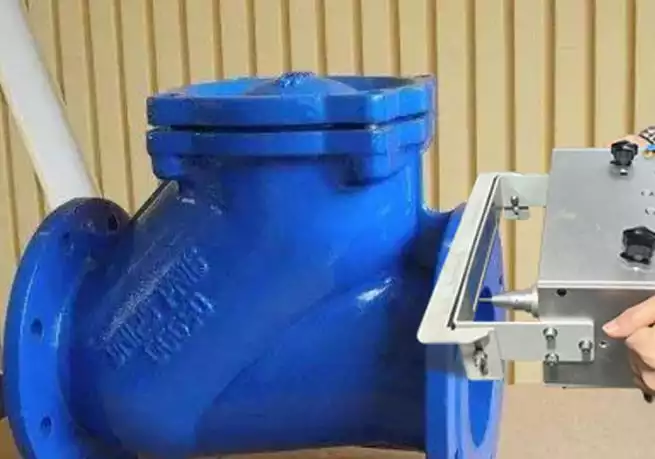
What Affects Marking Depth?
Several factors can influence the appropriate depth of a dot peen mark.
Material
Carbon steel, stainless steel, alloy steel, and other valve materials respond differently to mechanical impact. Hardness and surface condition can affect the appearance and depth of each indentation.
Wall Thickness
The thickness of the section being marked is another important consideration. A marking approach suitable for a thick valve body may not be appropriate for a thinner section. Manufacturers should evaluate the marking location before setting the machine parameters.
Marking Location
Not every area of a valve has the same engineering significance. When marking pressure-containing components, unnecessary surface deformation should be avoided. The marking location should therefore be considered together with the component design and applicable requirements.
Character Size and Readability
Larger characters do not necessarily require deeper marks. Character height, dot spacing, impact force, and marking speed all contribute to the final readability of the identification.
Impact Force
The impact force determines how aggressively the stylus strikes the surface. Excessive force can create deeper indentations than necessary, while insufficient force may result in marks that are difficult to read or verify.
Deeper Does Not Always Mean Better
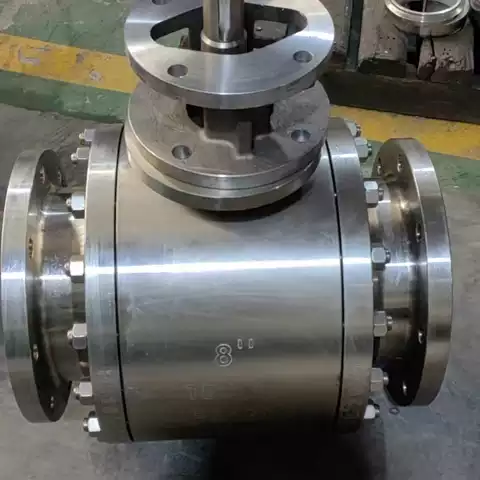
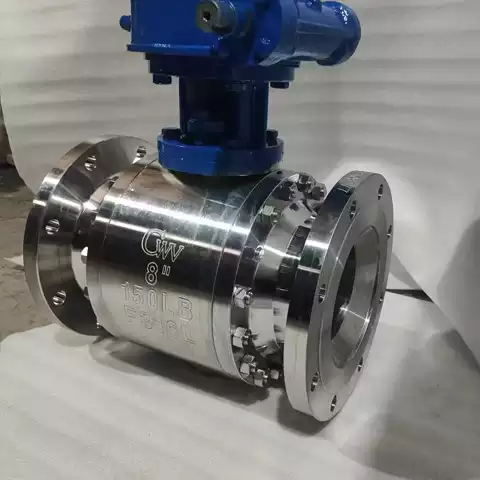
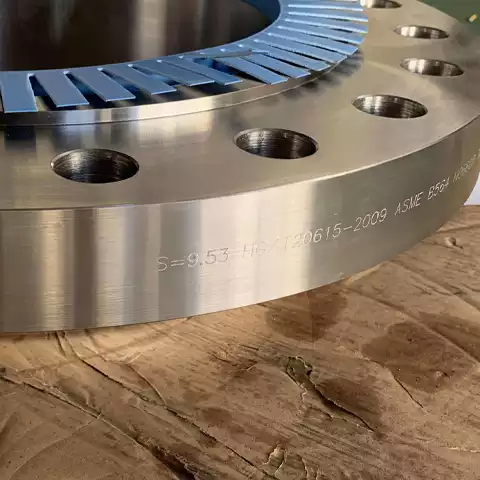
For valve marking, the objective should not be to create the deepest possible indentation. The better approach is to find a balance between mark permanence, readability, and controlled material deformation.
This is particularly relevant when marking pressure-containing valve components. A mechanical marking process should be selected and validated according to the material and engineering requirements of the specific component.
Industry standards can also influence the marking method and location. For example, API 6D includes requirements for valve identification and recognizes low-stress marking methods for applicable valve components. However, manufacturers should not interpret this as one universal dot peen depth requirement for every valve.
A practical approach is to perform test marking on representative material or production parts before setting the final parameters. The test can confirm whether the characters remain sufficiently clear after handling, finishing, or other manufacturing processes while avoiding unnecessarily aggressive impact.
In production, depth should therefore be treated as one part of the overall marking process rather than the only measure of marking quality.
Choosing a Dot Peen Marking Machine for Valve Manufacturing

Choosing a dot peen marking machine for valve applications involves more than looking for the machine with the strongest impact. The equipment should match the valve dimensions, material, marking location, and identification requirements.
Marking Force and Depth Control
A machine with adjustable marking parameters gives manufacturers greater control when working with different materials and valve sizes.
This is particularly useful when the same production line handles stainless steel, carbon steel, or alloy steel components. Rather than using one aggressive setting for every part, operators can establish suitable parameters for each application.
A controlled marking process also helps maintain consistency between individual valves, which is important when serial numbers, heat numbers, or traceability codes need to remain uniform across a production batch.
Marking Area and Valve Size
The physical size and shape of the valve should also influence machine selection.
For smaller valve components, a standard dot peen marking system may provide sufficient working space. Larger valve bodies or flanges may require a larger marking area, appropriate fixtures, or a configuration designed for positioning bigger workpieces.
Curved or irregular surfaces require particular attention to positioning. The marking head needs to remain properly aligned with the surface so that the dots are formed consistently and the resulting characters remain readable.
Identification and Traceability
The type of information being marked is another consideration. A valve manufacturer may only need to mark a model number or serial number, while another application may require a Data Matrix code containing production information.
A suitable dot peen marking machine can support different marking formats, including:
- Alphanumeric characters
- Serial numbers
- Logos
- Part numbers
- Heat numbers
- Data Matrix codes
For higher-volume manufacturing, automated marking can also reduce manual data entry and improve consistency. The marking system may be integrated with production equipment or a traceability system so that variable information is transferred automatically to the marking machine.
Ultimately, the right machine is not necessarily the one capable of producing the deepest mark. For valve manufacturing, a better choice is a system that provides sufficient marking force, consistent positioning, adjustable parameters, and reliable marking quality for the specific materials and components being produced.
By validating the marking process before production and selecting equipment suited to the valve’s geometry and traceability requirements, manufacturers can achieve permanent identification while keeping the marking controlled and consistent.