
A Batch of 8 Units of 50W MOPA Fiber Laser Marking Machines Shipped Today
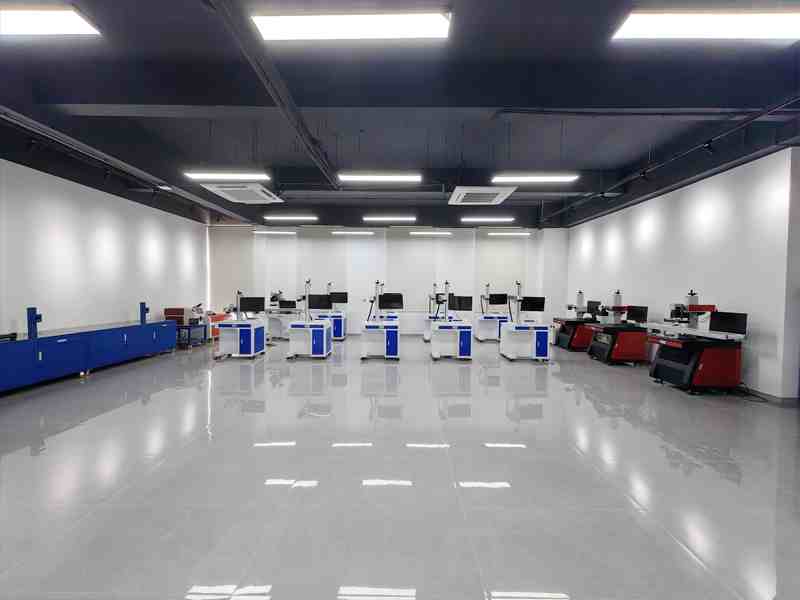
After we began supplying custom laser marking machines for surface processing in the laptop industry, our customer recommended us to another manufacturer—this time a smartphone producer based in China. This new client holds over 10% of the global smartphone market and produces and sells over 100 million devices annually.
Previously, the client used dozens of fiber laser marking machines from Han’s Laser for identification and traceability coding on internal injection-molded plastic components. Since smartphone parts are typically small, marking tiny QR codes (e.g., 2×2 mm) on flame-retardant ABS+PC materials requires precise energy control to avoid deformation. Therefore, we recommended a 50W MOPA laser source from Chuangxin, and won the customer’s trust through actual testing and sample results.
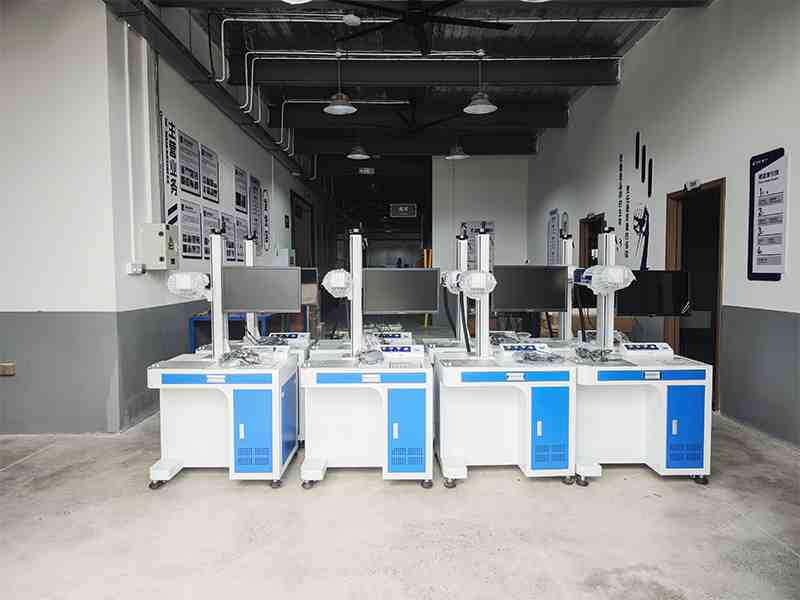
This batch of eight 50W MOPA fiber laser marking machines marks the client’s first sample order and will be installed on existing production lines to replace older 30W models that have been in service for years. With strong in-house design and production capabilities, this client has traditionally purchased standard laser marking machines and independently developed automated fixtures and processes to achieve highly automated marking in production.
We also proposed an alternative solution that integrates vision positioning, which would involve upgrading or adding control cards with visual modules to improve flexible production and fast line-switching. Although the client has extensive experience with micron-level vision detection and agrees with the technical principles, they currently have no need for vision-based laser marking due to their large inventory of custom fixtures and a product development strategy that emphasizes universal design.
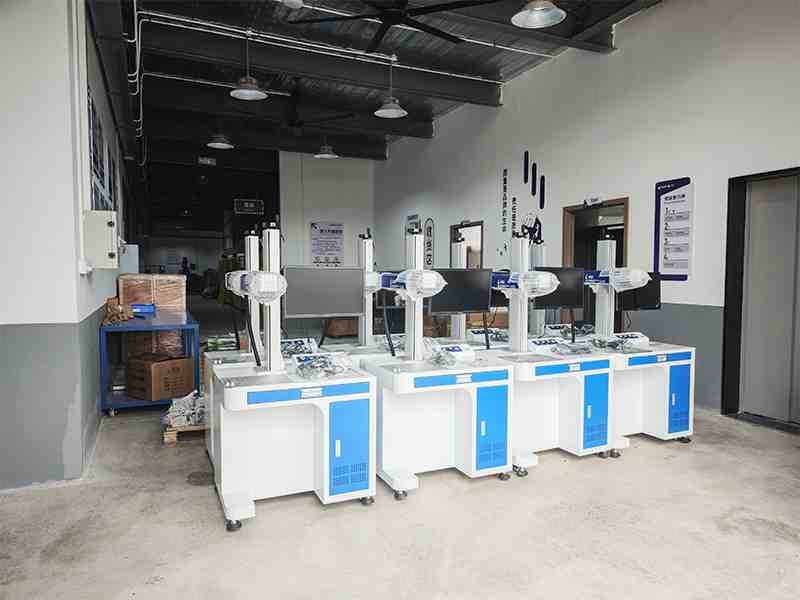
The client has also shown interest in our 2-in-1 and 5-in-1 systems previously supplied to the laptop industry. After the machines are delivered and installed, we will dispatch our technical engineers to the site for several days to assist in optimizing laser parameters and to begin discussions on deploying multi-in-one laser marking systems and automated loading/unloading solutions.
If you’re looking for professional automated laser marking machines, feel free to contact us for more information.
Application Context for A Batch of 8 Units of 50W MOPA Fiber Laser Marking Machines Shipped Today
Fiber and MOPA laser marking projects are often used for metal parts, anodized layers, nameplates and electronics housings. The key is to match laser power, pulse width and beam delivery to the desired contrast, depth and cycle time.
Recommended CNMarking Solutions and Internal Resources
If you are comparing equipment for a similar application, the following CNMarking pages are useful next steps:
- Fiber Laser vs CO2 Laser Marking Machine – choose the right laser source by material.
- Enclosed High Peak Power MOPA Fiber Laser for Anodized Layer Ablation – review a dedicated MOPA solution for anodized layer removal.
- Semi-enclosed 3-in-1 MOPA Fiber Laser Marking Machine – see a three-side marking and ablation workstation.
- Notebook Anodized Aluminum Laser Marking Case – learn how laser marking supports notebook surface treatment.
How to Choose a Similar Marking Setup
Before selecting a machine, prepare a short sample brief with the following information. This helps CNMarking recommend the right laser, dot peen, scribe or automation configuration instead of only matching a picture.
- Base material and surface coating
- Required contrast, depth or ablation result
- Cycle time target and marking area
- Enclosure, extraction and automation needs
Related Reading
- Enclosed High Peak Power MOPA Fiber Laser for Anodized Layer Ablation
- Semi-enclosed 3-in-1 MOPA Fiber Laser Marking Machine
- Notebook Anodized Aluminum Laser Marking Case
- How to Choose the Right Laser Marking Machine for Your Factory
FAQ
Can CNMarking test my own samples before I choose a machine?
Yes. For most marking, cleaning and welding projects, sample testing is the fastest way to confirm contrast, depth, speed and fixture requirements before final configuration.
What information should I send for a quotation?
Please send the material, part size, marking or cleaning area, required result, production volume and any automation or traceability requirements. Photos or short videos of the current process are also helpful.