
Precautions for Using Laser in Winter
The weather is getting colder, and the temperature in many areas will drop below zero. For water-cooled lasers, if the cooling water inside freezes due to the low ambient temperature, the laser may be difficult to repair or even scrapped.
The Harm of Low Temperature to Laser
1. Ice Ruptures Cooling Pipes
Once the cooling water inside the laser freezes, the internal cooling pipes will be broken after the cooling water expands and leaks. Leakage will also cause damage to electrical components and contamination and damage to optical devices. For example, optical devices such as the quartz head of the optical fiber that are in direct contact with the cooling water will also crack due to freezing of the water.
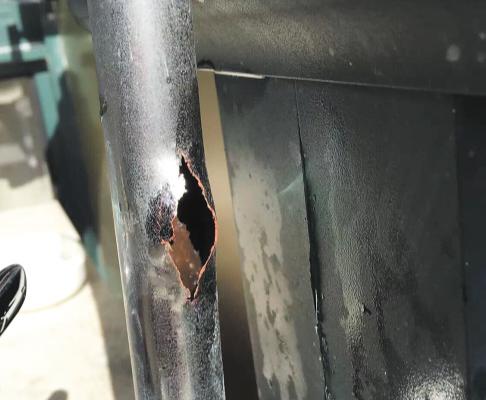
2. Ice Causes the Cavity to Deform
If ice forms inside the laser, the laser’s resonant cavity and optical path components will be squeezed, resulting in irreversible deformation and displacement. This will cause the laser’s output power to drop, the spot pattern to become abnormal, and in more serious cases, the laser may even be unable to emit light.
How to Prevent It?
1. Keep the Ambient Temperature Above Freezing
Please make sure that the ambient temperature of the laser is within the temperature range required for normal operation of the laser. Most lasers require an ambient temperature of more than 5°C. Installing air conditioners or other heating equipment and ensuring that these facilities can operate continuously and safely can effectively prevent ice from forming inside the laser.
2. Keep the Water Chiller Running Continuously
When the laser is in a short-term shutdown or standby state, please keep the water chiller running continuously. Because the continuous flow of water can delay the occurrence of ice to a certain extent. (Also make sure that the ambient temperature is above freezing.)
3. Drain the Coolant
If the laser needs to be shut down, stored or transported for a long time, make sure that the coolant in the laser pipeline is drained. Blowing clean, oil-free compressed air or nitrogen from the water inlet can effectively drain the remaining coolant in the pipeline. However, the pressure of compressed air or nitrogen needs to be kept within a certain range, because excessive pressure can easily damage the pipeline. Some lasers use self-locking quick-connect connectors for water connections. In this case, please use the original quick-connect connector to open the self-locking device for drainage operations.
Application Context for Precautions for Using Laser in Winter
This page is part of CNMarking’s Industrial marking and traceability content library. For buyers comparing similar equipment, the key question is not only whether the sample can be marked, cleaned, welded, or processed, but also whether the final setup can match production speed, fixture stability, marking depth, visual quality, and long-term maintenance requirements. The application is most relevant to industrial part identification, product traceability, sample testing, equipment selection, and production-line marking projects.
When evaluating a similar project, CNMarking normally checks the workpiece material, available marking area, expected cycle time, required code or logo content, fixture method, safety enclosure needs, and whether the process must connect with an existing line, MES, scanner, or operator workflow. These details help choose between a standard machine, a semi-custom workstation, or a fully automated solution.
Recommended CNMarking Product Pages
Related CNMarking Case Studies and Guides
- How to Choose the Right Laser Marking Machine for Your Factory
- VIN Number Marking Machines Guide
- Dot Peen vs Laser Marking Guide
How to Choose a Similar Setup
- Send clear photos or drawings of the workpiece, including the required marking or processing position.
- Confirm the material, surface coating, required depth or contrast, and any durability requirements after cleaning, painting, heat treatment, or outdoor use.
- Share the expected production rhythm, such as pieces per hour, operator loading method, fixture constraints, and whether automatic code reading is required.
- For new applications, request sample testing first so the marking quality, processing speed, and fixture plan can be confirmed before mass production.
FAQ
Can CNMarking test my own samples before quotation?
Yes. For most marking, cleaning, welding, and precision laser processing projects, sample testing is the safest way to confirm process feasibility. A short video, test photos, and recommended configuration can be prepared after the workpiece and target result are confirmed.
What information should I send for a faster recommendation?
Please send the material, dimensions, required content, target cycle time, production environment, and any automation requirements. If the project is replacing an existing process, also share the current pain point, such as low efficiency, unstable quality, consumable cost, surface damage, or traceability requirements.
Need a similar solution? Contact CNMarking with your workpiece photos and target result. Our engineers can recommend a standard model or a customized workstation based on your sample and production requirements.