
Laser Cleaning Machine Price 2026: Cost by Power, Cooling and Application
Laser cleaning machine price discussions usually go wrong in the first five minutes. A buyer asks for a number, a seller replies with a power label, and both sides skip the decisions that actually control budget: what contamination must be removed, what substrate must be protected, how parts will be handled, how long the machine must run per shift, and what extraction, optics protection and labor model are acceptable on site. A quote can look attractive and still fail the application once real production constraints appear.
This 2026 guide is written for B2B buyers and process teams who need a defensible cost model rather than a marketing headline. It explains how price shifts by power class, cooling architecture and application type without inventing machine speeds, universal parameters or made-up list prices. The correct budget still depends on sample testing with the real part, contamination and acceptance standard.
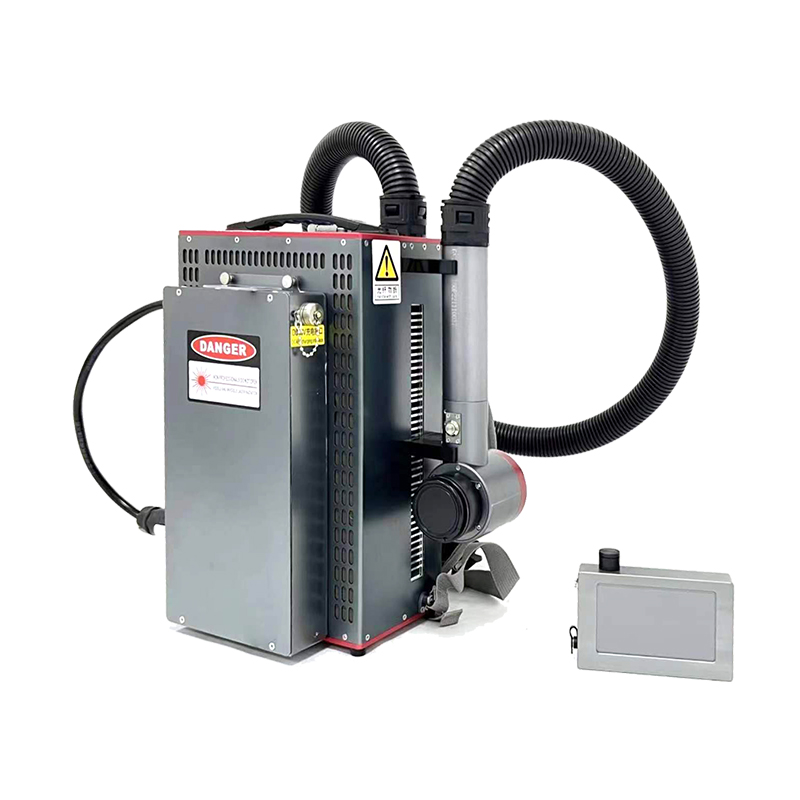
What “Price” Means in a Real B2B Purchase
A procurement discussion should separate at least three numbers. The first is the quoted machine package. The second is the installed project cost after utilities, extraction, fixtures, operator protection and commissioning are included. The third is the operating cost per accepted part, meter or square area after labor, optics care, filters, downtime and rework are measured. These numbers move independently. A lower entry quote can create a higher installed cost if the supplied package leaves out a required extraction module, guarding change or part-handling tool.
For laser cleaning, the safest buying question is not “What is the cheapest unit?” It is “What configuration clears this contamination to the required quality at the planned duty cycle without damaging the substrate?” That framing keeps price attached to process reality.
Budget by Power Class, Not by a Single Wattage Claim
| Power-class discussion | Typical commercial use | Main cost pressure | What to verify before budget approval |
|---|---|---|---|
| Entry-power portable systems | Spot cleaning, maintenance, smaller work areas, lower daily duty | Operator handling time can dominate total cost | Cycle time on the real contamination, ergonomics, and whether manual repositioning is acceptable |
| Production-balanced systems | Mixed workloads with repeat jobs and moderate throughput targets | Cooling, extraction and optics protection become more important | Shift-level stability, extraction load, and maintenance interval under representative use |
| Higher-throughput cell concepts | Heavy contamination, larger area, automation, or repeat industrial cells | Project engineering, safety boundary and utilities can outweigh the source price delta | Integrated handling, fixture repeatability, downtime risk, and service response strategy |
That table avoids one common mistake: treating a power label as if it were a final application answer. More available power can reduce cleaning time in some jobs, but it can also raise optics exposure, extraction demand, cooling complexity and capital cost. On sensitive surfaces, more aggressive energy may increase process risk rather than value. A quote request should therefore state the result that must be achieved, not only the power level that the buyer expects to see.
How Cooling Architecture Changes the Budget
| Cooling path | Budget effect | Operational question | Hidden risk if skipped |
|---|---|---|---|
| Air-cooled portable package | May simplify footprint and transport | Can it hold the required duty cycle in the actual workshop climate? | Throughput or uptime drops when ambient heat, dust or shift length exceed the test condition |
| Integrated water-cooled portable system | Adds chiller and maintenance considerations | Does the site support water quality checks, hose routing and seasonal maintenance? | Cooling faults, condensation risk or unstable performance if setup discipline is weak |
| Water-cooled production cell | Usually increases project scope but can stabilize repeat production | Will the gain in repeatability and duty cycle offset the added utilities and engineering? | Underestimating installation, extraction coordination and service planning |
Cooling is not only a technical choice; it is a cost boundary. A portable package that looks simple on paper can become expensive when it slows the job, overheats in the actual environment or forces more operator pauses than expected. A water-cooled system can be the better commercial choice when stable production matters, but only if the buyer budgets for its real maintenance and utility demands from the start.
Application Type Controls the Useful Price Range
| Application | What changes the budget most | Why supplier prices diverge | Sample-test boundary |
|---|---|---|---|
| Rust removal on fabricated steel | Contamination thickness, target finish and access to corners | Some quotes assume light flash rust while the real job may be layered scale or mixed coatings | Test low, normal and worst-case rust samples and time the full handling cycle |
| Selective paint or coating removal | Need to protect the substrate and keep the cleaned edge controlled | Precision requirements can demand a different process window than bulk stripping | Approve substrate appearance, edge control and downstream adhesion after cleaning |
| Weld preparation or oxide removal | Consistency, travel path and integration into the fabrication sequence | Quoted speed often ignores positioning and inspection | Measure total takt including clamp, clean, inspect and release |
| Mold cleaning and maintenance | Part geometry, downtime pressure and safe access | A portable quote may omit fixture or handling tools needed for repeat maintenance | Validate cleaning result, operator posture and thermal recovery between jobs |
| Sensitive surface cleaning | Substrate protection and repeatable quality criteria | Low-damage cleaning may require a more controlled process than the buyer first expected | Test visual change, roughness, residue and any downstream bonding or coating requirement |
Application-fit is why two suppliers can describe the “same” laser cleaning machine and still arrive at very different budgets. One may be pricing a lighter-duty maintenance tool; the other may be pricing a production-ready package with extraction, stability and service assumptions that suit a factory cell. Without a shared application brief, the cheaper quote is not necessarily the lower-cost solution.
Do Not Ignore Labor, Extraction and Optics
For many jobs, labor is the cost item that grows fastest after installation. If an operator must reposition the head repeatedly, shield nearby surfaces, inspect cleaned areas under better lighting, or pause frequently to protect optics, the real cost per part climbs even though the machine price does not change. A buyer should ask the supplier to time the complete task, including setup, masking if any, cleaning, inspection and unload, on a representative part.
Extraction belongs in the same model. Removing rust, paint, oil or coating residue loads filters, affects visibility and changes maintenance frequency. If a quotation is based on cleaner material than the real job, filter life and optics cleanliness can be overstated. Protective windows and optics should be treated as recurring budget items, not as invisible accessories.
Compare Laser Cleaning Against the Existing Process Correctly
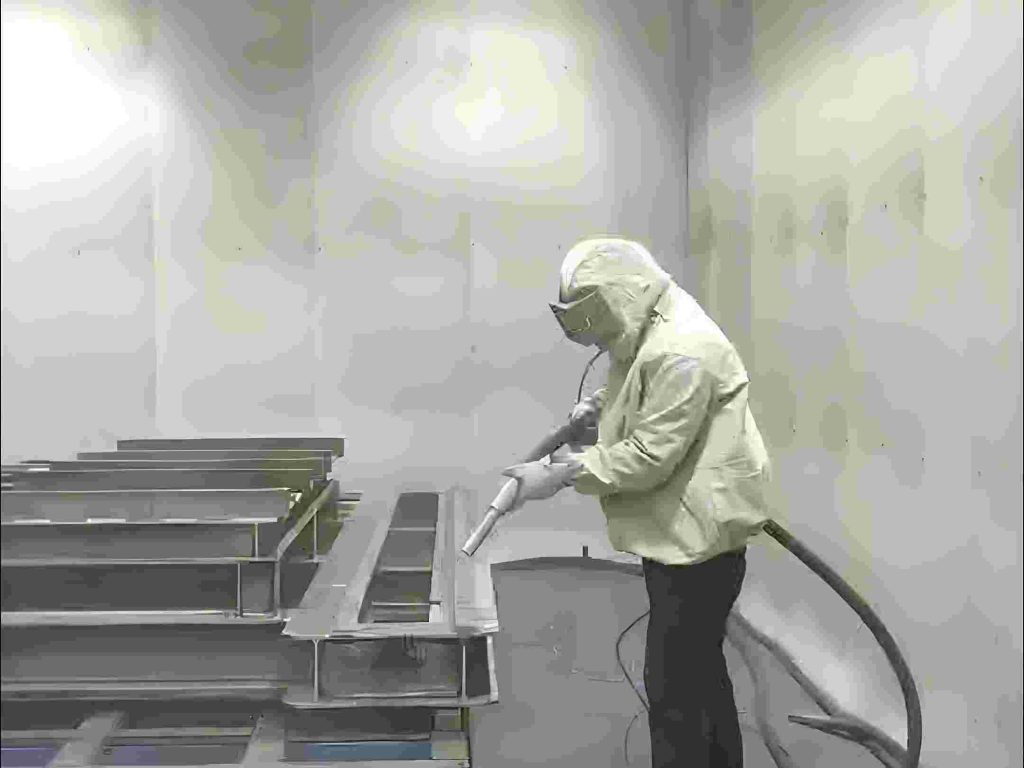
If the current method is blasting, include abrasive media, compressor energy, masking, cleanup, disposal and operator exposure controls. If the current method is chemical cleaning, include chemical purchase, rinsing, drying, treatment, ventilation and compliance effort. If the job is outsourced, include transport, queue time, minimum charges and the cost of delayed production. Laser cleaning can reduce some of these items, but it replaces them with its own cost stack: optics care, extraction, maintenance, training, and sometimes more careful process validation.
The commercial decision is strongest when both methods are compared on the same acceptance standard. A lower-cost process that leaves residue, changes the surface condition too much or creates rework is not a true substitute.
Safety, Utilities and Shutdown Discipline Affect Ownership Cost
Laser cleaning budgets also need a safety and utilities line. Buyers should confirm power supply requirements, extraction routing, cable management, operator PPE expectations, and the maintenance procedure for optics and cooling components. When water cooling is involved, shutdown discipline matters because uncontrolled cooling practice can increase moisture or service risk. Operators should follow the machine and chiller procedure exactly rather than improvising around ambient temperature.
These points matter financially because unstable setup increases downtime and can accelerate wear. A machine that looks inexpensive in a spreadsheet becomes costly if it repeatedly stops production for preventable alarms, extraction issues or optics contamination.
Quote Checklist for a Reliable 2026 Budget
- Send the substrate material, contamination type, contamination thickness or severity description, and photos of the real part.
- State the target finish after cleaning, including any no-damage areas or cosmetic boundaries.
- Provide area per part, daily volume, shift pattern and whether the work is stationary, portable or cell-based.
- Describe the available utilities, workshop climate, and whether the process must run indoors, outdoors or in mixed environments.
- Request a sample test that separates confirmed results from estimated ones.
- Ask for a total package list including extraction expectations, maintenance items, training and service assumptions.
- Record what is intentionally excluded from the supplier scope so the missing cost does not reappear later as a surprise.
Do You Need Cleaning or Permanent Marking?
Some RFQs mix surface cleaning with permanent identification. If the actual goal is to place serial numbers, logos, QR codes or traceability marks on metal, review the laser marking machine solutions instead of overbuying a cleaning setup. If the plant needs indented permanent IDs on heavy components, compare the dot peen and scribe marking range. For cleaning-specific process selection, the most relevant next comparison is continuous vs pulsed laser cleaning.
CTA: Ask for a Cost Model, Not Just a Quote
Start with the CNMarking laser cleaning machine range, then send your substrate, contamination photos, area per part, daily volume, cooling preference and acceptance criteria through the contact page. Zixu Chuke can review whether a portable package, a production-balanced system or a higher-throughput cell concept matches the application before you compare price lines that do not actually solve the same job.
Frequently Asked Questions
Can I estimate laser cleaning machine price from wattage alone?
No. Wattage by itself does not define the real budget. Cooling architecture, extraction, optics protection, operator handling, fixture design and the contamination-removal target all change the usable configuration and the total cost of ownership.
Is air-cooled always cheaper than water-cooled?
Not automatically. Air-cooled platforms may reduce chiller complexity, but a slower process, more operator time or weaker duty-cycle fit can make the total project cost higher than a correctly sized water-cooled solution.
How should I compare pulsed and continuous laser cleaning budgets?
Compare them on the same contamination, substrate and acceptance standard. Measure the complete process including setup, cleaning, inspection, extraction load, optics care and operator fatigue rather than a single scan-speed claim.
What should I send before requesting a formal quotation?
Send photos, substrate material, contamination type and thickness, area per part, daily volume, utility availability, preferred handling method, and the surface-quality requirement after cleaning. Those inputs reduce rework and misquoted configurations.