
Chongqing Jinmao Machinery Adopts Zixu 2,000W Handheld Laser Welding for Motorcycle Exhaust Production
Chongqing Jinmao Machinery Co., Ltd. has spent more than three decades producing exhaust system components for motorcycles, automobiles, and general-purpose engines. In 2026, the company began replacing part of its TIG welding workflow with Zixu 2,000W handheld laser welding systems. The first unit performed well enough in production trials that Jinmao placed a repeat order for four additional machines.
For Zixu, the project is a practical local manufacturing case rather than a generic equipment delivery. Jinmao is based in Chengjiang Town, Beibei District, Chongqing, close to Zixu’s former factory site. The two companies were less than one kilometer apart, but the relationship started only after Jinmao searched online for laser welding equipment that could help reduce welding fumes and support cleaner production.
Customer Background: A Local Exhaust System Manufacturer
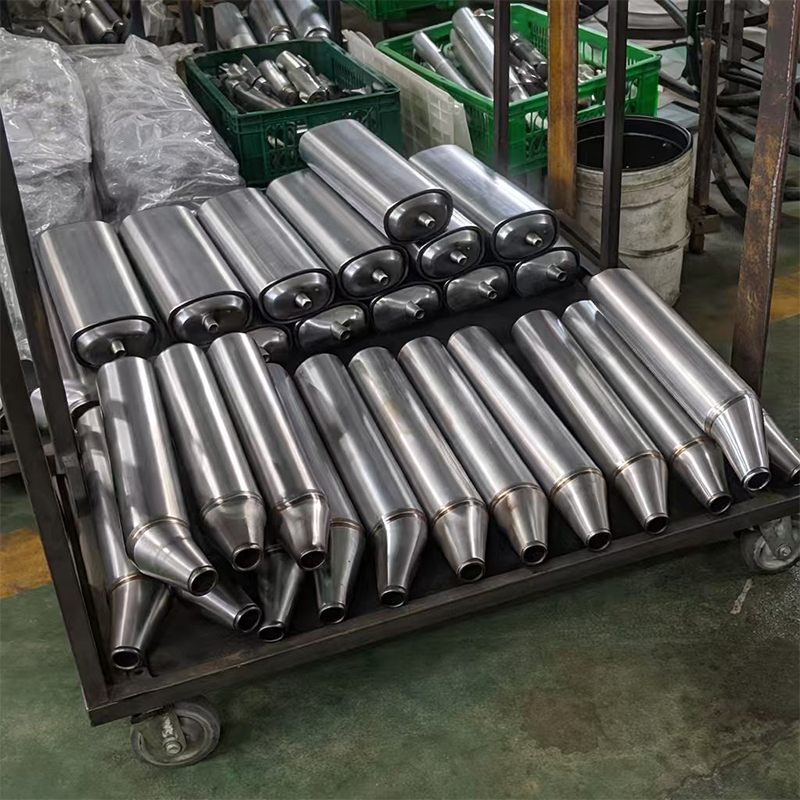
Founded in 1992, Chongqing Jinmao Machinery operates a production facility of more than 8,000 square meters, with fixed assets of around RMB 30 million and annual output value exceeding RMB 90 million. Its product scope includes mufflers, exhaust pipes, and related parts for motorcycles, automobiles, and general-purpose engines, along with sheet metal parts for home appliances.
The customer base listed in the source brief includes Loncin, Zongshen, Lifan, Midea Air Conditioning, and Haier Home Appliances. Jinmao has also been recognized locally for safety production standardization and, in 2024, was honored by the China Disabled Persons’ Federation as a national model unit for employing people with disabilities. These details matter because the welding solution was selected by an established production company, not by a one-off workshop.
Why Jinmao Started Evaluating Laser Welding
Jinmao’s existing welders were already skilled in TIG welding. The source brief does not describe the old process as poor in quality or inefficient for every job. The reason for evaluation was more specific: Chongqing’s environmental and emission requirements were becoming stricter, and the customer wanted a welding process with less fume generation while keeping stable weld quality on motorcycle exhaust parts.
Before selecting Zixu, Jinmao visited multiple suppliers outside Chongqing, including suppliers in Chengdu, Changsha, and Wuhan. The final decision favored a local certified manufacturer because service response and after-sales convenience were important to the production team. For equipment that may become part of daily factory output, local support can be as important as the machine specification.
Handheld Laser Welding Fit the Exhaust Pipe Geometry
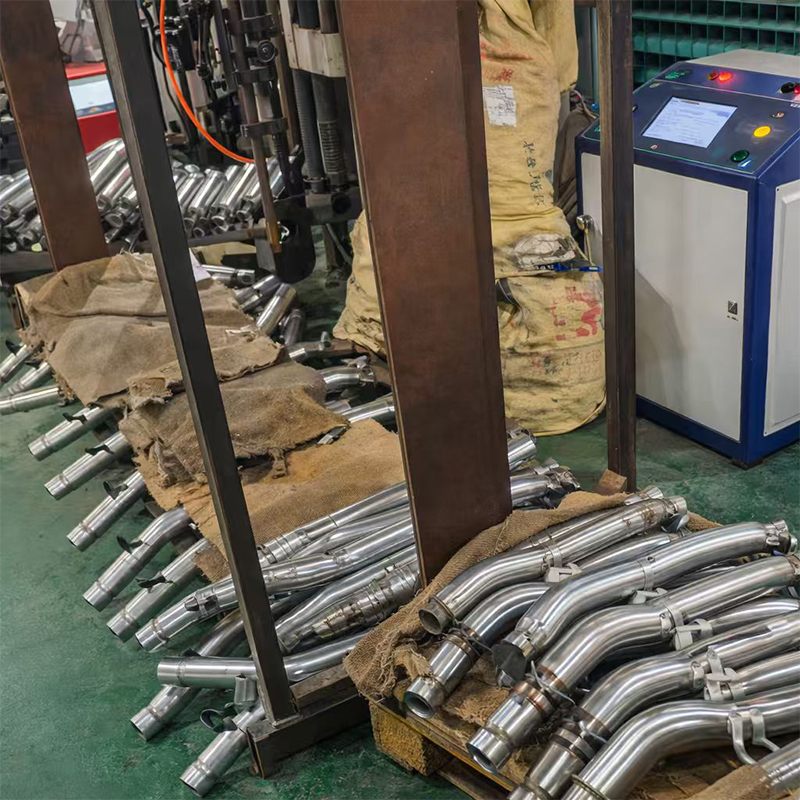
The customer evaluated both handheld laser welding and automated platform welding. Automated platform welding can be attractive for straight, repeated seams, but motorcycle exhaust pipes create a different problem: curved surfaces, changing contours, varied workpiece angles, and mixed batch sizes. In that context, Jinmao’s welders found handheld laser welding more practical for the parts they actually build.
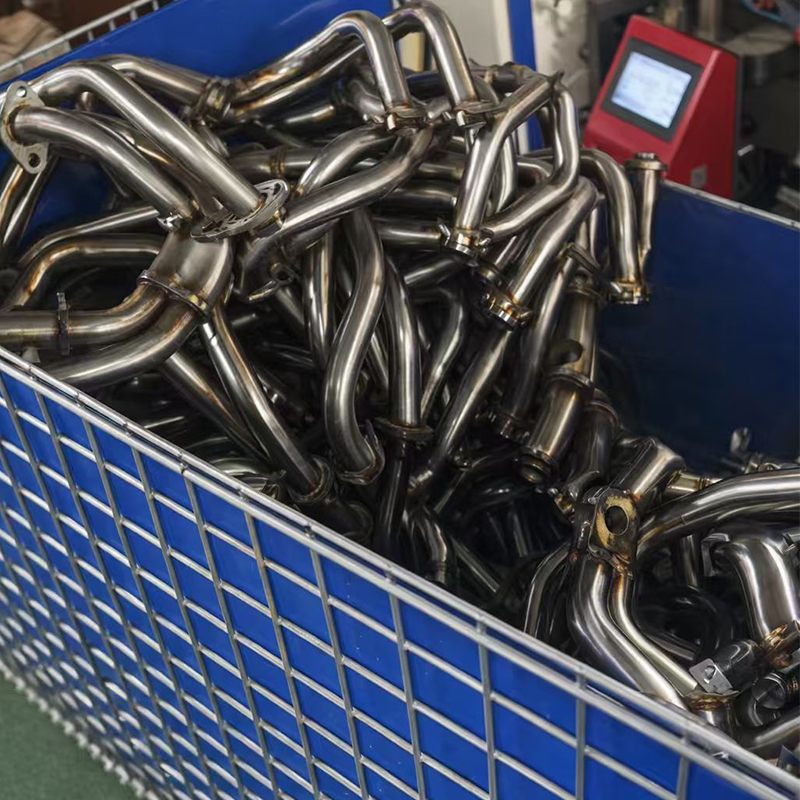
- The 2,000W handheld laser welding system can cover the stainless steel exhaust components shown in the source photos.
- The process requires less operator skill than conventional TIG welding while still supporting clean, repeatable weld seams.
- Lower fume generation helps the customer move toward cleaner production and easier environmental compliance.
- The flexible handheld gun is better suited to curved motorcycle exhaust geometries than a fixed straight-seam platform.
SUP Three-in-One Torch: Welding and Cleaning in One Workflow
A key configuration in the supplied system is the SUP three-in-one welding torch. The source brief highlights this as a practical difference because the same torch supports welding and cleaning functions. Operators can clean the oxidized layer after welding without changing to a separate cleaning tool, reducing one post-welding step and helping keep the weld surface clean.
That workflow is especially relevant for exhaust components. The visual condition of the weld seam matters, but the production team also needs a process that can be repeated across many bent parts and assemblies. By combining handheld welding with immediate cleaning capability, the system supports both appearance and production practicality.
Training, First Trial, and Repeat Order
After delivery of the first 2,000W unit, Zixu provided on-site training for Jinmao’s team. The training covered equipment operation, daily maintenance, best practices, and common troubleshooting. This step was important because the customer was not simply buying a machine; they were moving part of a skilled welding workflow to a new process.
The first deployment received positive feedback from Jinmao’s welding team. After the trial exceeded expectations, the customer ordered four additional units of the same configuration and invited Zixu technicians back for training when the following machines were delivered. That repeat order is the strongest proof point in this case: the system was accepted by the people who had to use it on real production parts.
What Similar Manufacturers Can Take From This Case
This project shows where handheld laser welding is most likely to create value. It is not only a matter of replacing TIG welding with a newer technology. The stronger fit appears when a factory has curved metal parts, visible weld seams, environmental pressure, and a need for fast operator adoption.
For manufacturers working with motorcycle exhaust pipes, automotive components, stainless steel assemblies, or mixed small-batch sheet metal parts, the selection question should be practical: can the welding method reduce fume, simplify training, maintain weld appearance, and still fit the actual part geometry? Jinmao’s repeat order suggests that, for this production scenario, Zixu’s 2,000W handheld laser welding system answered those questions well.
Related CNMarking and Zixu resources: another handheld laser welding case for motorcycle exhaust production, the handheld laser welder category, and the air cooling laser welding machine page.