
Custom 2.5D Auto Lifting Deep Engraving for Foundry Mold Relief Serial Numbers
Chongqing Zixu Machine Works has validated a custom 2.5D auto lifting deep engraving system for a customer in the automotive and motorcycle foundry mold industry. The customer produces steel casting molds that require matching relief serial numbers on corresponding left and right mold halves. After visiting Zixu for on-site sampling and testing, the customer confirmed the result and signed a formal contract.
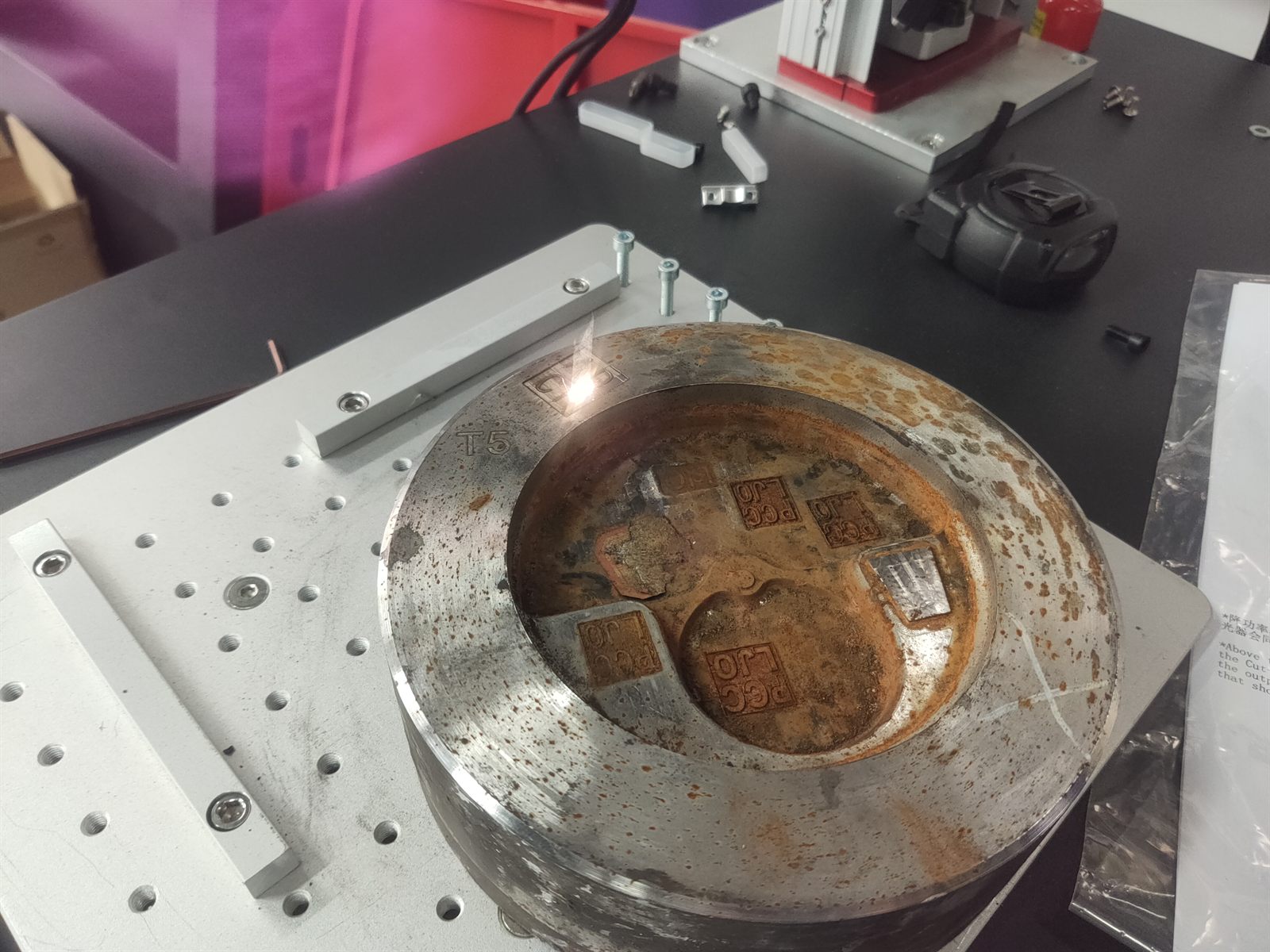
Application: Relief Serial Numbers on Foundry Molds
The application is different from ordinary surface marking. The mold needs raised, durable, and clearly matched serial numbers on two corresponding positions, with a target depth of 0.5 mm to 0.8 mm. For foundry operations, this type of identifier supports mold pairing, production traceability, and quality control after repeated use in demanding metal casting environments.
Because the customer needed relief characters rather than a shallow mark, the process had to remove material accurately over many passes while keeping the same graphic position and character edge quality. This is where laser source selection, 2.5D auto lifting focus control, and layered software processing become decisive.
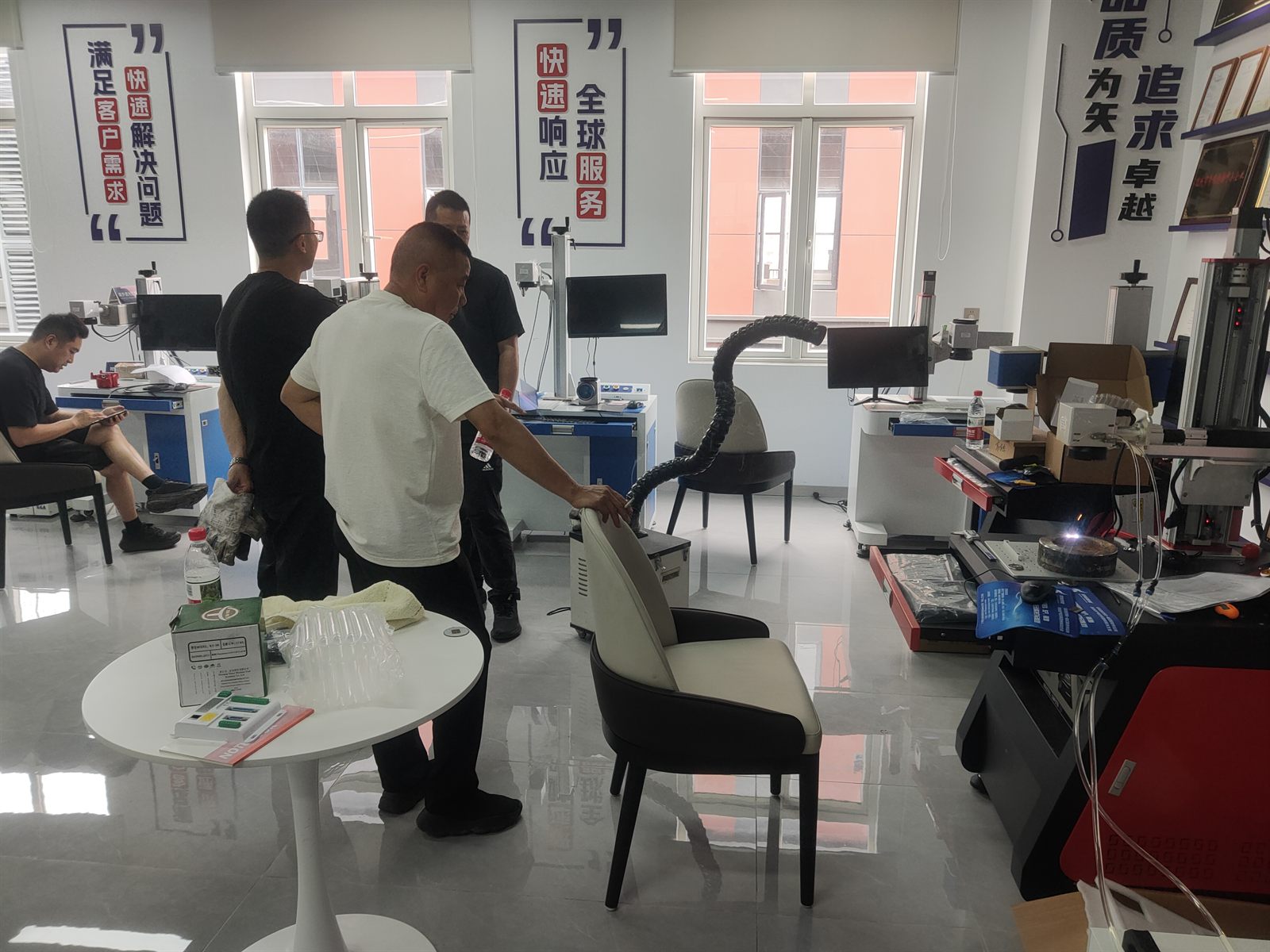
Technical Configuration Used for Sampling
For the sampling test, Zixu configured a functional prototype around a JPT M7 series 300W MOPA fiber laser. The M7 series is suitable for deep engraving, surface treatment, and high-speed marking tasks where pulse width and frequency control help tune energy delivery.
The laser was paired with a 2.5D auto lifting Z-axis deep engraving module, a BSL deep engraving control card, an integrated Z-axis servo motor, and dedicated RZ-CAD software for layered processing. This setup is designed for applications where focus control matters across depth, not only across a flat marking plane.
| Laser source | JPT M7 series 300W MOPA fiber laser |
| Optics | 2.5D auto lifting Z-axis module |
| Control | BSL deep engraving control card with Z-axis servo |
| Software | RZ-CAD layered processing |
| Target depth | 0.5 mm to 0.8 mm relief/deep engraving |
| Sampling result | 0.5 mm relief depth in approximately 12 minutes on the prototype |

Layered Processing Keeps the Laser at Effective Focus
RZ-CAD divides the target graphic into hundreds or even thousands of layers. After a defined group of layers is engraved, the software drives the Z-axis servo to lower the optical path, helping the active processing surface stay near the maximum laser energy focal point.
This focus management is critical for steel mold relief engraving. Once the process moves out of focus, energy density drops and the engraving depth can become inconsistent. By combining MOPA laser control, 2.5D auto lifting Z-axis control, and servo-driven layered processing, the system can keep removing material while maintaining character clarity.
Production System Design
The sampling was completed on a functional prototype. The production equipment to be delivered will use an enclosed cabinet for operator safety and process containment. It will also include compressed air assist to remove floating and surface-deposited metal particles from the work area, plus fume extraction to capture airborne particles during deep engraving.
Air assist and fume extraction are especially important for deep engraving on steel. Vaporized and removed material can redeposit on the workpiece, interfere with later laser passes, and reduce the consistency of the relief surface. The production configuration is therefore planned around both process quality and workplace safety.
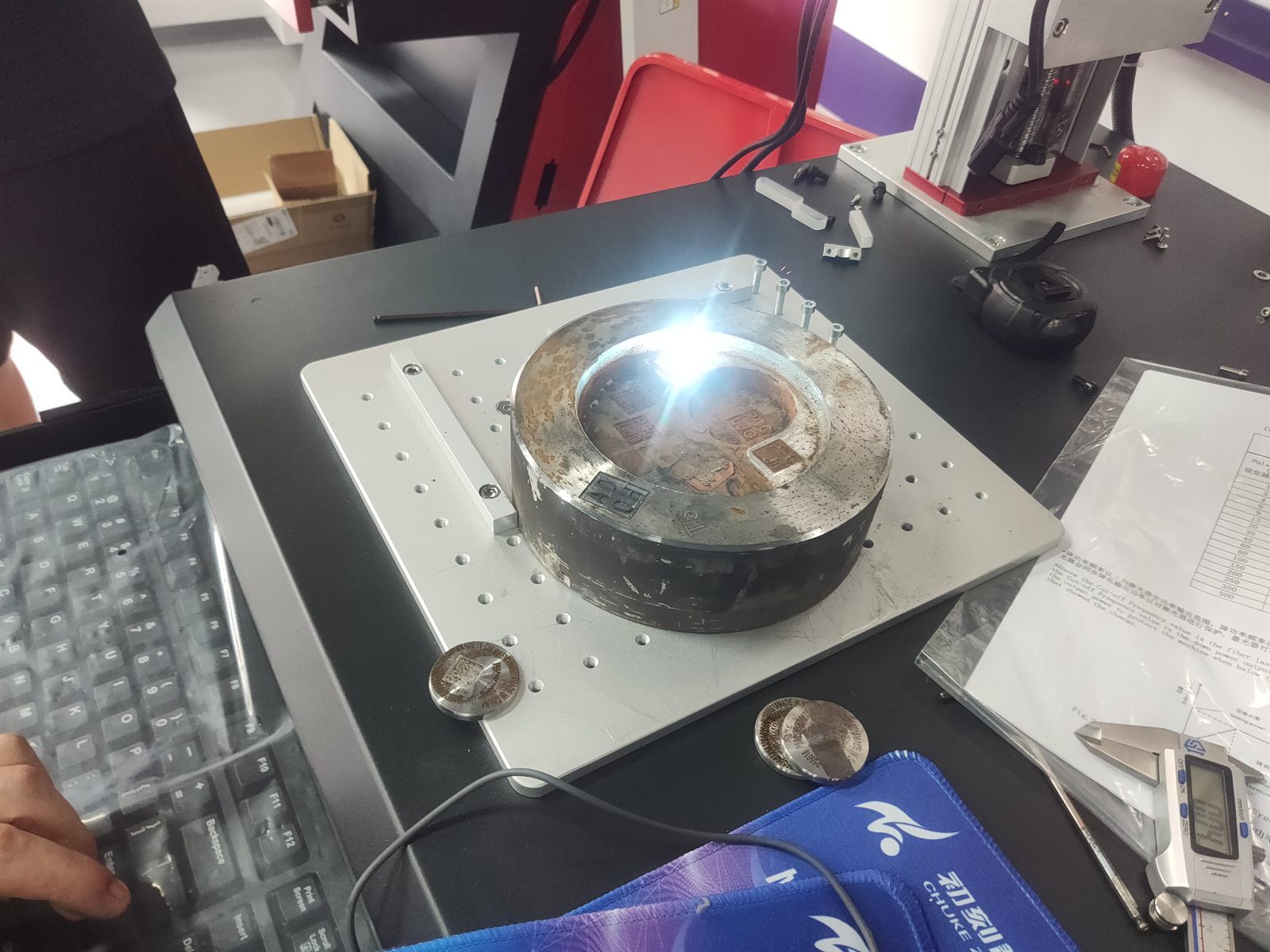
Sampling Result and Expected Production Cycle
During on-site sampling on the customer’s steel workpiece, the prototype produced a 0.5 mm relief result in approximately 12 minutes. With air assist enabled on the production units, the expected cycle time is under 10 minutes for the same 0.5 mm relief depth. The customer confirmed that the sampling result and projected production configuration met its requirements.
The source material also records a 0.5 mm to 0.8 mm depth requirement. For accuracy, the verified timing claim is tied to the 0.5 mm result from the sampling test, while deeper processing remains dependent on the final production recipe, material condition, and required character geometry.
Why This Matters for Mold Production
Matched mold identifiers help production teams trace the correct mold pair and maintain clear quality records. Relief engraving directly on steel mold surfaces can remain readable where shallow marking may become insufficient. For customers in automotive and motorcycle component casting, this type of process can support more reliable mold management without adding a separate labeling process.
Zixu’s local manufacturing base in Chongqing also supported the customer’s decision. For customized high-power laser processing equipment, sampling response, on-site communication, and after-sales support can be as important as the hardware configuration itself. In this case, the successful sampling result and local service capability together led to the signed order.
Related Laser Marking Resources
- Fiber laser marking machines for permanent metal marking applications.
- Dot peen vs. laser marking for choosing the right process by depth, speed, and material.
- Automotive component marking case for another traceability-focused manufacturing application.
FAQ
Can this process reach 0.8 mm relief depth?
The source requirement is 0.5 mm to 0.8 mm. The recorded sampling result was 0.5 mm in about 12 minutes on the functional prototype. Final cycle time for deeper relief depends on production parameters, material condition, and the finished character geometry.
Why use a 2.5D auto lifting system?
Deep engraving removes material over many passes. A 2.5D auto lifting and Z-axis servo setup helps keep the active surface near the effective focus point as depth increases, improving consistency compared with a simple flat-field marking setup.
Why are air assist and fume extraction included?
Air assist helps clear metal particles from the processing area, while fume extraction removes airborne particles. Both features protect the engraving process and support a cleaner production environment.