
Pure Black Marking on Glass with Solid-State Infrared Picosecond Laser
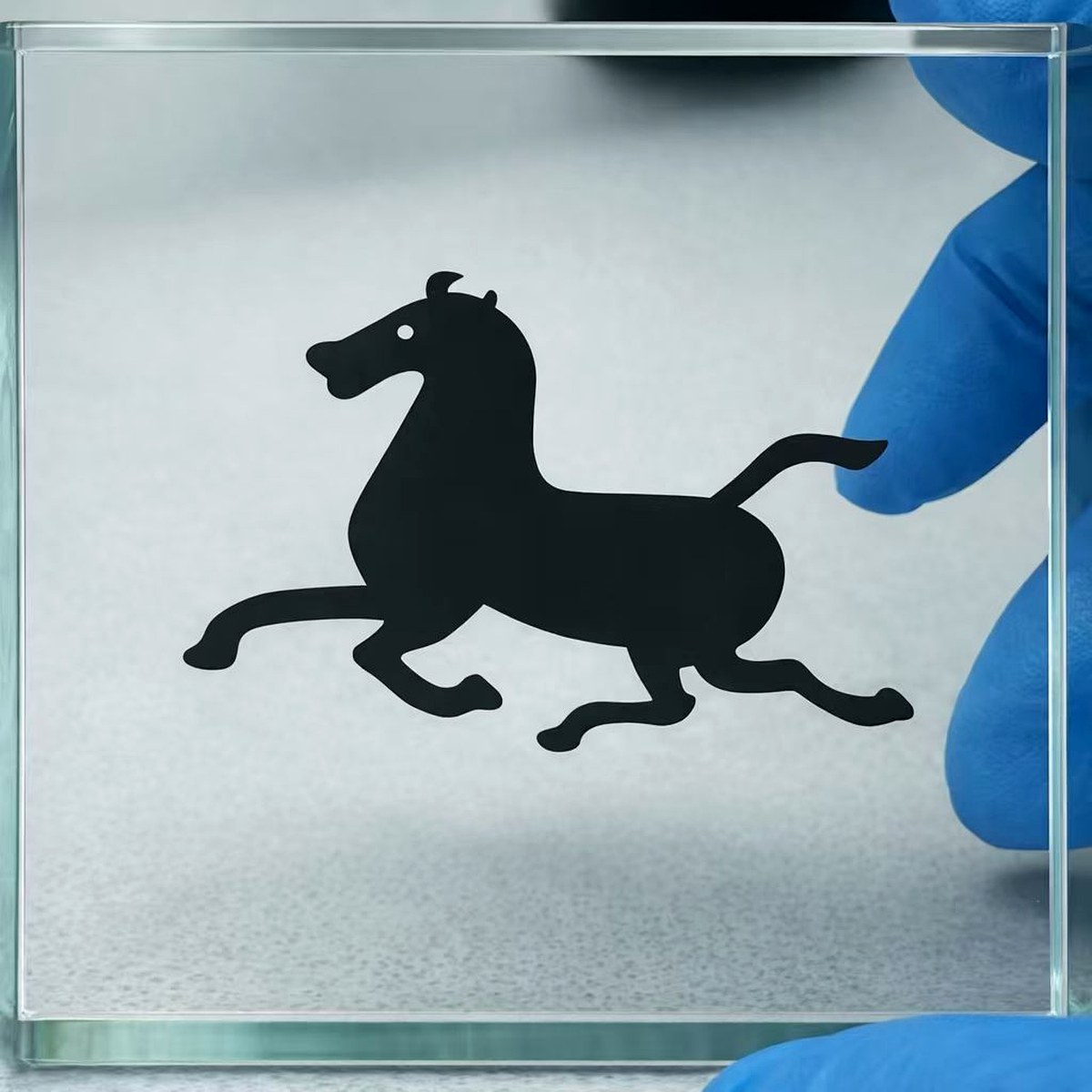
Pure black marking on transparent glass is different from ordinary frosted laser engraving. Standard glass transmits most infrared laser energy, so the process needs a controlled way to convert laser energy into a durable black mark without cracking or chipping the glass. Zixu Marking uses this application note to explain how a solid-state infrared picosecond laser can produce a high-contrast black mark on glass through target-assisted processing.
Application Snapshot
- Material: transparent glass and glass-like parts
- Target result: high-contrast pure black marking
- Laser type: solid-state infrared picosecond laser, commonly around 1064 nm
- Process aid: stainless-steel target material placed tightly against the marking side
- Main value: permanent black marking with low heat-affected-zone risk and strong visual contrast
This article is published as a glass marking application note. CNMarking does not currently list a standalone picosecond glass marking machine product page, so customers should treat this as a process reference and contact us with sample glass, thickness, design size, durability requirement and production volume.
Why Use an Infrared Picosecond Laser?
The key advantage of a picosecond laser is its extremely short pulse duration. A pulse measured in picoseconds releases energy before heat can spread deeply into the surrounding area. This is often described as a cold-processing effect. For brittle materials such as glass, that shorter thermal path helps reduce cracks, edge chipping and thermal stress when the process is correctly focused and fixtured.
A solid-state infrared picosecond source also offers mature industrial stability and good cost-performance for many precision micromachining tasks. The beam quality and high peak power make it suitable for fine marking, drilling, cutting and localized surface modification when the process window is tested carefully.
How Pure Black Marking Forms on Glass
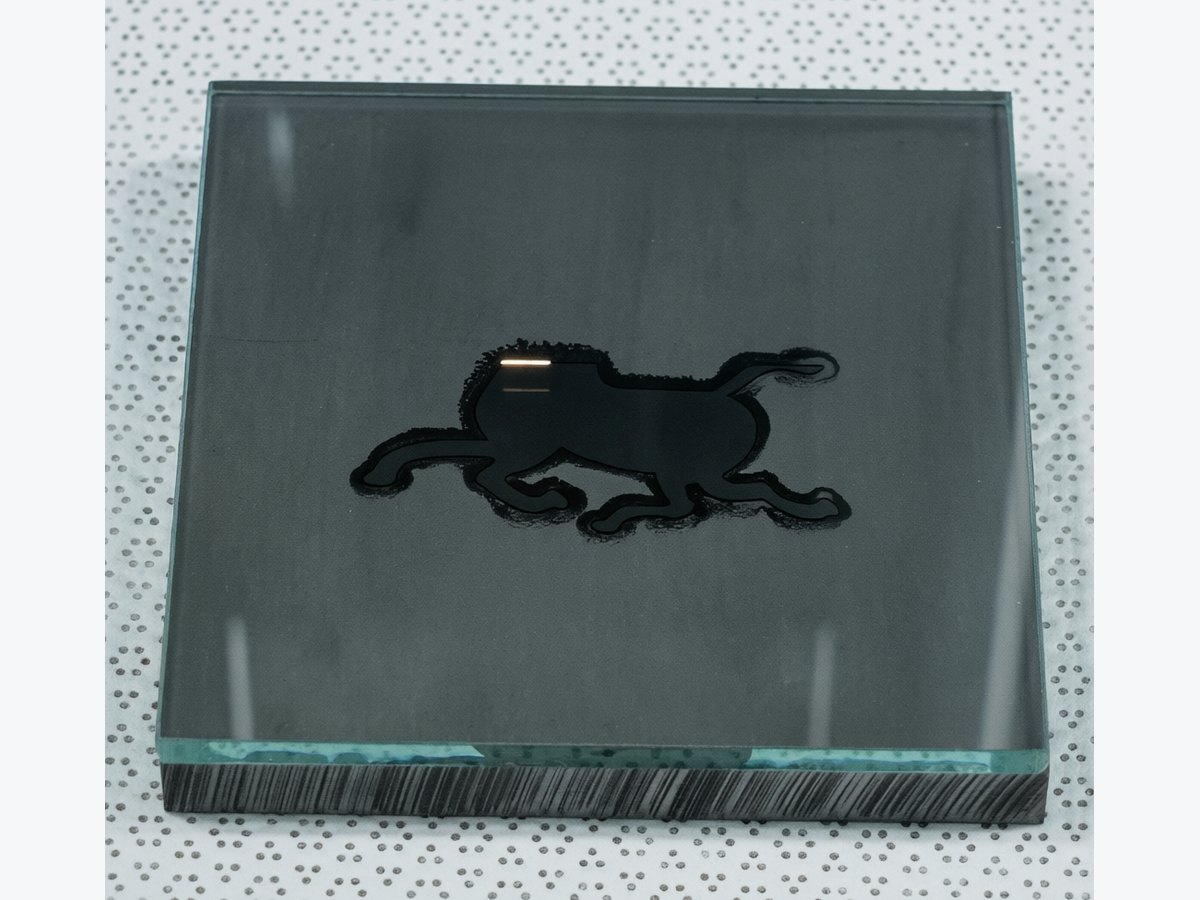
Because ordinary glass is transparent to infrared laser light, the laser is not used in the same way as a direct absorption process. The practical method is target-assisted transfer. A stainless-steel target is placed in close contact with the backside or interface area of the glass. The infrared picosecond beam passes through the glass and focuses at the glass and stainless-steel interface.
- Target ablation: the picosecond pulse ablates a very small area of the stainless-steel surface.
- Particle and film transfer: carbon-containing particles, alloy components, oxide or carbide-like material are transferred and attached to the glass surface.
- Dense black layer: the transferred material forms a high-contrast black mark on the glass.
- Microstructure support: picosecond interaction can create fine microstructures that trap light through repeated reflection and absorption, improving the visual black effect.
The result is a permanent black mark that can be much more visible than light frosted engraving. However, the process depends strongly on target contact, focus position, pulse energy, scanning speed, glass thickness, cleaning and post-process inspection.
Where This Process Is Useful
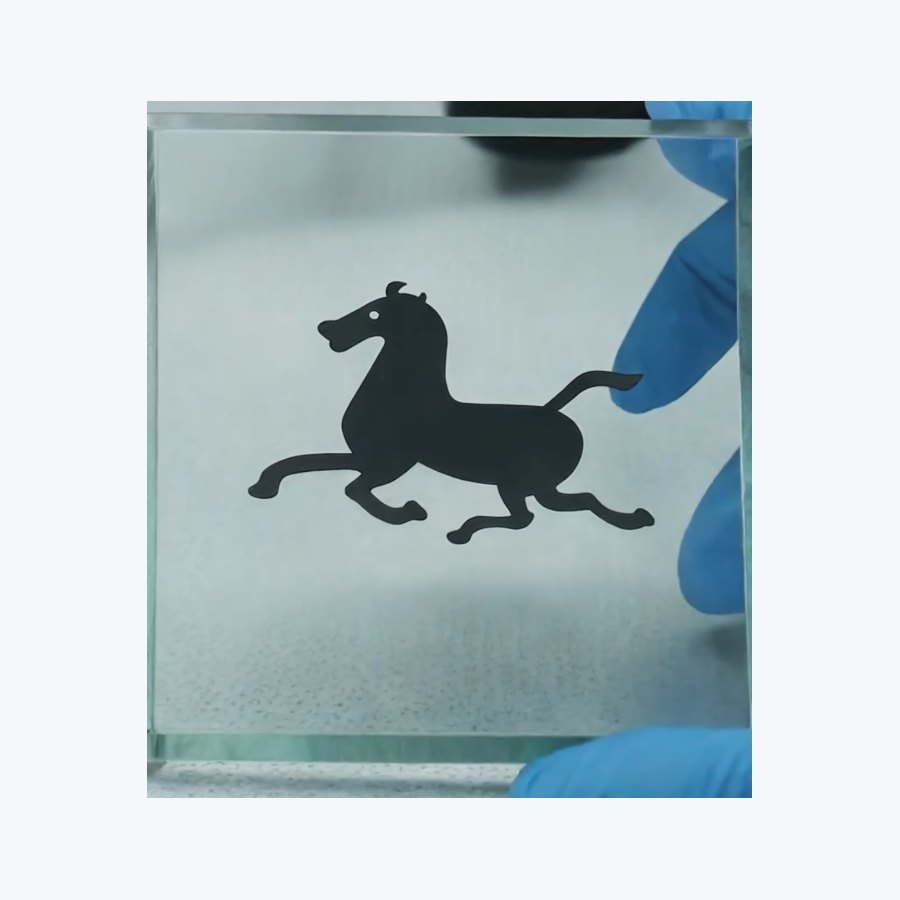
Pure black glass marking is useful when the mark must stay readable on a transparent or reflective part. Typical evaluation fields include automotive glass, medical glass components, optical lenses, laboratory glassware, instrument covers, display panels, decorative crystal and custom high-end glass products.
What to Test Before Production
- Glass composition, thickness and coating condition
- Required black density and viewing angle
- Edge distance and crack-risk area
- Target material contact and fixture repeatability
- Adhesion, wipe resistance, cleaning method and corrosion requirement
- Cycle time, mark size and batch production tolerance
CNMarking Support
Zixu Marking and CNMarking provide laser marking process evaluation for metal, glass, crystal and other industrial materials. For other glass and crystal laser applications, you can also review our 3D subsurface UV laser engraving machine for crystal glass and the laser marking machine category.
If you need black marking on glass, send your sample material, drawing, mark size, quantity and durability requirement through CNMarking contact. Our team can help judge whether infrared picosecond target-assisted marking is a practical route for your application.