
Class 1 Enclosed vs Open Laser Marking Machine
“Class 1 enclosed” and “open laser marking machine” describe very different installation concepts, but the labels are often used too casually in quotations. A buyer needs to understand the complete laser product, not only the source inside it. A high-power source can be integrated into an enclosure that prevents accessible hazardous emission during normal operation, while an open workstation can expose a controlled laser area that requires additional site measures, procedures and personal protection.
This article is a procurement and engineering guide, not a substitute for a site-specific laser safety assessment. Applicable laws, standards, classification evidence and responsible-person requirements vary by country and installation. The manufacturer must confirm the final machine classification and documentation for the delivered configuration. Doors, windows, rotary openings, extraction ports, automation interfaces and service modes can change the safety concept.
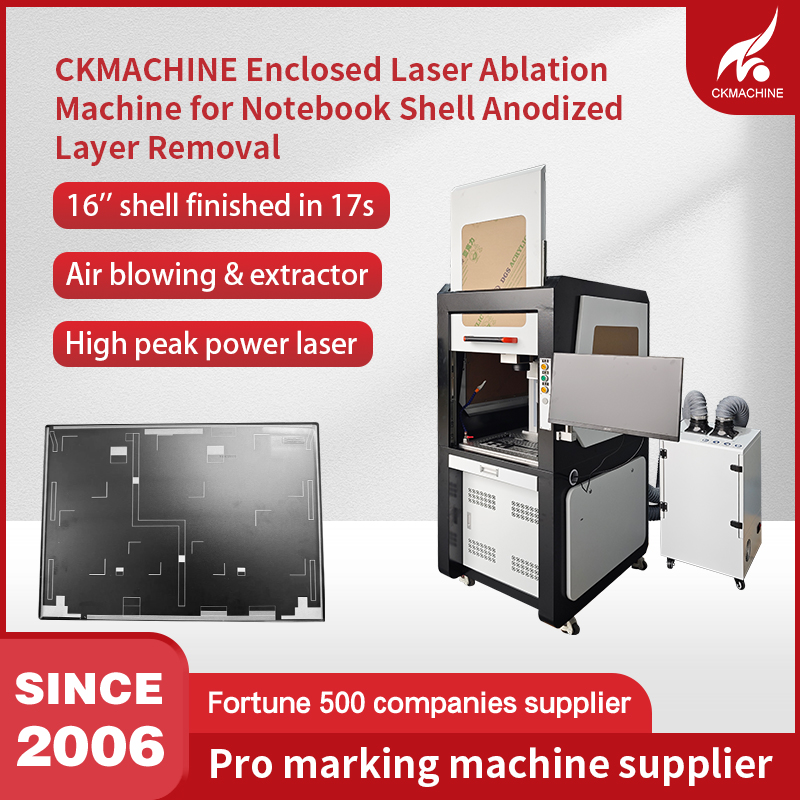
Enclosed vs Open: Practical Comparison
| Decision factor | Class 1 enclosed concept | Open workstation concept |
|---|---|---|
| Operator access during marking | Prevented by enclosure and interlocked access in normal use | Controlled through site rules, guarding or a designated laser area |
| Loading | Door, drawer, shuttle or automation interface | Direct access can simplify unusual or oversized parts |
| Footprint | Includes enclosure, door travel and extraction routing | Machine may look compact, but the controlled area can be larger |
| Fume and debris control | Extraction can be integrated around the closed chamber | Capture depends heavily on hood position and room airflow |
| Integration | Needs safe transfer openings, interlocks and defined sequences | Easier physical access but more site-level guarding work |
| Installed-cost risk | Higher machine package cost may include more safeguards | Lower machine price can exclude room controls, barriers and validation |
What Class 1 Means in the Buying Conversation
Laser classification relates to accessible emission under defined conditions. It is not simply a sticker placed on any cabinet. For an enclosed marking machine, the safety concept normally includes a light-tight enclosure, interlocked doors or drawers, controlled viewing windows, emergency stop, warning indicators and logic that prevents marking when access is open. The delivered documentation should identify the configuration and the conditions under which the classification applies.
Buyers should ask whether classification covers normal operation only, how service access is controlled and what happens when an interlock is defeated for maintenance. They should also ask how the machine behaves after power loss, emergency stop or door opening. Restart should require a deliberate safe sequence. A software screen saying “door closed” is not enough if the physical interlock, safety circuit and stopping behavior have not been demonstrated.
Open Machines Are Not Automatically the Wrong Choice
An open marking workstation can be practical for very large molds, vehicle structures, installed equipment or irregular parts that cannot enter a small cabinet. It may also be integrated into a larger guarded production cell provided by the customer or system integrator. The advantage is access; the cost is that safety responsibility extends beyond the marking head and requires a controlled installation.
The project may need barriers, warning signs, controlled entry, beam-resistant surfaces, local procedures, trained personnel, eyewear selected for the actual wavelength and exposure, and a laser safety assessment. Reflections from metal parts and fixtures must be considered. A nominal machine price that excludes these measures is not comparable with a complete enclosed workstation. The buyer should compare total installed compliance, not just the laser and column.
Door, Drawer and Shuttle Loading
Enclosures can be loaded through a vertical door, hinged door, slide-out drawer, rotary table or shuttle. A manual door is simple but adds opening and closing time. A drawer can improve ergonomics and keep the operator away from the marking chamber, but it needs safe locking and repeatable positioning. A rotary table or shuttle can allow loading while another part is marked, but the divider, indexing position and control sequence become safety-critical.
Select the loading concept from the real part weight, dimensions, daily volume and operator reach. Test pinch points, visibility, fixture change and removal of a failed part. If the component is heavy, the enclosure opening and table must work with the planned hoist or robot. A cabinet that accepts the part dimensions on paper can still fail because the door, fixture or lifting path lacks clearance.
Extraction Is Part of the Machine Concept
Laser marking can create smoke, particles, vapor or odor depending on the material, coating and process. An enclosed chamber helps contain these emissions, but only if extraction captures them near the source and maintains appropriate airflow. The supplier should ask about base material, coatings, oil and expected removal volume before sizing the extraction path. Filter selection and replacement intervals depend on the real process.
Open machines are more sensitive to room airflow and hood position. A portable nozzle placed too far from the mark may not capture the plume. Strong crossflow can spread contamination through the workspace. Extraction should be tested with the real part and mark, including the most demanding recipe. The FAT should check visibility, residue on optics, operator exposure controls and filter status indications. Site occupational-hygiene requirements must be confirmed locally.
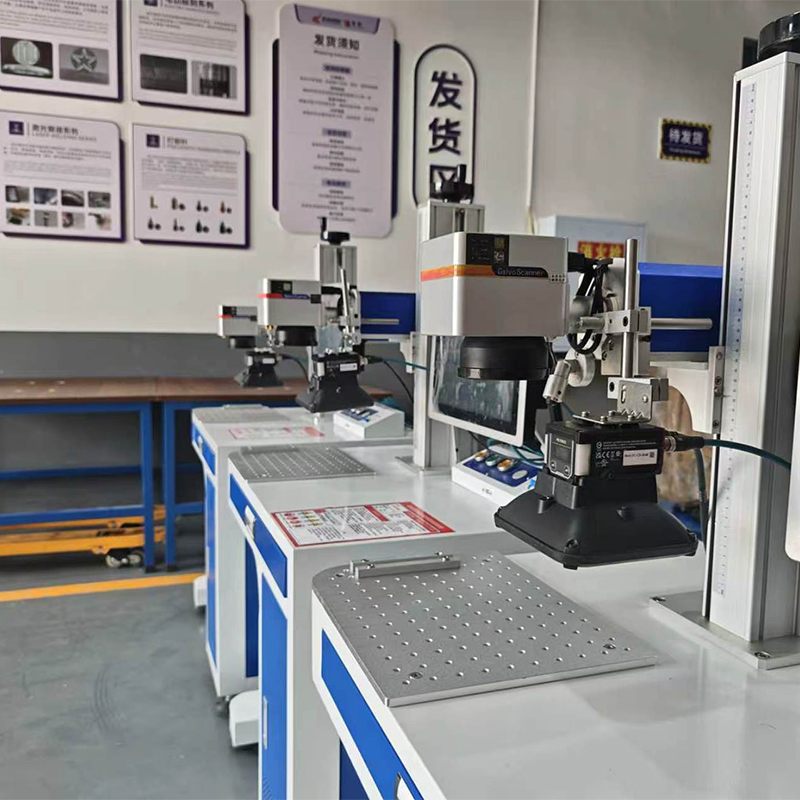
Automation Openings and Integration
A conveyor, robot, rotary axis or feed-through opening can compromise an enclosure if it provides a path for hazardous emission. The integrator must design tunnels, shutters, baffles, safe positions and interlocks for the actual part flow. Signals should cover guard status, part present, recipe ready, marking active, complete, scanner result and fault recovery. The PLC/MES marking integration guide provides a useful starting point for the data flow.
Do not accept a safety concept that exists only in the standalone manual mode if the delivered machine will run automatically. Test normal production, door or shutter fault, part jam, robot stop, emergency stop, loss of air pressure, power recovery and manual maintenance mode. Define who is responsible for the final integrated conformity assessment when the laser source, enclosure, robot and conveyor come from different suppliers.
Installed Cost and Procurement Questions
The Class 1 enclosed machine may have a higher quoted price because the cabinet, safety components, extraction interface and control logic are included. The open machine may be cheaper at purchase but require a controlled room, barriers, site engineering, training and additional validation. Downtime for safety modifications after delivery can exceed the apparent saving. Compare both options with the same boundary: machine, fixture, guarding, extraction, installation, documentation, training, maintenance and local acceptance.
- What exact delivered configuration is classified, and what evidence is supplied?
- Which wavelength, power and operating modes are covered?
- How are doors, drawers, windows and automation openings protected?
- What occurs on interlock opening, emergency stop, power loss and restart?
- How is fume extraction sized, monitored and maintained?
- Who owns final safety validation after robot or conveyor integration?
- Which service operations require a controlled higher-hazard mode?
- Are manuals, labels, schematics, risk assessment and training supplied in the required language?
FAT and Site Acceptance Checklist
Before shipment, inspect the complete machine rather than a similar demo cabinet. Confirm part loading, fixture repeatability, focus, marking recipe, door cycle, interlock behavior, emergency stop and extraction. Run a batch of real parts and include deliberate faults. Record the safety component list, software version and wiring drawings. Check that the product plate and documents match the ordered serial number and configuration.
At site acceptance, repeat critical tests after installation, extraction connection and line integration. Confirm that local changes did not create an opening, reflection path or bypass. Train operators and maintenance staff separately because their access and risks differ. The enclosed MOPA laser marking machine example shows one product format; a final recommendation requires part drawings, loading method and local compliance requirements.
Send those details through the CNMarking contact page. Ask for a documented configuration and sample test instead of selecting “open” or “Class 1” from price alone.
Frequently Asked Questions
Is every cabinet laser marking machine automatically Class 1?
No. Classification depends on accessible emission and the complete delivered design, including doors, windows, openings, interlocks and modes. Request classification evidence for the exact configuration and confirm local requirements.
Can an open laser marker be installed safely?
It can be integrated into a controlled area or larger guarded cell, but the site must assess reflections, access, barriers, procedures, training, extraction and personal protection. Responsibility and validation boundaries should be written into the project.
Does Class 1 mean no training is needed?
No. Operators still need machine, material, loading, emergency and fault-recovery training. Maintenance or service work may involve different access conditions and require additional controls and authorized personnel.
Which enclosure is fastest for production?
The answer depends on load time, part weight, fixture, door motion, marking time and verification. A drawer, rotary table or shuttle may improve throughput, but the complete safe sequence must be tested with real parts.
What documents should be requested before purchase?
Request the machine specification, classification evidence, risk and safety information, manuals, electrical and pneumatic drawings, safety component details, extraction requirements, FAT protocol, maintenance plan and the documents required by the destination market.