
Automated pneumatic dot peen marking machine in production line on-site demonstration
We recently received an on-site demonstration video from one of our long-term clients—a large-scale metal hardware manufacturer based in China. Despite its domestic location, this manufacturer has established a robust international presence, supplying hardware parts such as nuts, studs, and fasteners to a wide range of industries around the world. Their production capabilities are both extensive and diversified, requiring reliable, efficient, and high-throughput marking solutions.
Over the past few years, this customer has purchased more than ten of our pneumatic dot peen marking machines, delivered in several batches. These include standalone marking units as well as fully customized automated systems. One notable system delivered last year is a fully automated pneumatic dot peen marking machine specifically designed for marking hexagonal nuts. The system integrates an inclined loading rail for automatic feeding and a cylinder ejector mechanism that pushes the nuts into place. A pneumatic clamping fixture is used to secure each nut firmly, ensuring that the marking process is both precise and repeatable.
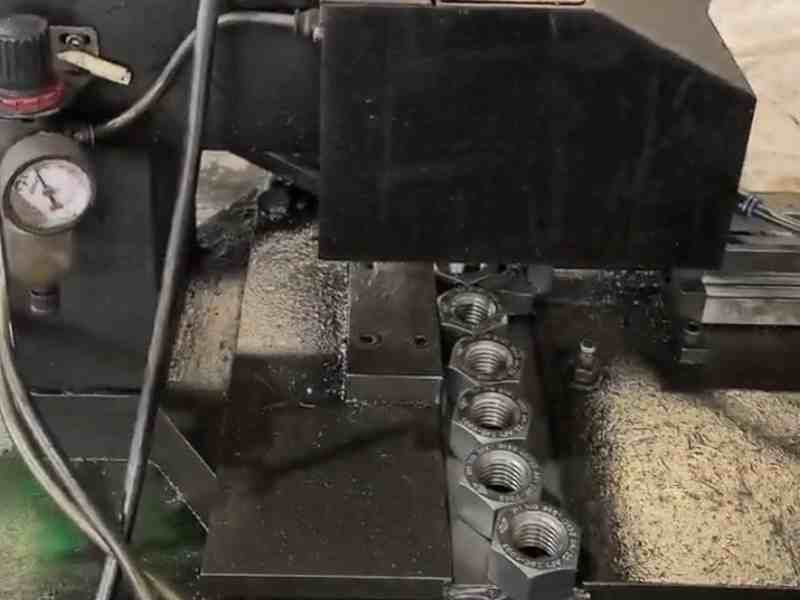
This automated system has been operating with high stability and performance, greatly reducing the need for manual handling and increasing marking efficiency. By streamlining the marking process, the customer has improved both production speed and consistency in product identification, which is essential for traceability and quality control.
Additionally, last year, we also designed and manufactured a similar automated dot peen marking system for another hardware producer. That particular system was built for marking steel rods. It employed a tilted rail and a pneumatic cylinder ejector to automatically feed and position the rods for top-side marking. The marking head then applied a precise dot peen engraving on the top surface of the bar in a fixed and aligned position.
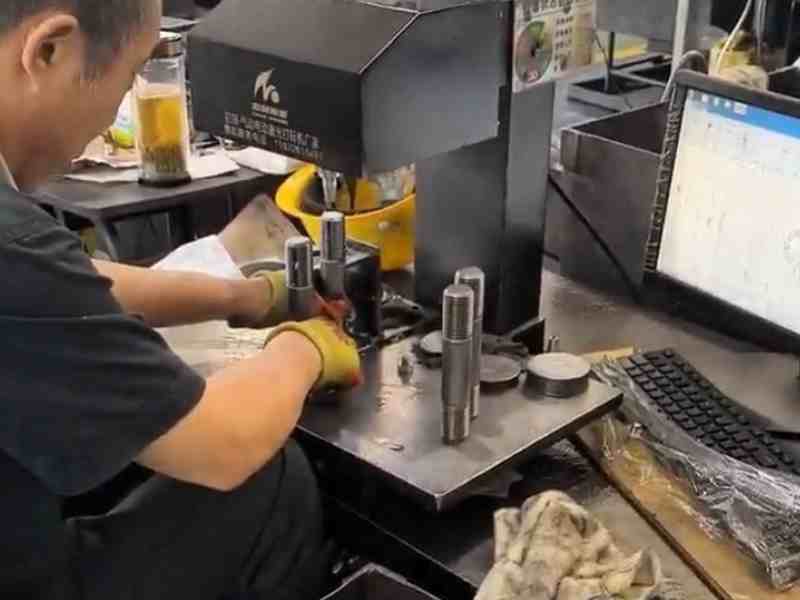
Currently, the same Chinese customer is using our machines to mark metal studs. However, due to the nature of the studs—especially their varying diameters—automatic positioning remains a challenge. At this stage, these components must still be manually loaded and aligned before marking. While hexagonal screws of different sizes can be easily positioned by adjusting the angle of the tilting guide rails and the cylinder-based clamping system, the same approach does not work as effectively for round studs. The inconsistency in size and shape makes automatic cutting and feeding more complex and less reliable.
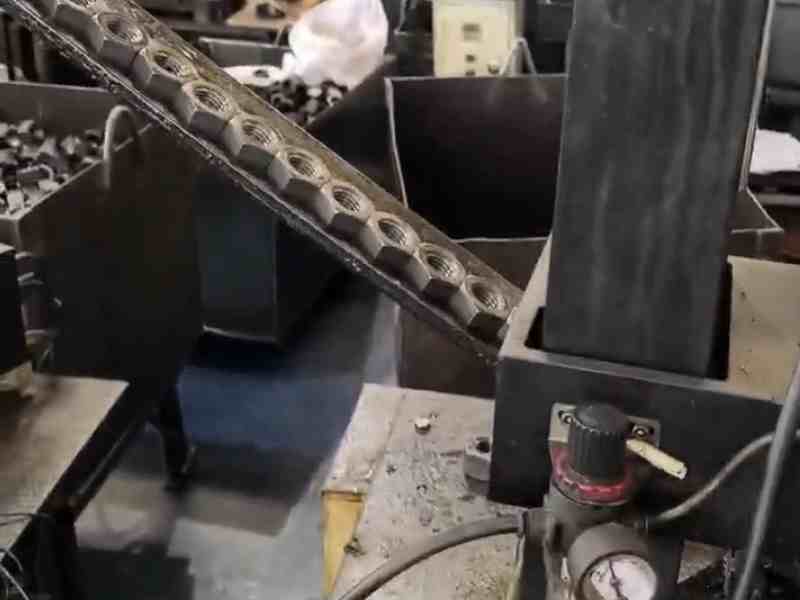
To address this, the customer reached out to us again—this time sharing a video showcasing the operational success of the nut-marking system and expressing a strong interest in upgrading the marking process for other hardware components like studs. They have communicated their intention to achieve full automation in stud marking and hope to eliminate the manual steps currently required.
In response, our technical engineering team has already begun coordinating with the customer. We are analyzing the dimensions and characteristics of their stud products, aiming to design new custom loading and clamping mechanisms tailored to these specific components. The goal is to deliver an advanced automation solution that replicates the efficiency and accuracy achieved with nut marking.
This case highlights not only our capability in developing fully customized automated marking systems, but also our commitment to long-term customer partnerships and continuous product improvement. Whether it’s nuts, bolts, studs, or other irregular hardware components, we provide tailored, high-efficiency pneumatic dot peen marking machines designed to integrate seamlessly into your production line.
If you have similar marking needs or are looking to upgrade your current hardware marking process, don’t hesitate to contact us. Our team is ready to deliver a cost-effective, automated solution customized for your specific application.
Application Context for Automated pneumatic dot peen marking machine in production line on-site demonstration
This page is part of CNMarking’s Dot peen and scribe marking content library. For buyers comparing similar equipment, the key question is not only whether the sample can be marked, cleaned, welded, or processed, but also whether the final setup can match production speed, fixture stability, marking depth, visual quality, and long-term maintenance requirements. The application is most relevant to permanent identification on metal parts, VIN and chassis numbers, nameplates, flanges, cylinders, rods, and industrial traceability components.
When evaluating a similar project, CNMarking normally checks the workpiece material, available marking area, expected cycle time, required code or logo content, fixture method, safety enclosure needs, and whether the process must connect with an existing line, MES, scanner, or operator workflow. These details help choose between a standard machine, a semi-custom workstation, or a fully automated solution.
Recommended CNMarking Product Pages
- Dot Peen and Scribe Marking Machines
- Handheld Scribe Marking Machine
- Portable VIN Marking Machine for Chassis and Engine Codes
Related CNMarking Case Studies and Guides
- Dot Peen vs Laser Marking Guide
- Automotive Chassis Benchtop Dot Peen Case
- Oil Drilling Rods Rotary Dot Peen Case
How to Choose a Similar Setup
- Send clear photos or drawings of the workpiece, including the required marking or processing position.
- Confirm the material, surface coating, required depth or contrast, and any durability requirements after cleaning, painting, heat treatment, or outdoor use.
- Share the expected production rhythm, such as pieces per hour, operator loading method, fixture constraints, and whether automatic code reading is required.
- For new applications, request sample testing first so the marking quality, processing speed, and fixture plan can be confirmed before mass production.
FAQ
Can CNMarking test my own samples before quotation?
Yes. For most marking, cleaning, welding, and precision laser processing projects, sample testing is the safest way to confirm process feasibility. A short video, test photos, and recommended configuration can be prepared after the workpiece and target result are confirmed.
What information should I send for a faster recommendation?
Please send the material, dimensions, required content, target cycle time, production environment, and any automation requirements. If the project is replacing an existing process, also share the current pain point, such as low efficiency, unstable quality, consumable cost, surface damage, or traceability requirements.
Need a similar solution? Contact CNMarking with your workpiece photos and target result. Our engineers can recommend a standard model or a customized workstation based on your sample and production requirements.