
Although not many people saw it, a video of the laser marking process on an automated production line helped attract a major new client
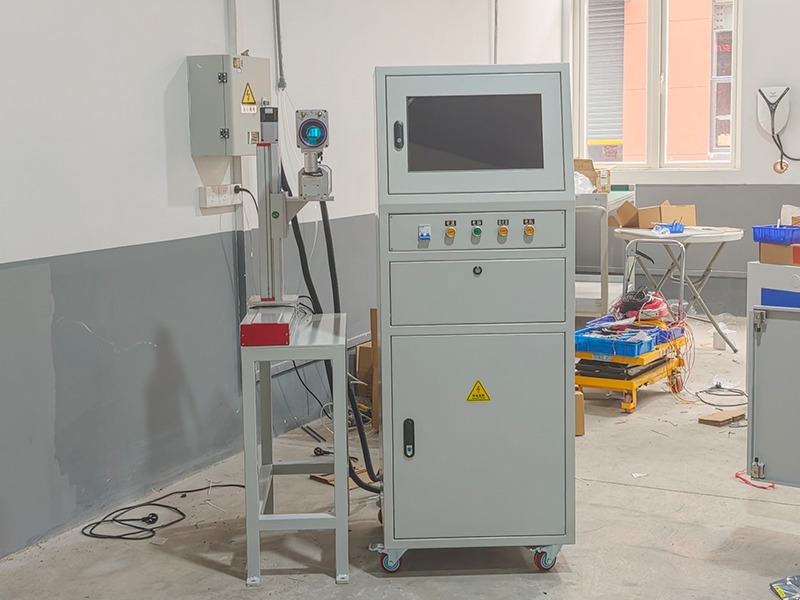
Two weeks ago, we posted a video of one of our customers using their highly automated production facility. After receiving a new batch of orders from that customer last week, the video, which had only received a few hundred views on YouTube, was seen by the CEO of a different company with an automated production line. Within two days, we determined the most cost-effective solution based on the customer’s current production line and automation setup.
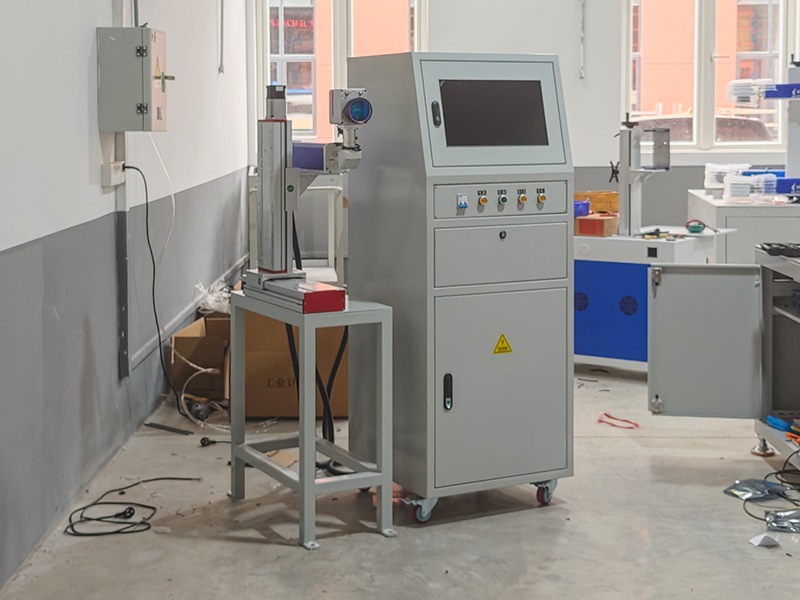
The customer chose a simpler sheet metal frame and control cabinet to accommodate operator preferences and ensure quick delivery. Since the steel products to be marked are on a production line, the customer opted to control them via a programmable logic controller (PLC).
This setup enables the workpiece to stop at the front of the marking machine, send marking commands, and resume moving once the marking process is complete and the end signal is received. The scanning galvanometer is initially in the rear position to prevent a collision when the workpiece is moving. After receiving the marking signal, the Y-axis moves the guide rail into place for marking. Once marking is complete, the galvanometer returns to the initial position and stands by.
The current workpiece does not require the Z-axis to be raised or lowered automatically. The customer needs to identify the manufacturer’s information and the serial number. The galvanometer can be marked without moving. However, due to the occasional occurrence of workpieces of different sizes, the customer chose to add this module for more convenient line cutting in the future.
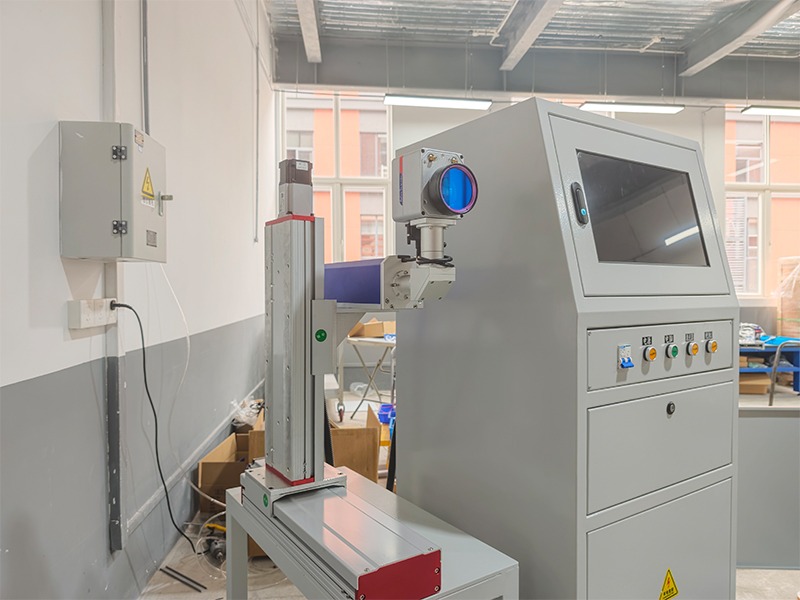
If you are interested in our cost-effective, automated laser marking machine, don’t hesitate to get in touch with us to request a solution and quotation.
Application Context for Although not many people saw it, a video of the laser marking process on an automated production line helped attract a major new client
Automation projects need more than a marking head. The feeding method, positioning logic, PLC communication and quality inspection flow decide whether the marking system can run reliably in production.
Recommended CNMarking Solutions and Internal Resources
If you are comparing equipment for a similar application, the following CNMarking pages are useful next steps:
- Automated Laser Marking on Production Line – see a PLC-controlled production-line marking solution.
- Custom Side Laser Marking Conveyor Case Study – review conveyor-side marking for industrial parts.
- Fully Automated Steel Pipe Dot Peen Marking Demonstration – connect automation needs to steel pipe traceability.
- Dual-Vision Dual-Laser Precision Marking Solution – review vision positioning for complex workpieces.
How to Choose a Similar Marking Setup
Before selecting a machine, prepare a short sample brief with the following information. This helps CNMarking recommend the right laser, dot peen, scribe or automation configuration instead of only matching a picture.
- Part feeding and unloading method
- Positioning tolerance and fixture repeatability
- PLC, barcode, MES or vision integration
- Expected cycle time and maintenance access
Related Reading
- Custom Side Laser Marking Conveyor Case Study
- Fully Automated Steel Pipe Dot Peen Marking Demonstration
- Dual-Vision Dual-Laser Precision Marking Solution
- How to Choose the Right Laser Marking Machine for Your Factory
FAQ
Can CNMarking test my own samples before I choose a machine?
Yes. For most marking, cleaning and welding projects, sample testing is the fastest way to confirm contrast, depth, speed and fixture requirements before final configuration.
What information should I send for a quotation?
Please send the material, part size, marking or cleaning area, required result, production volume and any automation or traceability requirements. Photos or short videos of the current process are also helpful.