
Paint Removal Case
A customer visited CNMarking to test a pulsed laser cleaning machine on a coated galvanized sheet sample. The target was not general paint stripping. The customer needed selective removal of the surface paint layer while keeping the electro-galvanized zinc layer underneath as intact as possible.
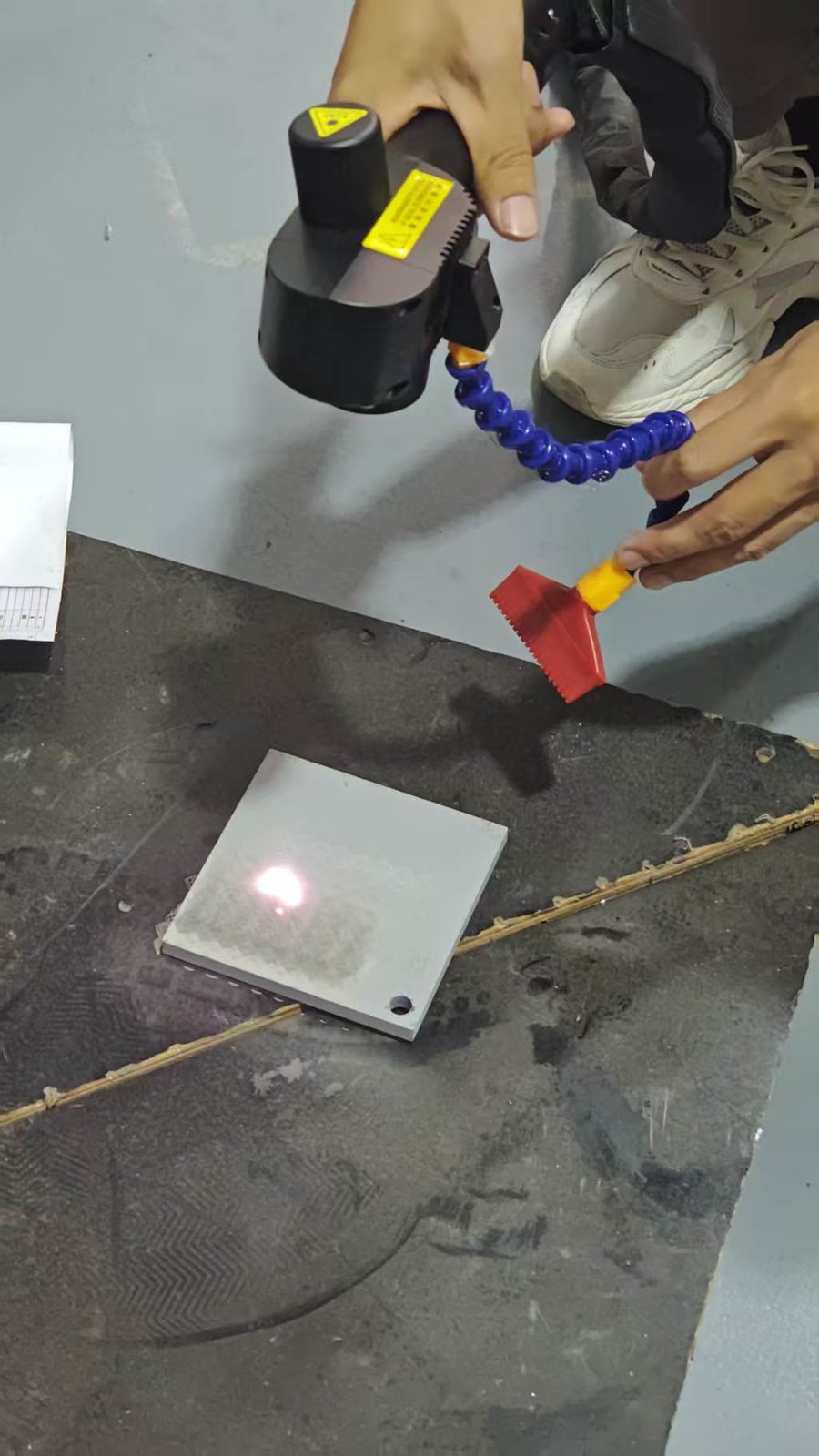
Application: selective paint layer removal on galvanized sheet.
Process keywords: pulsed laser cleaning, selective laser ablation, selective removal, controlled coating removal.
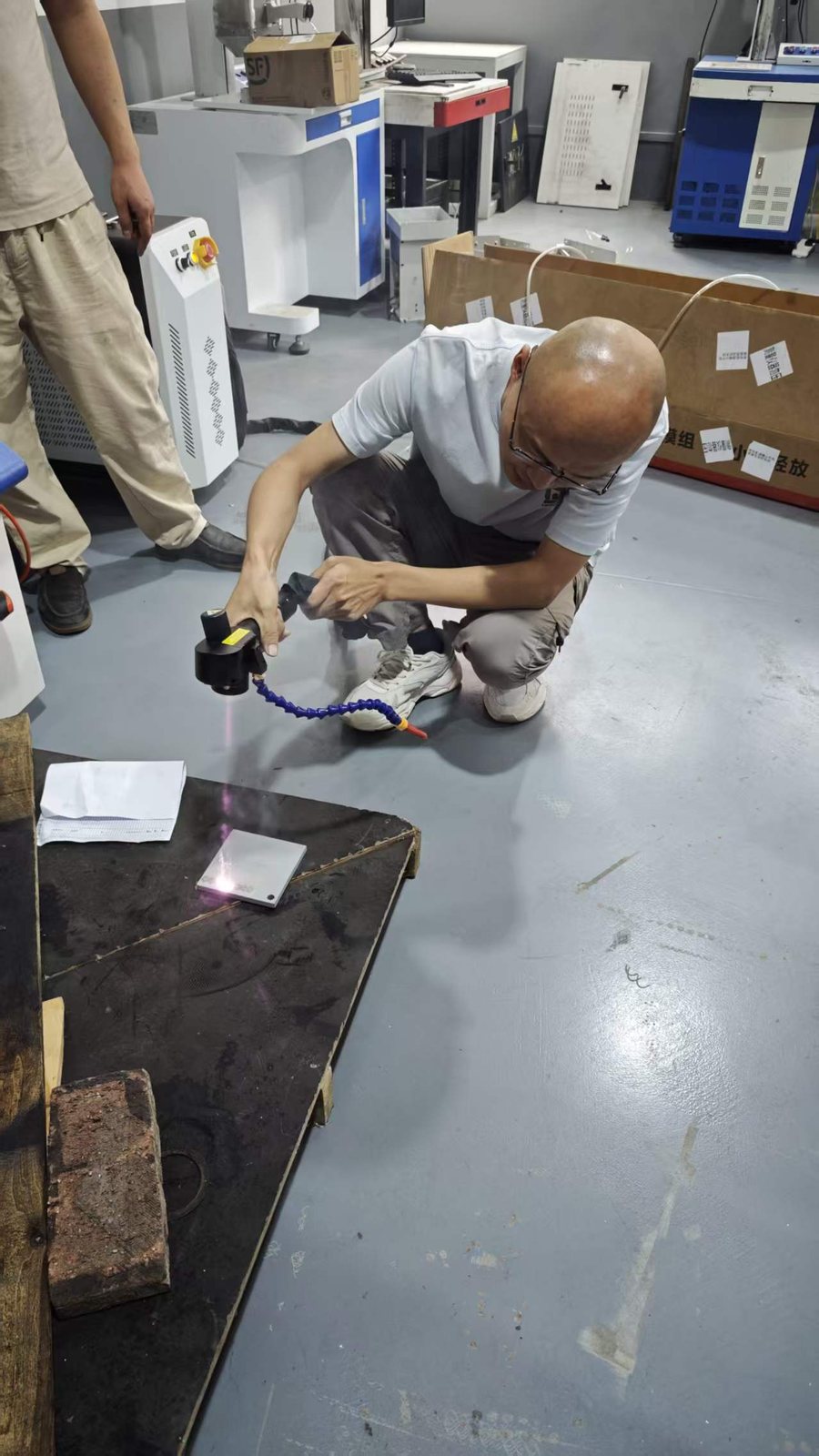
Current result: handheld sample testing showed the process direction was feasible, but the result was not fully stable because manual motion changes speed, overlap and focal distance.
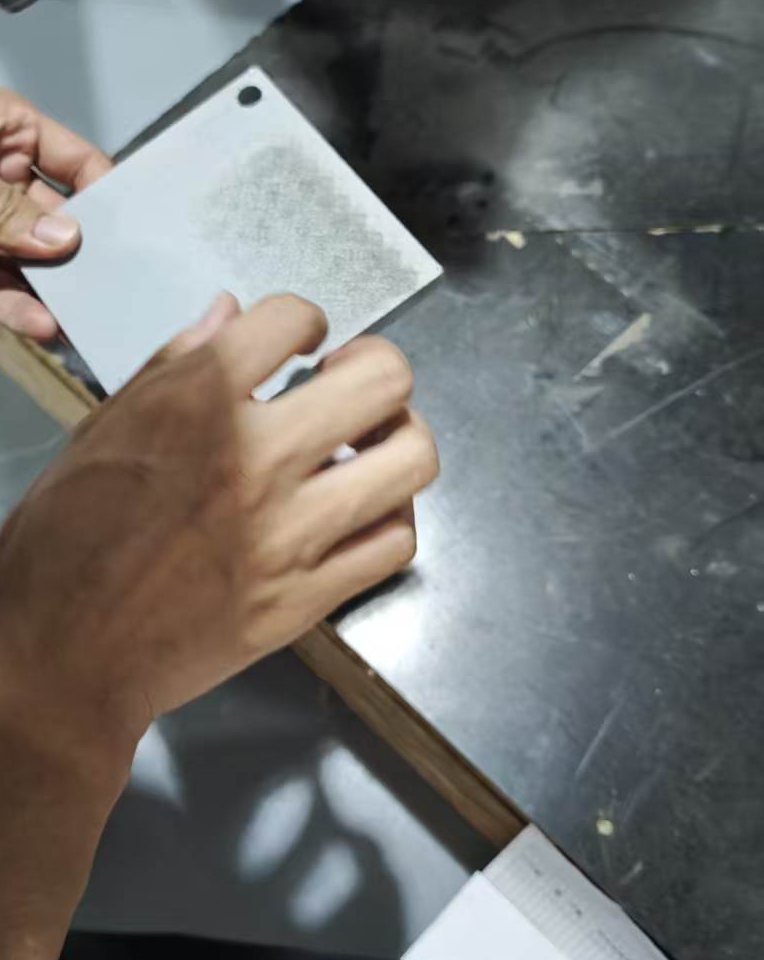
Next step: the customer will take the cleaned sample back for inspection, then consider whether to purchase an automatic platform laser cleaning machine for more repeatable production.
Customer Requirement
The sample was a galvanized metal sheet with a surface paint layer. The requirement was to remove the paint with controlled energy input and avoid damaging the zinc coating below. This is a typical selective laser ablation problem: the laser process must remove one layer while preserving the functional layer underneath.
For this type of work, the final decision should not be based only on visual brightness after cleaning. The customer also needs to check the sample after testing, because zinc layer integrity, surface roughness, adhesion condition and corrosion protection can matter more than the first visual result.
Why Pulsed Laser Cleaning Was Tested
A pulsed laser cleaning machine can deliver short, high-peak-power pulses to the paint layer. Compared with continuous heating, pulsed energy can help localize the removal process and reduce unnecessary heat accumulation in the substrate. This makes it useful for precise coating removal, oxide removal, mold cleaning and other selective removal tasks.
In this case, the key process question was whether the paint absorption threshold and the zinc-layer damage threshold had enough separation. If the process window is wide enough, the laser can be tuned to remove the paint layer while reducing zinc layer impact.
What Worked
The handheld test could remove paint from the galvanized sheet sample and produce visible local cleaning on the target area.
What Needs Control
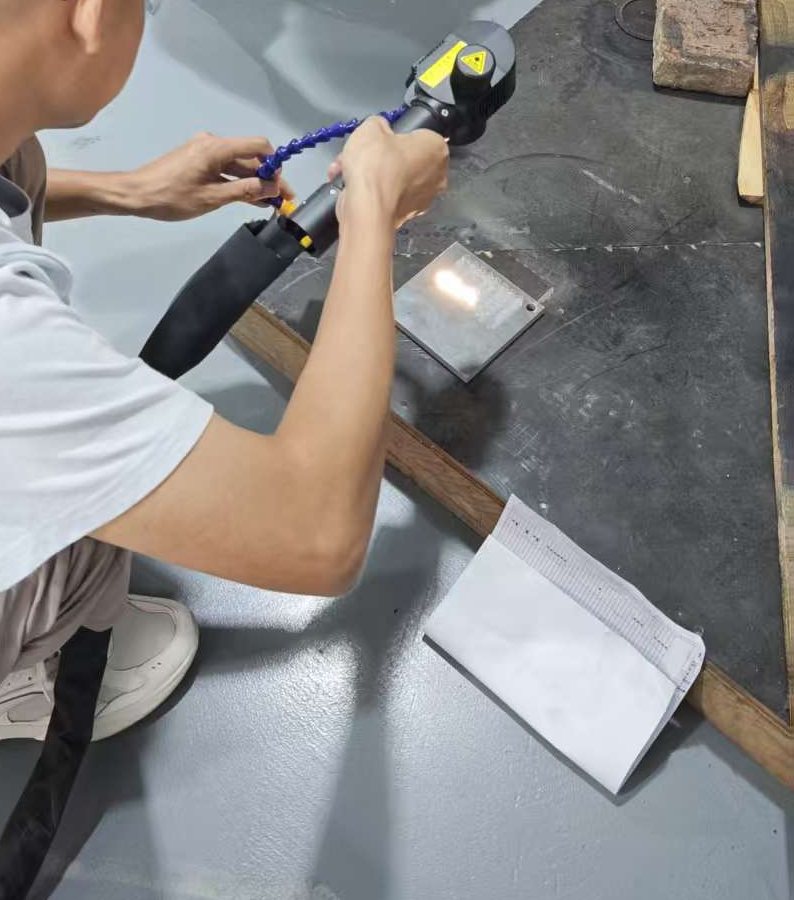
The handheld process was not fully stable because hand speed, overlap, spot angle and focus distance changed during operation.
Handheld Test vs Automatic Platform
Handheld laser cleaning is useful for quick sample testing, field maintenance and irregular workpieces. However, when the customer needs consistent selective removal on sheet parts, an automatic platform is usually the more practical route. A platform can keep scanning speed, line spacing, focus height and cleaning path consistent from one sample to the next.
| Item | Handheld Sample Test | Automatic Platform Cleaning |
|---|---|---|
| Purpose | Feasibility check and quick parameter exploration | Repeatable production and stable quality control |
| Motion control | Depends on operator movement | Controlled by motion platform, robot or fixture |
| Selective removal stability | Can vary across the cleaned area | More consistent overlap, speed and focus |
| Best use | Small batch, repair, field work, early sample test | Batch cleaning, defined area removal, inspection-ready samples |
Process Points for Galvanized Sheet Paint Removal
- Pulse energy and frequency: set the paint removal threshold without overdriving the zinc layer.
- Scanning speed: too slow can increase heat accumulation; too fast can leave paint residue.
- Line spacing and overlap: important for even selective laser ablation across the required area.
- Focus distance: handheld focus drift can change energy density and cleaning uniformity.
- Post-test inspection: check whether the electro-galvanized layer still meets the customer’s functional requirement.
Recommended Next Configuration
If the customer’s inspection confirms that the zinc layer is acceptable after cleaning, the next test should use an automatic laser cleaning platform. CNMarking can configure the machine around the sample size, target removal area, required cycle time, fixture method and inspection standard.
For related equipment, start from the CNMarking laser cleaning machine range and the pulse laser cleaning machine category. If you need to test a similar selective removal project, send sample photos, coating type, base material, removal area, inspection criteria and production target through CNMarking contact.