
A global consumer goods brand based in Shanghai that specializes in glass products visited us and sample marked
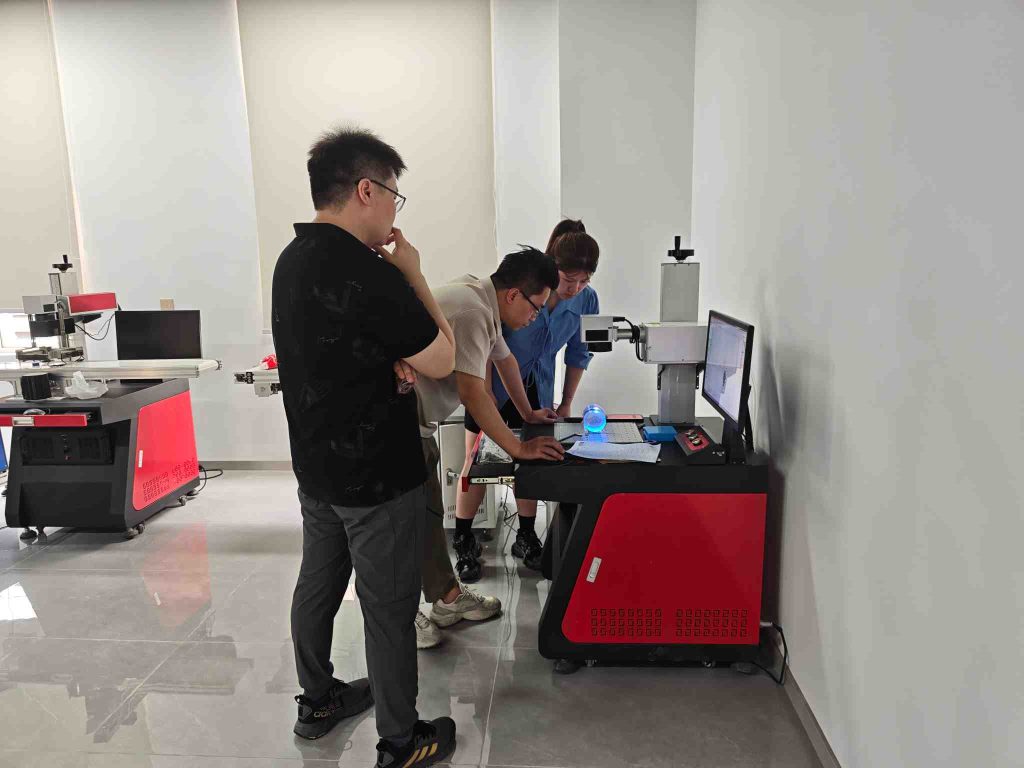
This month, a Shanghai-based glass goods brand contacted us after finding our demo video online. They arranged a site visit and sample test this morning. The brand primarily produces and sells various types of glass products, including popular double-layer, vacuum-insulated teacups, as well as tabletop ornaments. They came to us looking for a flexible, personalized logo solution for their products. This will reduce the cost of outsourcing logo printing and allow for more flexibility in testing styles and offering personalized customization services.
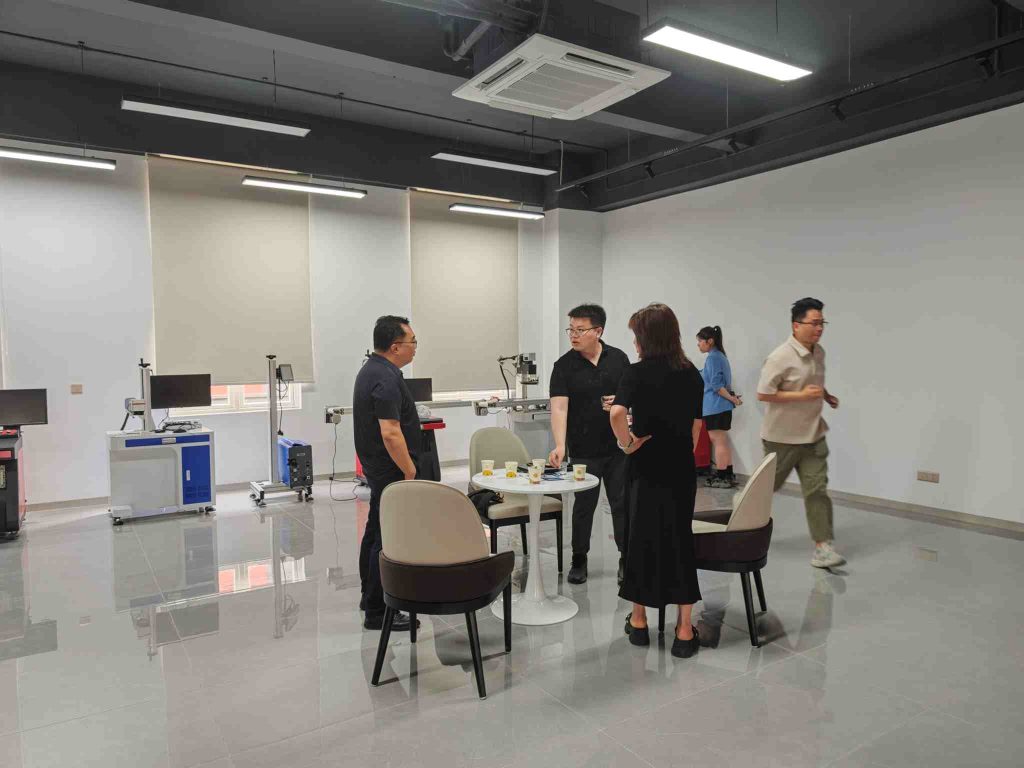
After communicating with our sales staff and technicians for several days, the customer confirmed their purchase. They would like us to provide a short training session for the head of their technical team so that they can learn to use the UV laser marking machine and perform routine calibration and maintenance. Since the UV laser etches the glass surface rather than marking it, and its relatively cold processing mode still generates heat on the glass workpiece, it is necessary to optimize the setup parameters to control the energy density of the glass surface and prevent rupturing due to thermal effects.
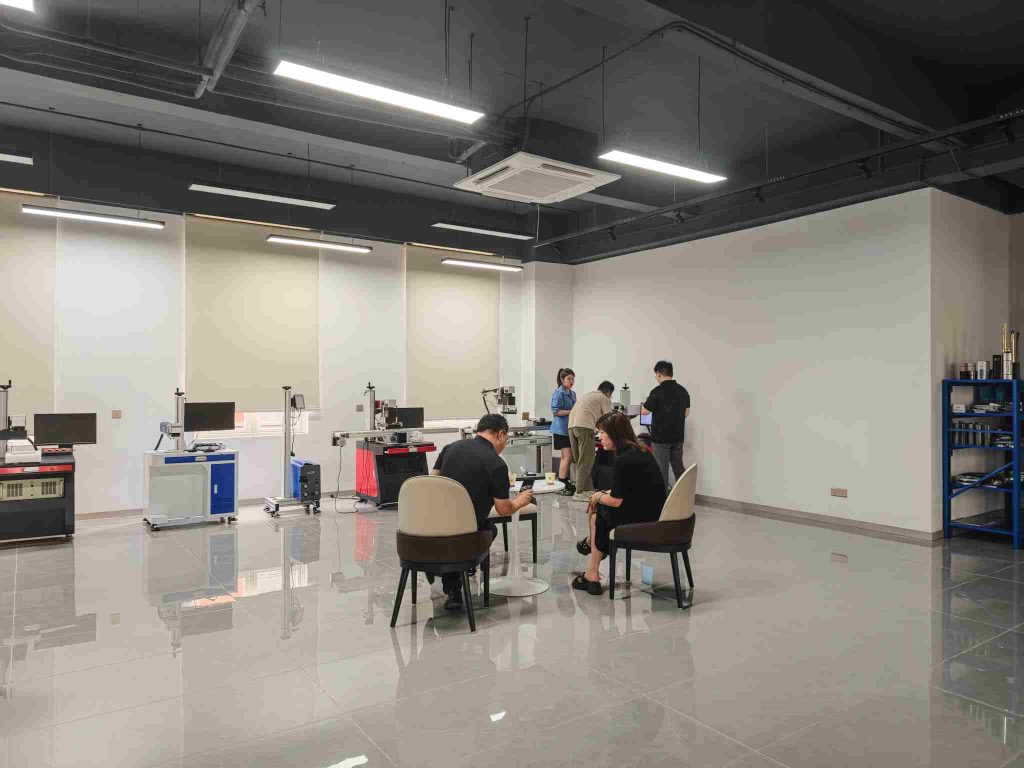
Since the customer did not bring their own samples, we showed them samples and proofing videos from previous customers. We also gave a series of demonstrations using blank glasses. The customer appreciated the professionalism of our technicians and sales staff. They used a stopwatch to time how long it took to laser etch their logo at a specific size. This information will help them make decisions about subsequent purchases and deployments.
Thanks to continuous research and development in glass laser etching, its applications have expanded beyond traditional glass products to include mineral water bottles, perfume bottles, and glass measuring instruments. Currently, marking and traceability are gradually being applied to various glass products and handicrafts. This helps our customers develop their businesses successfully.
Application Context for A global consumer goods brand based in Shanghai that specializes in glass products visited us and sample marked
UV and precision laser applications are sensitive to material absorption, thermal effect and edge quality. Before choosing a system, CNMarking normally evaluates the sample material, expected mark contrast and whether cutting, etching or surface marking is required.
Recommended CNMarking Solutions and Internal Resources
If you are comparing equipment for a similar application, the following CNMarking pages are useful next steps:
- Laser Glass Etching Machine Guide – review glass etching, sandblasting and laser marking options.
- 30W UV Laser Cutting Sapphire Precision Case – see precision UV laser cutting for hard materials.
- UV Laser Glass Etching Customer Sample Test – view a customer sample test for glassware marking.
- Automatic UV Laser Marking for Lithium Battery QR Codes – connect UV marking to battery traceability applications.
How to Choose a Similar Marking Setup
Before selecting a machine, prepare a short sample brief with the following information. This helps CNMarking recommend the right laser, dot peen, scribe or automation configuration instead of only matching a picture.
- Material type such as glass, sapphire, plastic or coated surface
- Required line width, edge quality and visual contrast
- Fixture accuracy and camera positioning needs
- Batch size and inspection requirement
Related Reading
- 30W UV Laser Cutting Sapphire Precision Case
- UV Laser Glass Etching Customer Sample Test
- Automatic UV Laser Marking for Lithium Battery QR Codes
- How to Choose the Right Laser Marking Machine for Your Factory
FAQ
Can CNMarking test my own samples before I choose a machine?
Yes. For most marking, cleaning and welding projects, sample testing is the fastest way to confirm contrast, depth, speed and fixture requirements before final configuration.
What information should I send for a quotation?
Please send the material, part size, marking or cleaning area, required result, production volume and any automation or traceability requirements. Photos or short videos of the current process are also helpful.