
Contact Us
Focusing on Workstation Quality and Efficiency Improvement – ZIXU’s Integrated Benchtop Pneumatic Marking Machine Empowers Precision Marking
In segmented manufacturing fields such as precision hardware, auto parts, and equipment nameplate processing, workpiece identification marking is a key process for ensuring product traceability, standardizing production management, and enhancing product recognition. To adapt to lightweight, refined, and simplified workshop production needs, Chongqing ZIXU Machine Works, leveraging nearly 20 years of experience in marking equipment R&D and scenario implementation, has completed a technology iteration and upgrade, launching a new integrated benchtop pneumatic marking machine. With an integrated innovative design, it addresses multiple usage pain points of traditional equipment, providing a new implementation solution for marking small workpieces and nameplates.
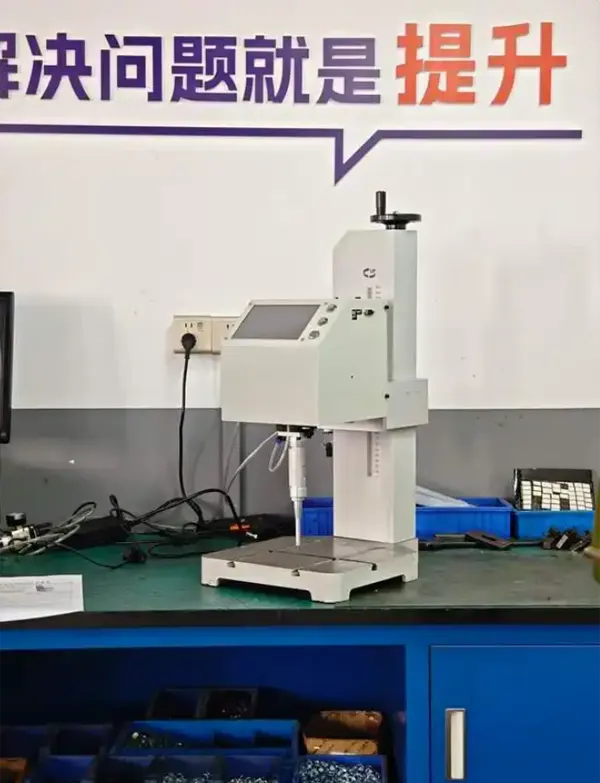
For a long time, traditional benchtop pneumatic marking machines on the market have adopted a split-type structural design. The machine body needs to be paired with an independent external controller, and aviation connector cables are used for signal transmission and functional linkage. The complete set involves many accessories and a complex assembly process, which not only occupies limited workbench space and makes the operating area at compact workstations even more cramped, but also leads to issues such as cable aging, loose connectors, and cable tangling during long-term workshop operation. These problems indirectly affect the continuity of marking operations and increase the time and cost of routine equipment maintenance. Especially for small-batch, multi-category nameplate and small metal parts processing scenarios, the shortcomings of split-type equipment—cumbersome debugging and inconvenient mobility—make it difficult to adapt to flexible production rhythms.
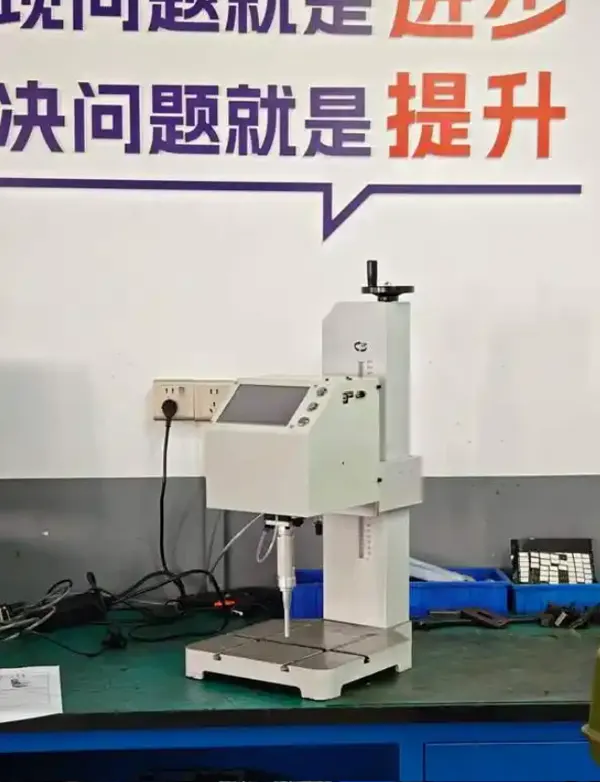
Based on real working conditions and actual customer needs on the production frontline, ZIXU's R&D team has focused on optimizing marking equipment technology, breaking through the limitations of traditional split-type structures and restructuring and upgrading the overall equipment architecture. The newly launched integrated benchtop pneumatic marking machine features an integrated design that consolidates the control core, operation and interaction system, and signal transmission module into the main body, achieving a fully integrated single-unit machine. The streamlined hardware structure greatly reduces the equipment's footprint, optimizes workstation layout, and meets the usage needs of various small processing workshops and benchtop work scenarios.
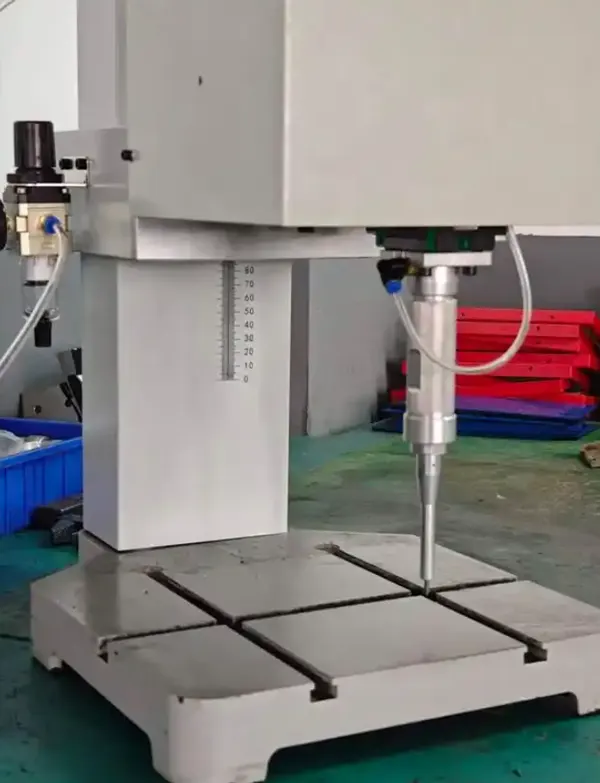
In terms of operational experience and performance adaptability, this new machine balances practicality and stability. It features an integrated touchscreen interface paired with a user-friendly physical button layout. The operation logic is simple and intuitive, with a friendly learning curve—operators can quickly complete routine tasks such as parameter adjustment, pattern editing, and batch marking without complex training. The machine retains a mature and stable pneumatic marking core structure, with a solid and sturdy base and flexible marking head height adjustment. It adapts to small metal workpieces, equipment nameplates, hardware accessories, and other materials of different thicknesses and specifications. The marked characters and patterns are clear and neat, with excellent durability.
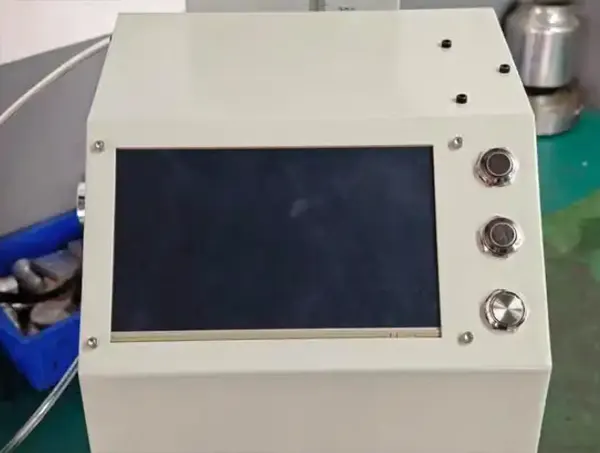
Compared with traditional models, the integrated structure delivers outstanding operational advantages. The machine requires no additional auxiliary accessories and features a simple installation process—just connect power and air supply to put it into use. This eliminates tedious wiring and debugging steps and greatly shortens pre-production preparation time. The streamlined body design avoids common issues such as wiring faults and poor connector contact, reducing equipment failure rates and subsequent maintenance costs for more stable daily production. Meanwhile, the body is equipped with diversified expansion interfaces, allowing flexible import of various marking files according to production needs. It adapts to multi-category, multi-specification marking requirements with strong scenario adaptability and functional scalability.
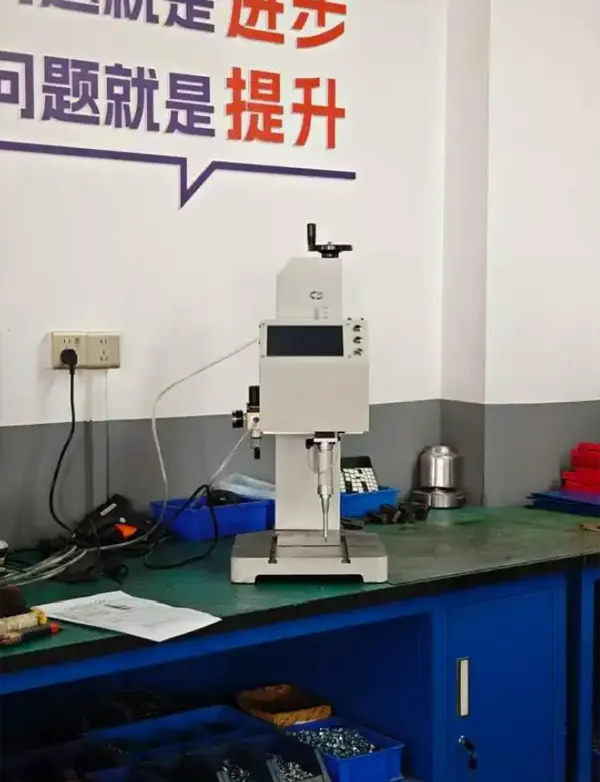
From the application scenario perspective, this machine focuses on small and medium-sized precision processing scenarios. It is widely suitable for marking work in multiple industries, including mechanical equipment nameplates, small hardware components, small auto parts, mold components, electronic hardware, etc. It is well-suited to the lightweight production model of small and medium-sized processing enterprises and individual processing workstations. Whether for small-batch custom processing or routine standardized mass production, it can adapt flexibly, helping enterprises strictly control production costs while improving the standardization level of the marking process and optimizing the workshop production environment.
The iterative upgrading of industrial equipment always revolves around the actual needs of the production frontline. Subtle structural optimizations can often bring tangible efficiency improvements to production processes. For many years, ZIXU has been deeply engaged in the intelligent marking equipment sector, adhering to a scenario-centered and practicality-oriented approach, continuously refining product structure and user experience, eliminating redundant design, and focusing on the core needs of quality improvement, efficiency enhancement, and cost reduction.
In the future, ZIXU will continue to deeply cultivate the intelligent manufacturing equipment field, continuously gain insight into the differentiated needs of processing scenarios across various industries, and continuously advance equipment technology innovation and structural optimization. It will launch more marking equipment with high adaptability, ease of operation, and high stability for small and medium-sized manufacturing scenarios, helping various segmented manufacturing fields achieve process optimization and capacity upgrading, and injecting sustained momentum into the refined development of local manufacturing.