
Laser Hardening: Precision, Performance, and Modern Manufacturing Advantages
Laser hardening, also known as laser transformation hardening, is a revolutionary surface treatment technology that is reshaping the essence of modern manufacturing with its precision.
This technology uses a focused laser beam to selectively heat and rapidly cool specific areas of a component. The process forms an ultra-hard martensitic layer while maintaining the original toughness of the core material. Compared with traditional furnace-based methods, this process achieves a qualitative leap in precision, consistency, and efficiency, opening up new possibilities for demanding industrial applications.
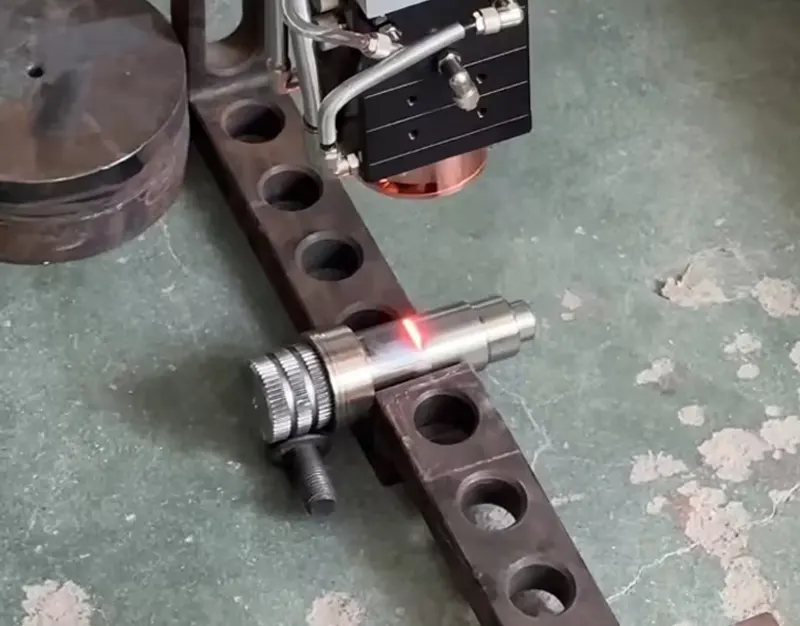
Key Applications Across Industries: The versatile capabilities of laser hardening make it a critical technology for industries with high demands on component precision.
In the automotive industry, it is applied to the strengthening of key mechanical components ranging from engine cylinder liners, crankshafts, and camshafts to gear tooth surfaces and clutch contact areas. In mold manufacturing, the industry relies on its ability to significantly extend the service life of injection molds, stamping dies, and cutting tools.
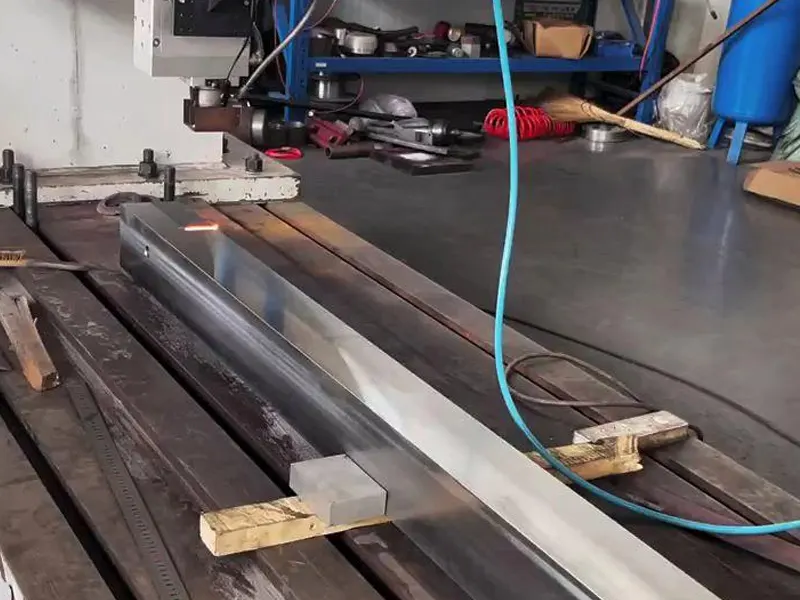
At more precision-demanding application levels, its value is demonstrated in the strengthening of landing gear load-bearing components and turbine blade roots in aerospace, the hardening of rail contact surfaces in rail transit, and the treatment of components in energy equipment such as nuclear power and wind power. Particularly notable is the technology’s remarkable ability to handle complex geometric configurations and selective hardening. It excels at processing complex shapes that induction hardening struggles with — whether grooves, edges, or internal channels, these complex geometries that leave induction hardening helpless can all be strengthened through laser hardening, enabling engineers to locally harden only gear tooth roots or specific wear tracks without affecting the microstructure of the entire part.
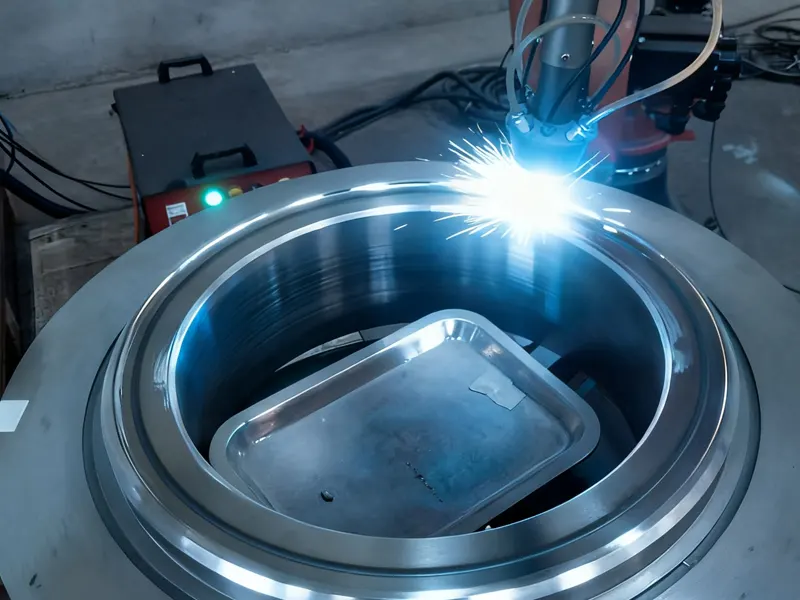
Advantages of the Technology: Laser hardening outperforms traditional methods such as flame hardening or induction hardening in several key aspects, improving performance with greater efficiency.
It offers outstanding precision and control. The process enables extremely localized treatment, capable of hardening areas less than one millimeter wide with clearly defined boundaries. Hardening depth typically ranges from 0.1mm to 2.0mm and can be precisely controlled by adjusting laser parameters. When integrated with robots or multi-axis systems, it can easily handle complex three-dimensional contours.
The technology delivers excellent metallurgical quality. The rapid heating and cooling cycle produces a fine-grained martensitic structure, typically making surface hardness 10% to 20% higher than traditional hardening. The heat-affected zone is very narrow, usually 1 to 2mm, minimizing part distortion and often eliminating the need for subsequent straightening or machining. Additionally, the process protects the surface from oxidation or decarburization and barely alters the original surface finish.
It is highly efficient and flexible, with fast processing speeds – scanning speeds typically between 0.5 and 10 meters per minute. Since it is a completely dry process that relies on the substrate itself for cooling, no quenching oil or water is required, making it clean. Changing hardening patterns for different parts is as simple as loading a new software program, with no physical tooling changes required, such as custom induction coils.
The process brings significant economic and environmental benefits. Laser hardening is considerably energy-efficient, typically consuming only 30% to 50% of the energy required for induction hardening. Marking equipment reduces total production costs by minimizing post-processing steps and significantly extending component life. As a green technology, it eliminates quenchant disposal issues and produces no fumes, contributing to a greener, cleaner workshop environment.
In summary, laser hardening technology, with its mastery of energy focusing, provides modern manufacturing with a cleaner and more flexible heat treatment alternative. At a time when high precision, minimal distortion, and selective hardening of complex geometries have become core demands, this process is not only the key to awakening component performance but also a powerful engine driving the leap in competitiveness of advanced manufacturing – continuously leading the development direction of material surface strengthening technology.