
Laser Empowering New Energy Lithium Batteries | Application Case of P1000H-P Laser in Modification Treatment of New Energy Battery Separator Films
As a key development target of China’s strategic emerging industries, new energy has a higher market priority than other traditional manufacturing industries. The combination of laser application technology and new energy vehicle batteries can strengthen and complete the industrial chain, which is of great significance for demonstrating the production process technology of new energy electric vehicle batteries, thereby accelerating the achievement of the “new industrialization” development goal.
The film on the surface of new energy power batteries is also called separator film, release film, or protective film. It comes in red, green, blue, and black, and is divided into single-sided release film and double-sided release film. As an insulating material between batteries, it can also provide good protection, isolating the impact of various faults in a single battery cell on other cells. Its surface bonding strength can reach 1.9 MPa. Defective products may occur during pasting. To reduce production costs, the film needs to be peeled off and re-applied. However, due to its high surface bonding strength, it is necessary to reduce the bonding strength before peeling. This article mainly introduces the process research on using Raycus Flag Series P1000H-P laser to treat power battery films.
01 Comparison of Advantages and Disadvantages of Battery Separator Film Cleaning Methods
At present, traditional methods for cleaning separator films are mainly divided into wet cleaning and mechanical cleaning.
The wet cleaning method for PET separator film involves soaking the battery pack in warm water for a period of time, and after the bonding strength of the separator film decreases, manually tearing off the wrapped PET separator film. This method has low cost, but repair efficiency is also very low, and the reduction in bonding strength is limited. There is also a lot of residue after film tearing, requiring a large amount of manual assistance.
The mechanical cleaning method for PET blue film usually uses high-speed kinetic energy dry ice particles to impact and blast the PET separator film wrapped on the surface of the aluminum shell, directly jet-cleaning the PET separator film. The advantage of this method is that it can directly clean the separator film and reduce manual assistance, but the disadvantage is high cost.
In comparison, laser cleaning has advantages such as being green, causing little cleaning damage, high efficiency, automated operation, and low operating cost, so its usage rate in the new energy battery field is increasing.
02 Raycus Laser’s Laser for New Energy Power Battery Film Modification
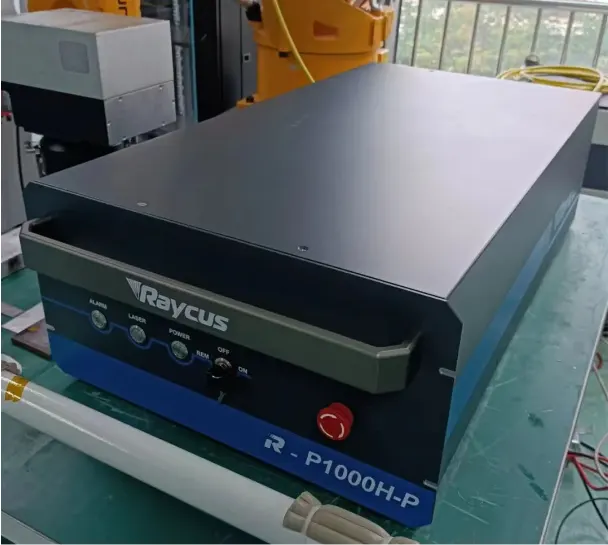
Flag P1000H-P laser
Compact size, light weight, easier to integrate and transport. Compared with the P1000 laser, the volume is reduced by 60% and the weight is reduced by more than 40%. The single-module high-peak-power 1000W nanosecond pulsed fiber laser adopts narrow pulse width seed source laser technology. Through a fiber pre-amplification stage (including multiple stages) and a fiber power amplification stage, it achieves technical specifications of average power ≥1000W and peak power greater than 1.5MW. (For product introduction, click: Understand the P1000H-P Laser at a Glance)
Note: Pulse width 40ns, fixed pulse width, peak power reaching 1.5MW.
03 Raycus Laser Research on Application of New Energy Power Battery Film Modification
(1) Experimental Materials
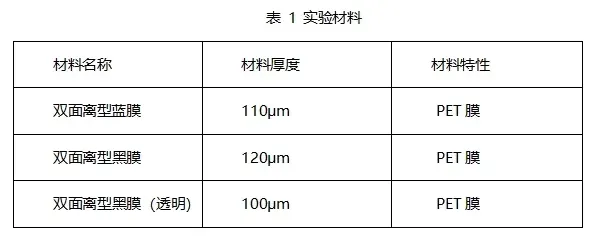
This experiment selected conventional double-sided release blue film with a thickness of 110μm, double-sided release black film with a thickness of 120μm, and transparent double-sided release black film with a thickness of 100μm. The experimental materials are shown in Table 1.
(2) Test Parameters and Results
a.Double-sided Release Blue Film
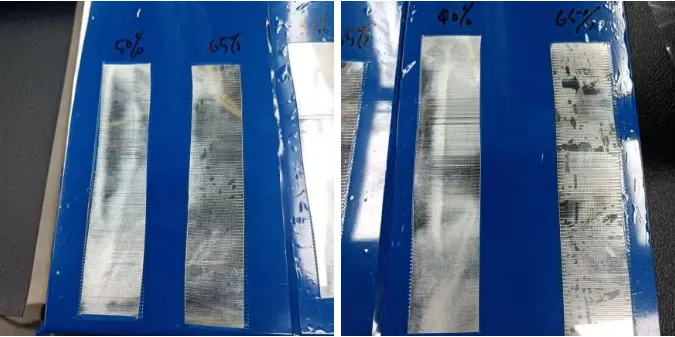
Figure 1 Cleaning effect of double-sided release blue film on the surface
(The left image shows the processing effects of 650W and 500W power, while the right image shows the processing effects of 400W and repeated 650W)
The processing efficiency of the above laser modification parameters is 65cm²/s. Three different power levels were set for processing. Among them, after treatment at 650W, the blue film modification resulted in low adhesion, and the other levels were also relatively easy to tear by hand, with tensile values all less than 10N. At a laser power of 400W, there were almost no visible laser treatment marks on the surface, while at 650W they were more obvious. The processing parameters were: power 500W, pulse width 40ns, frequency 25kHz.
b.Double-sided Release Black Film
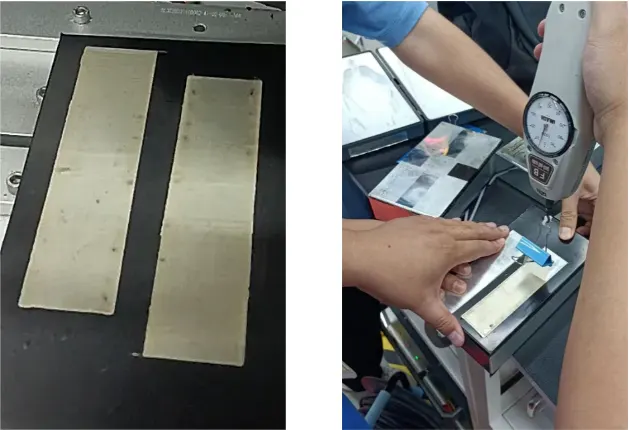
Figure 2 Cleaning effect of double-sided release black film on the surface
(The left image shows the surface treatment effect of the aluminum shell, and the right image shows the pulling force effect after removing the film)
Under the above laser parameters, with a processing efficiency of 23cm
²
/s, pulse width of 40ns, and power of 900W, the surface black film was just removed while retaining a light yellow film. It can be observed that the light yellow film layer can be easily torn by hand and peeled off as a whole. The pull-off force test showed less than 5N, and after removing the light yellow film layer, the aluminum shell surface was smooth, with no yellow film layer adhering to the aluminum shell surface.
c.Double-sided Release Black Film (Transparent)
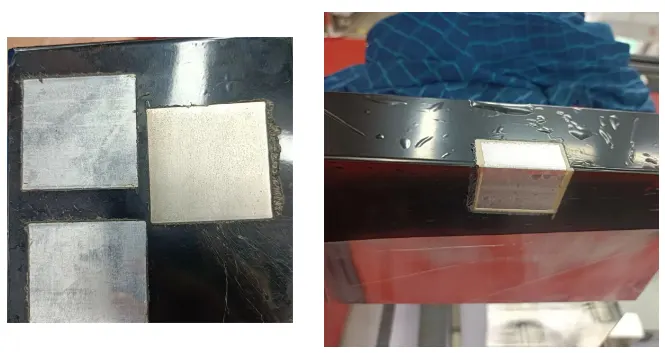
Figure 3 Cleaning effect of double-sided release black film (transparent) on the surface
(The left image shows the surface treatment effect of the aluminum shell, and the right image shows the R-corner treatment effect at the edge of the aluminum shell)
Under the above laser parameters, with a processing efficiency of 10.2cm²/s, pulse width of 40ns, and power of 800W, the surface black film was just cleaned while retaining a light yellow film. With excessive energy, there was less light yellow film, adhesion increased, making it harder to remove, and during manual wiping, sticky small particles would adhere to the aluminum shell surface and could not be wiped off. From the figure above, it can be observed that whether on the surface or at the R-angle edge of the aluminum shell, the Flag Series P1000H-P laser can achieve the cleaning effect on double-sided release black film (transparent). Moreover, after removing the light yellow film layer, the aluminum shell surface was smooth, with no yellow film layer adhering to the aluminum shell surface. The processing parameters were: power 800W, pulse width 40ns, frequency 20kHz.
Looking at the temperature and roughness conditions during the treatment process, the treatment effects of each film layer are shown in the figure below.
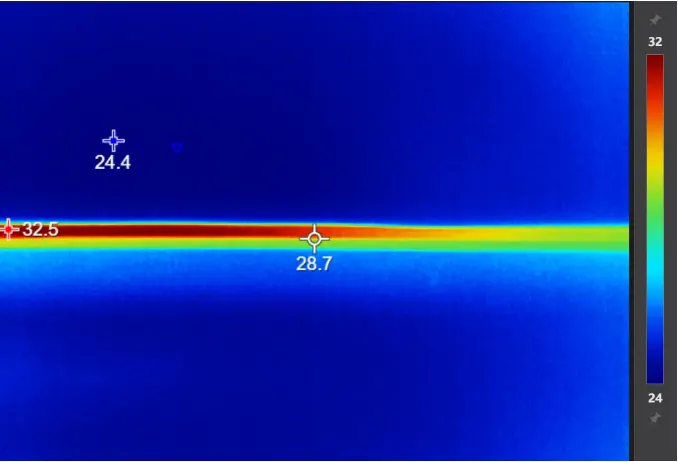
Temperature situation during the process of double-sided release blue film treatment
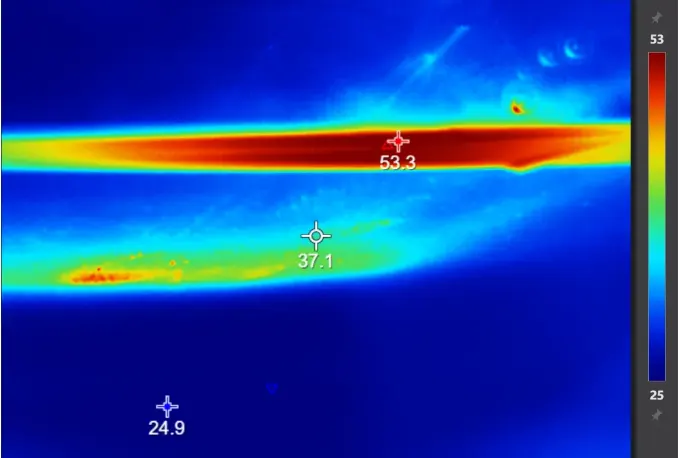
Temperature situation during the process of double-sided release black film treatment
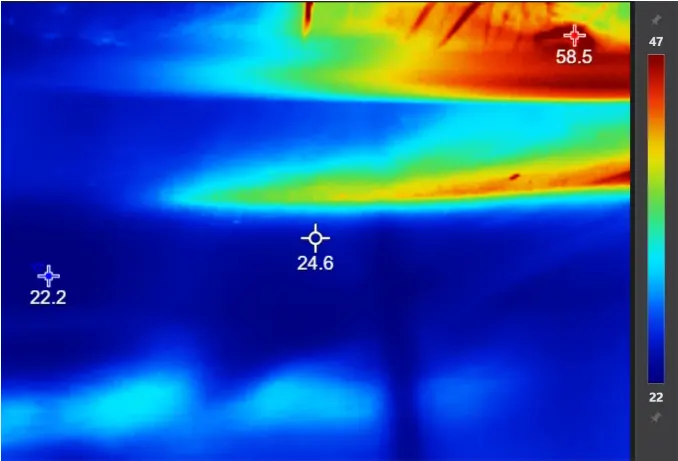
Temperature situation during the processing of double-sided release black film (transparent)
The overall temperature during the treatment process did not exceed 60°C. Among them, due to the high efficiency of processing the double-sided release blue film, the temperature did not exceed 35°C, while the temperature for the double-sided release black film (transparent) was 58.5°C, meeting the corresponding requirements.
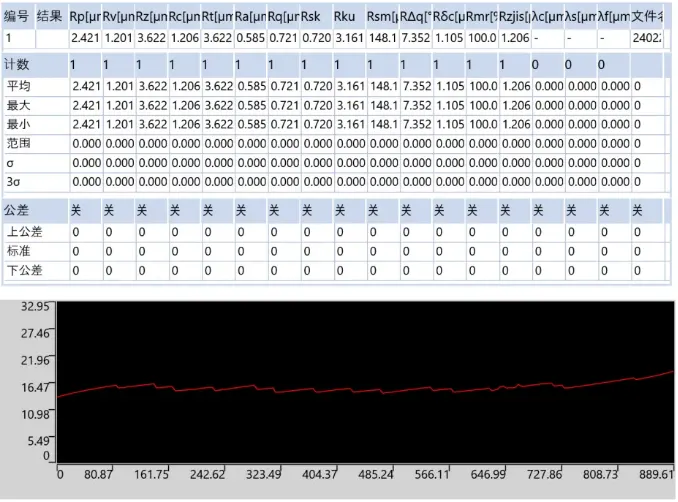
Roughness condition after blue film treatment
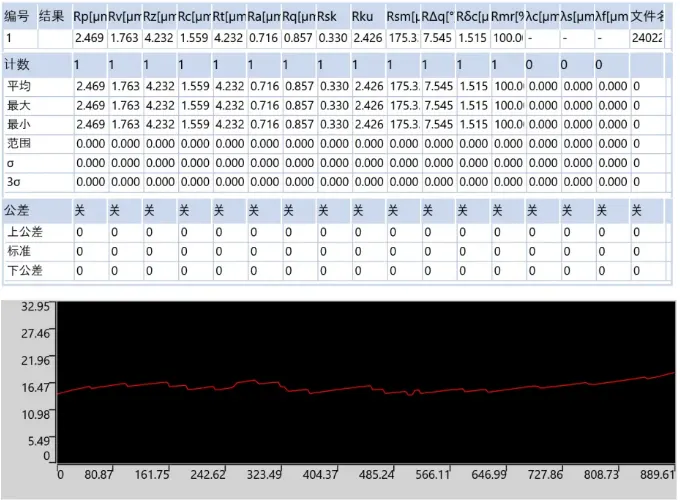
Roughness condition after black film treatment
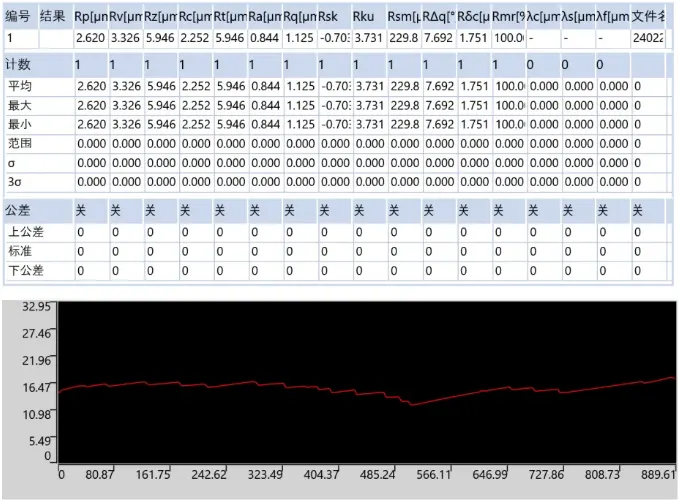
Roughness condition after black film (transparent) treatment
From the data in the figure, the Ra value of the double-sided release blue film is 0.58μm, the Ra value of the double-sided release black film is 0.72μm, and the Ra value of the double-sided release black film (transparent) is 0.84μm. The roughness values are all less than 1μm, meeting the requirements.
04 Case Summary
(1) The Raycus Flag Series P1000H-P laser paired with lens F254 can achieve modification of power battery film layers. Among them, the double-sided release blue film has high processing efficiency, reaching 65cm²/s; the double-sided release black film (transparent) has low processing efficiency, reaching 10.2cm²/s; and the double-sided release black film is in the middle, with an efficiency of 23cm²/s.
(2) The laser modification effect on blue film differs from that on black film. Whether on the surface or at the R-angle edge of the aluminum shell, the Flag Series P1000H-P laser can remove the black film while retaining a light yellow film layer, and after removing the light yellow film layer, the aluminum shell surface is smooth, whereas modification of the blue film only changes its adhesion.
(3) The overall temperature during the treatment process does not exceed 60°C, and the roughness is all less than 1μm. Among them, due to the high efficiency of processing the double-sided release blue film, the temperature does not exceed 35°C, with a roughness of 0.58μm; the temperature for the double-sided release black film (transparent) is 58.5°C, with a roughness of 0.84μm, also meeting the requirements.
As a strategic partner of Raycus, we vigorously promote this type of advanced laser application.