
Bar Finishing Line End-face Laser Marking Integration Solution — Achieving Unmanned Closed-loop Traceability for “Lights-out Factories”
Customer Request
The client’s core demands are: to achieve long-term, clear, and tamper-proof marking on the end faces of bars, and to deeply integrate with the MES system to build a fully unmanned closed-loop traceability system from production to shipment.
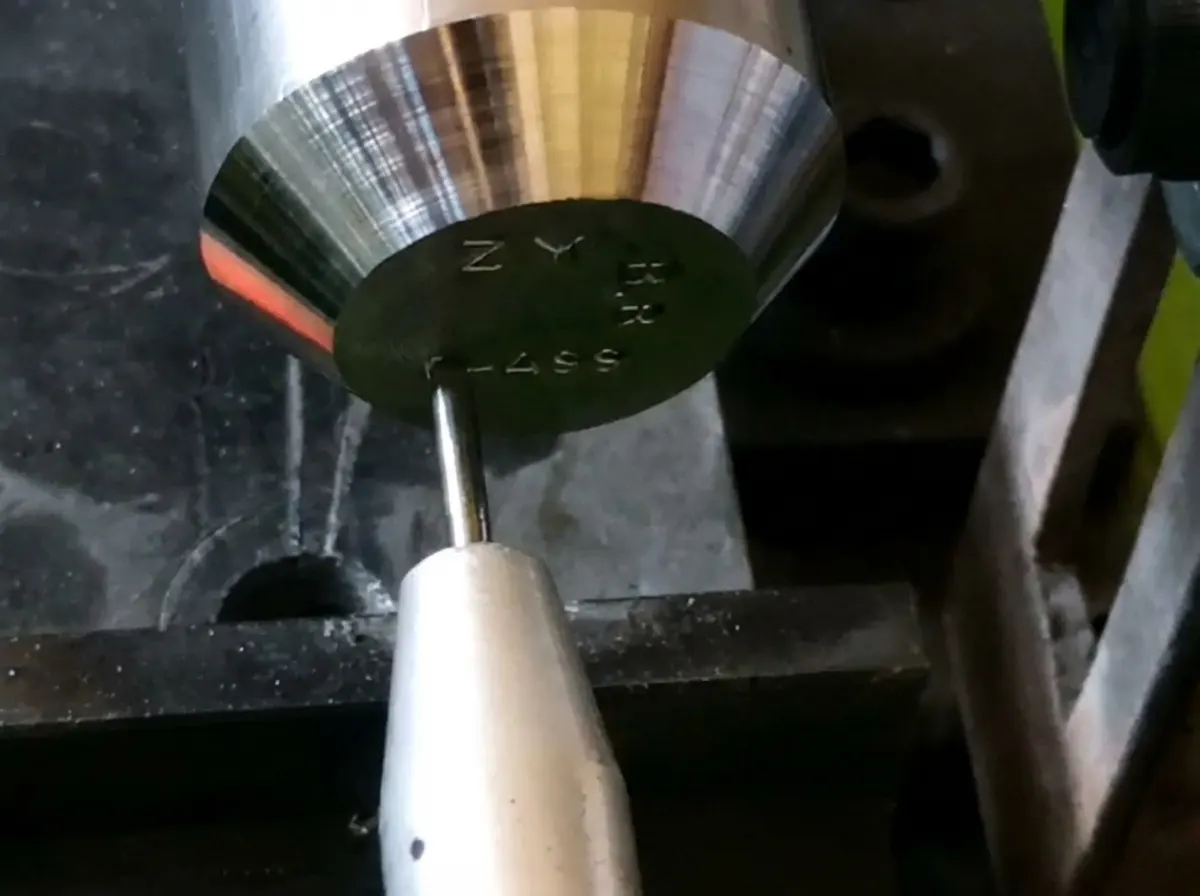
A large special steel manufacturing enterprise mainly produces various bar products such as carbon steel, alloy steel, and stainless steel, which are widely used in manufacturing fields including auto parts, construction machinery, and aerospace. With the continuous improvement of downstream customers’ requirements for product quality traceability, as well as the enterprise’s own strategic deployment of advancing “intelligent manufacturing” and “lights-out factory” construction, the client faces the following core challenges on the bar finishing line:
High requirements for marking durability: During production, bars need to go through multiple subsequent processes such as sandblasting, phosphating, and heat treatment. Traditional inkjet coding or label attachment methods are highly prone to falling off or blurring under high-temperature, high-pressure, and corrosive environments, resulting in marking failure and making full life-cycle traceability impossible.
Complex data traceability: Each bar needs to be marked with multiple pieces of information such as production batch, steel grade, heat number, serial number, and QR code, and the serial numbers must never repeat, with QR code grades required to reach Grade A standards. Traditional manual entry or semi-automatic methods are not only inefficient but also carry risks of data errors and omissions.
Difficult automation integration: The bar finishing line has a fast cycle and long continuous operation time, requiring the marking equipment to be deeply integrated into the existing conveyor mechanism, servo positioning fixtures, and PLC motion control system to achieve unmanned automatic operation. At the same time, automatic verification and defect detection capabilities are required before and after marking to form closed-loop control.
Limited spatial layout: The marking positions on the end faces of bars are not the same, and traditional vertical marking methods are constrained by on-site spatial layout, making it difficult to achieve online operation. A solution that can be flexibly deployed within limited space while ensuring marking accuracy is needed.
Solution
In response to the client’s varying needs on the bar finishing line, we customized a 90-degree fixed marking head integrated end-face laser marking system. This solution achieved full-process delivery from hardware selection and automation integration to software system interfacing.
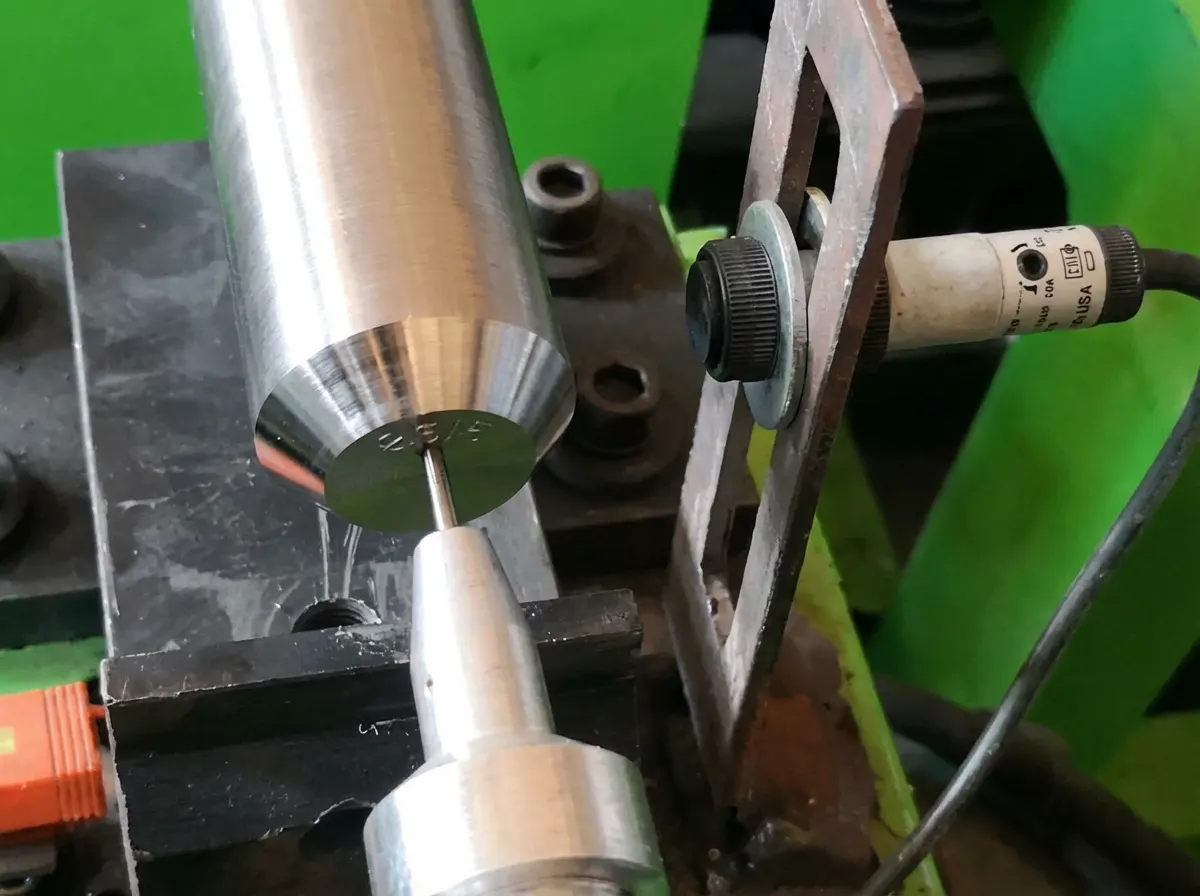
I. Core Hardware Configuration
90-degree fixed marking head: Adopting the 90
°
fixed laser marking head procured by the client from us, its distinctive 90
°
optical structure design enables vertical redirection of the laser beam within limited space, accurately acting on the end face of the bar and solving the problem of limited on-site spatial layout. The marking head is deeply integrated with its supporting controller, ensuring marking accuracy reaches the micron level and meeting the fine marking needs of various steel grades on end faces.
Laser source selection: Based on the marking characteristics of different materials such as carbon steel, alloy steel, and stainless steel, high-power fiber lasers are configured to ensure high-contrast, high-temperature-resistant, and corrosion-resistant long-term markings on the end faces of various steel grades. After subsequent processes such as sandblasting, phosphating, and heat treatment, the markings remain clearly readable, solving the problem of traditional marking methods being prone to falling off.
II. Automation Integration Solution
Conveyor mechanism interfacing: The system seamlessly interfaces with the client’s existing bar finishing line conveyor mechanism, achieving automatic conveying and positioning of bars.
Servo positioning fixtures: Equipped with high-precision servo positioning fixtures, automatically clamping bars and accurately positioning them to the marking station, ensuring that the end face of each bar remains highly consistent with the laser focal plane.
PLC motion control module: Through the PLC motion control module, full-process automated control of conveying, clamping, marking, and releasing is achieved, requiring no manual intervention and supporting 7×24 h continuous operation.
III. Software Traceability System
MES system interfacing: Through the MES interface, the system obtains production data such as production batch, steel grade, and heat number in real time, and automatically generates non-repeating serial numbers, QR codes, and manufacturer LOGOs. All marking information is bound to production data in real time, ensuring “one item, one code” and achieving full-process traceability.
OCR verification and defect detection: Before and after marking, the system uses a vision camera to complete OCR optical character recognition verification, automatically comparing whether the marking content is consistent with the data issued by MES. At the same time, the vision system performs defect detection on marking quality (such as missing strokes, insufficient contrast, position deviation, etc.), automatically alarming and rejecting abnormalities when found, ensuring the marking quality of each bar.
Unmanned closed-loop control: From data acquisition, marking generation, automatic marking to verification and detection, the entire process requires no manual participation, truly achieving “lights-out” unmanned closed-loop operation.
Satisfaction
After the system was delivered and put into continuous operation, it passed joint acceptance by the client’s production, quality, and information technology departments.
Superior Marking Quality: Laser markings exhibit excellent adhesion and weather resistance on the end faces of various steel grades. After subsequent processes such as sandblasting, phosphating, and heat treatment, the markings remain clearly readable, with grades consistently stable above Grade A. The client’s quality manager stated: “This solution has solved our long-standing pain point of markings being prone to falling off and laid a solid foundation for full life-cycle product traceability.”
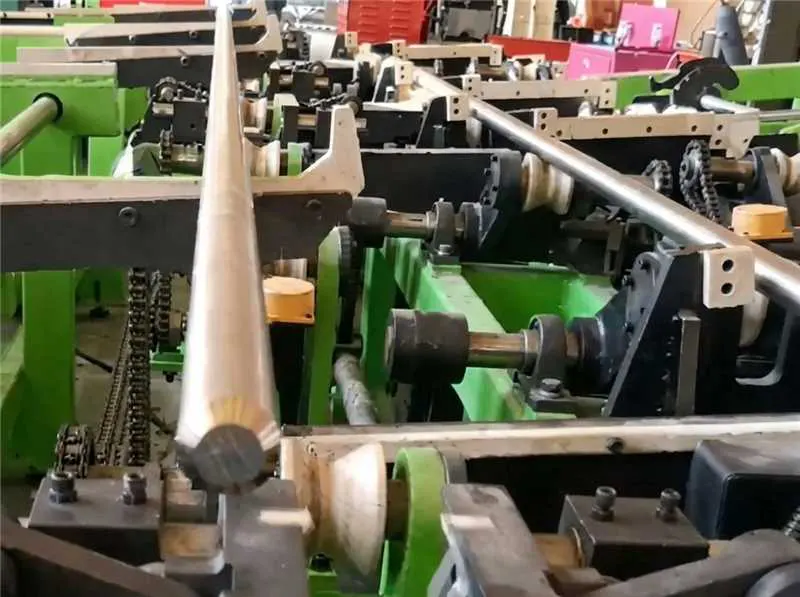
Stable Unmanned Operation: Since going online, the system has operated continuously and stably for more than 3,000 hours without major fault downtime. The 7×24 h unmanned operation mode has saved the client 4 manual positions while also eliminating the risk of data errors and omissions caused by human operational mistakes.
Significantly Improved Traceability Efficiency: Through MES system interfacing and automatic data generation, the marking information of each bar is uploaded to the database in real time, and the efficiency of full-process traceability from production to shipment has increased by more than 60%. During after-sales quality traceability, scanning the end-face QR code is all that is needed to quickly retrieve complete production data, greatly shortening problem investigation time.
Client evaluation: “From equipment selection to automation integration, and then to software system interfacing, your company has demonstrated true one-stop service capability. The clever application of the 90-degree marking head solved our on-site layout challenge, while visual verification and MES interfacing achieved the unmanned closed loop we had long dreamed of. This is a successful intelligent manufacturing upgrade practice.”