
Automatic Laser Nameplate Delivery
We delivered a customized automated nameplate MOPA fiber laser marking machine to support European gas supply.
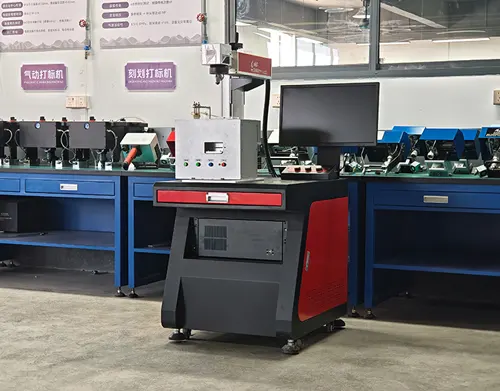
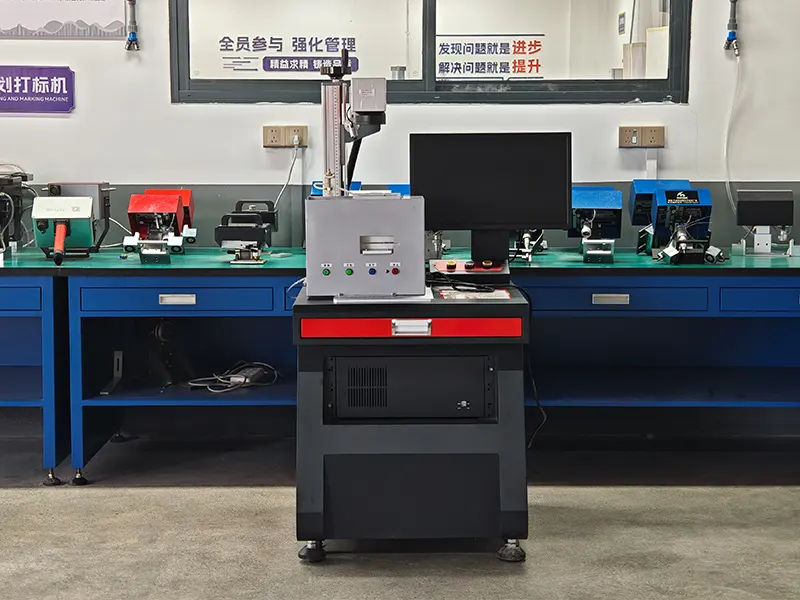
For this machine, we installed an automated nameplate fixture with integrated PLC control on the basis of a MOPA fiber laser marking machine. Using a MOPA fiber laser can provide better beam quality than conventional entry-level fiber lasers. Since the nameplates that this machine needs to mark are optimized for lasers, their white marking areas can be etched with extremely low energy density. We tested and demonstrated the marking effects using a Raycus 30W fiber laser and a JPT M7 30W MOPA fiber laser, and the customer chose the JPT M7. The nameplate fixture part of this machine uses a set of vertical motor modules combined with photoelectric sensors to achieve automated feeding and positioning. After a person places the nameplate into the fixture, the module can raise the nameplate to the accurate position based on feedback from the photoelectric sensor, thereby ensuring that each nameplate can be marked with consistent results. At the same time, the manually adjustable side walls and limiters on both sides allow quick adjustment to accommodate nameplates of any shape and size. For automatic unloading, we used a set of motor-driven X-axis travel cylinder suction cups. After receiving the instruction that a single nameplate has been marked, it can move into place and suck away that nameplate, then move horizontally to the unloading area and release the suction cup. By continuously repeating these actions, highly automated marking is achieved with one-key completion of all tasks after placing the nameplate.
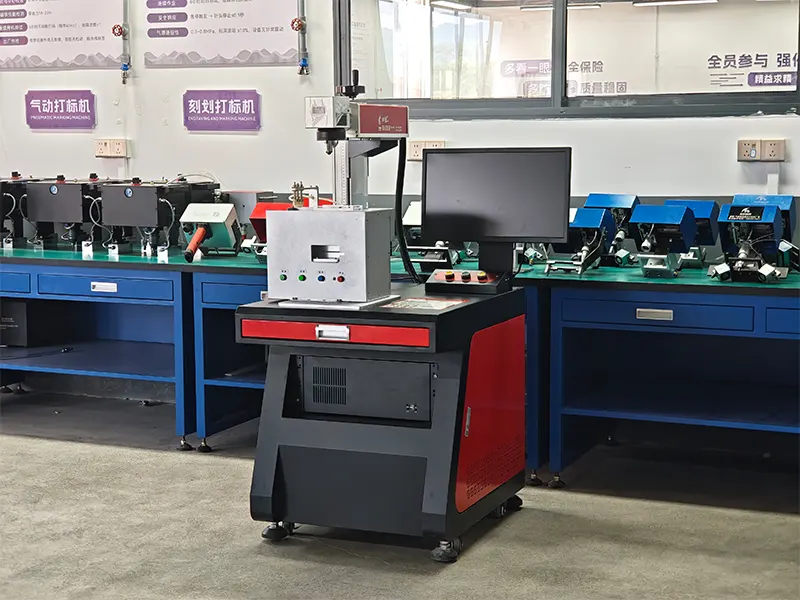
Compared with conventional fiber laser marking machines combined with manual nameplate fixtures and other methods, this solution has a relatively small cost increase but greatly improved efficiency. Therefore, it has been sold in the domestic market for many years and supplied to many power and hydraulic companies. Previously, most of our exports of this type of automated nameplate marking equipment were traditional dot matrix marking machines, which are widely used in the machinery industry. However, with the continuous development and price reduction of fiber lasers, the use of lasers instead of dot matrix marking for such nameplates and labels will become increasingly widespread.